Chiba: Local Specialties, Souvenirs, Shrines & Temples, Sightseeing | Japan 47 Prefecture Guide
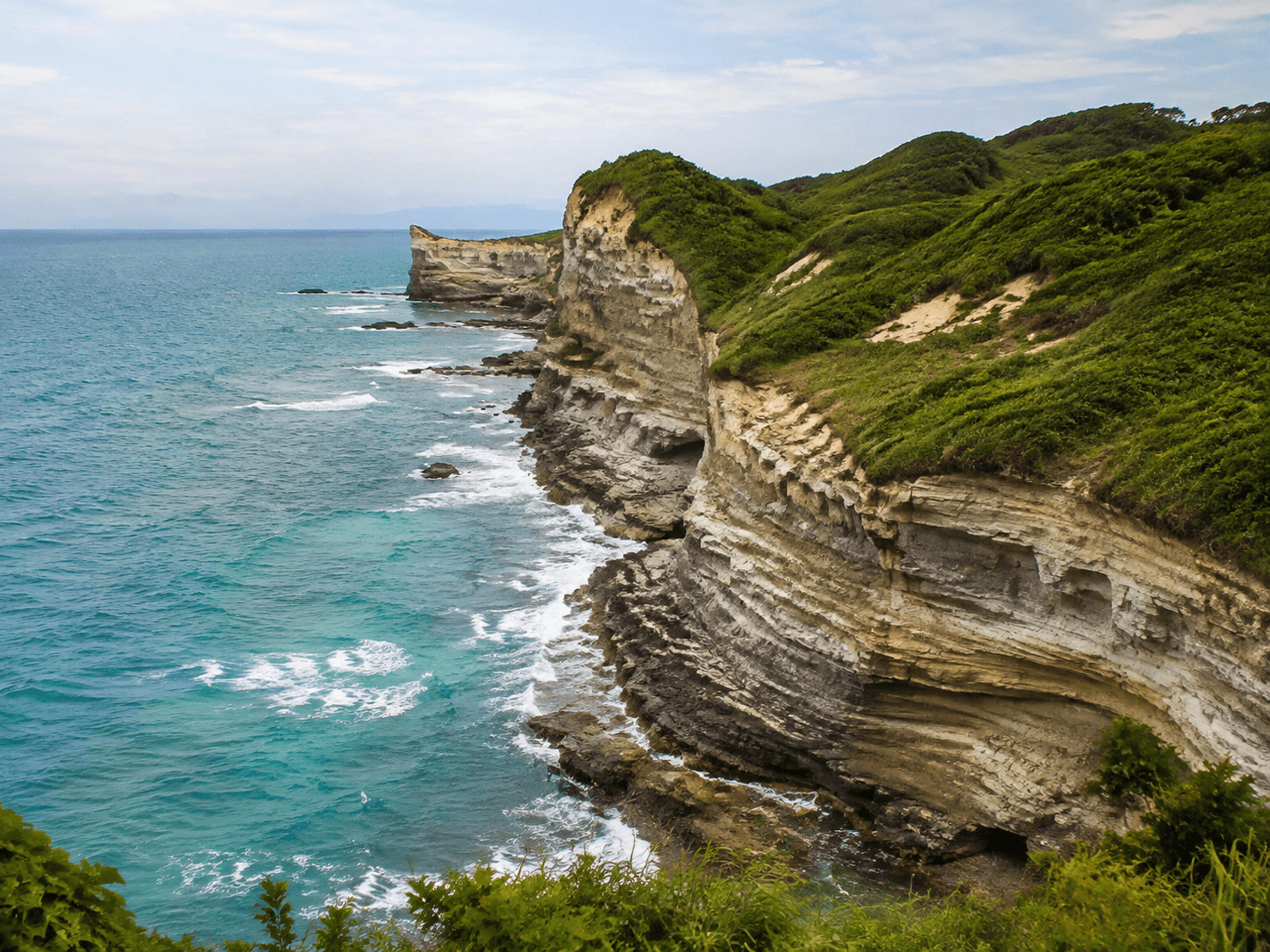
Chiba is ringed by sea on three sides, with low hills. Winters stay comparatively mild, and something is being harvested all year round. That is why it sits near the top of Japan for agricultural output.
Local Specialties
About 80 percent of Japan's peanuts are grown here, above all around Yachimata and Tomisato. Well-drained volcanic-ash soil suits a crop that sets its pods underground.
Chiba also ranks first for Japanese pears. Sweet potatoes, loquats and daikon are near the top as well.
Chiba ships more soy sauce than any other prefecture, from its two centres at Noda and Choshi. Soybeans and wheat grew here, salt was at hand, and the rivers carried the barrels to Edo. All four conditions were in one place.
Nori, sardines and the loquats of Boso are all from here too.
Souvenirs
Peanut confectionery leads: boiled peanuts, peanut monaka, peanut cream.
And soy sauce. A small bottle travels. A Boshu fan works as a practical object and as an ornament, which is what makes it a good souvenir.
Sacred Sites | Shrines & Temples
Katori Jingu is the head shrine of Japan's Katori shrines (about 400 shrines). Hokekyoji holds National Treasures. 30 shrines and temples worth knowing in Chiba.
Katori Jingu(Katori)Shinto shrine / Ichinomiya (first shrine) of Shimosa Province / One of the Three Shrines of the Eastern Provinces / Important Cultural Property / Hokuso / Head shrine of Katori shrines (about 400 shrines) / Blessings: victory, warding off misfortune, road safety
A martial deity, paired with Kashima Jingu. The kaname-ishi in its grounds is said to connect underground with the one at Kashima, the two pinning down the head and the tail of a giant catfish. Two shrines across the Tone river share one story: this was a region joined by water, not divided by a border.
Naritasan Shinshoji(Narita)Buddhist temple / Important Cultural Property / Hokuso / Blessings: warding off misfortune, good fortune, road safety
Among the most visited temples in Japan at new year. Eel restaurants line the approach because eels were caught at Lake Inba.
Tamasaki Jinja(Ichinomiya)Shinto shrine / Ichinomiya (first shrine) of Kazusa Province / Sotobo / Blessings: safe childbirth, love and relationships
It stands at the southern end of Kujukuri, facing the sunrise, and is spoken of as the eastern end of a ley line, the path of the rising sun.
Awa Jinja(Tateyama)Shinto shrine / Ichinomiya (first shrine) of Awa Province / Minami-Boso / Blessings: good fortune, business prosperity
It enshrines Ame-no-Futodama, a deity of making things, and has long drawn the faith of craftsmen as a god of industry and skill.
Nihonji(Kyonan)Buddhist temple / Minami-Boso / Blessings: warding off misfortune
The Great Buddha carved into the rock face of Mount Nokogiri is among the largest stone Buddhas in Japan. The temple is also known for its Hell Lookout platform.
Sawara(Katori)Buddhist temple / Important Preservation District for Groups of Traditional Buildings / Hokuso / Blessings: business prosperity
A waterside town that prospered before the gate of Katori Jingu. The house where Ino Tadataka lived still stands.
Katori Kaname-ishi(Katori)Utaki (Ryukyuan sacred grove) / Hokuso / Blessings: warding off misfortune
It is said to connect underground with the kaname-ishi at Kashima, pinning down the tail of the giant catfish.
Heiwa Daito(Narita)Buddhist temple / Hokuso / Blessings: warding off misfortune
Fifty-eight metres tall, standing at the far end of the broad grounds.
Chiba Jinja(Chiba)Shinto shrine / Chiba / Blessings: warding off misfortune, good fortune
The centre of Myoken belief. Unusually, the hall is built in two storeys, one above the other.
Senyoji(Chiba)Buddhist temple / Bando 33 Kannon Pilgrimage, Temple No. 29 / Chiba / Blessings: warding off misfortune
Held to be among the oldest temples in Chiba.
Kasamoridera(Chonan)Buddhist temple / Bando 33 Kannon Pilgrimage, Temple No. 31 / Important Cultural Property / Kazusa / Blessings: safe childbirth, warding off misfortune
A hall built on a rock, held up by 61 pillars on all four sides. The form is said to be the only one of its kind in Japan.
Hyakushaku Kannon(Kyonan)Buddhist temple / Minami-Boso / Blessings: road safety
A Kannon 30 metres high, carved into the face of a former quarry.
Jigoku Nozoki(Kyonan)Buddhist temple / Minami-Boso / Blessings: warding off misfortune
A platform jutting out over a sheer rock face.
Tamasaki Leyline(Ichinomiya)Shinto shrine / Sotobo / Blessings: good fortune
The line of the sunrise at the equinoxes is said to run straight on to Mount Fuji and Izumo Taisha.
Inage Sengen Jinja(Chiba)Shinto shrine / Chiba / Blessings: safe childbirth
It once faced the sea, and it carries the tradition of the Fuji-ko pilgrimage associations.
Manganji(Choshi)Buddhist temple / Hokuso / Blessings: good fortune
A temple near the cape where the first sunrise of the year can be seen earliest on Honshu.
Kawaguchi Jinja(Choshi)Shinto shrine / Hokuso / Blessings: good catches, safe voyages
A shrine guarding the mouth of the Tone river. The faith of a town of soy sauce and fishing.
Nagoji(Tateyama)Buddhist temple / Bando 33 Kannon Pilgrimage, Temple No. 33 / Important Cultural Property / Minami-Boso / Blessings: rebirth and renewal
The closing temple of the Bando 33 Kannon pilgrimage, looking down on Tateyama Bay.
Tomisaki Jinja(Katsuura)Shinto shrine / Sotobo / Blessings: good catches, good fortune
Known for the Katsuura Big Hina Festival, in which hina dolls are arranged on the stone steps.
Jinyaji(Kimitsu)Buddhist temple / Important Cultural Property / Kazusa / Blessings: warding off misfortune
Said to have been founded by Prince Shotoku, and among the oldest temples in eastern Japan.
Inage(Chiba)Shinto shrine / Chiba / Blessings: safe childbirth
It once faced the sea. Members of the Fuji-ko associations carried its sand home.
Seichoji(Kamogawa)Buddhist temple / Natural Monument / Sotobo / Blessings: rebirth and renewal
Where Nichiren first chanted Namu Myoho Renge Kyo. A thousand-year-old cedar stands here.
Tanjoji(Kamogawa)Buddhist temple / Sotobo / Blessings: safe childbirth
It stands on the birthplace of Nichiren. The sea at Tai-no-ura is a Special Natural Monument.
Tokyowan Kannon(Futtsu)Buddhist temple / Kazusa / Blessings: rebirth and renewal
Fifty-six metres tall, built in mourning for the war dead and in prayer for peace.
Hokekyoji(Ichikawa)Buddhist temple / National Treasure / Chiba / Blessings: warding off misfortune
It holds two documents in Nichiren's own hand as National Treasures. A hundred-day ascetic training is held here.
Ohi Jinja(Funabashi)Shinto shrine / Chiba / Blessings: safe voyages
A lamp tower survives in its grounds: a lighthouse for the fishermen, kept up by the parishioners.
Katori Okumiya(Katori)Shinto shrine / Hokuso / Blessings: victory
It enshrines the rough spirit of Futsunushi-no-Okami, standing quietly deep among the cedars.
Makata Jinja(Sakura)Shinto shrine / Hokuso / Blessings: good fortune
The head shrine of the eighteen Makata shrines around Lake Inba.
Manganji (Choshi)(Choshi)Buddhist temple / Hokuso / Blessings: good fortune
It enshrines the Hundred Kannon of Bando, Chichibu and Saigoku together under one roof.
Sakuragi Jinja(Noda)Shinto shrine / Hokuso / Blessings: love and relationships
It carries the origin of the place name sakura, cherry. Cherry trees bloom here through all four seasons.
Sightseeing
Breakdown: historic townscape 4, nature / scenery 7, industrial heritage 1, festival / event 2. 15 places to see in Chiba.
Ogoma(Narita)nature / scenery / Hokuso
A goma fire is lit every day. For road safety you can have the car itself blessed.
Sawara Dashi(Katori)festival / event / Hokuso / UNESCO Intangible Cultural Heritage
UNESCO Intangible Cultural Heritage. The festival of a waterside town that prospered before the gate of Katori Jingu.
Narita Omotesando(Narita)historic townscape / Hokuso
An approach 800 metres long, where eel restaurants split the fish in front of the shop.
Jigoku Nozoki(Kyonan)nature / scenery / Minami-Boso
A rock ledge thrust out over a former quarry, with the whole Boso peninsula in view.
Inubosaki(Choshi)nature / scenery / Hokuso
The earliest sunrise of the new year on Honshu. A white lighthouse stands here.
Katsuura Hina(Katsuura)festival / event / Sotobo
One thousand eight hundred hina dolls on the sixty stone steps of Tomisaki Jinja.
Sawara(Katori)historic townscape / Hokuso / Preservation District for Traditional Buildings
Merchant houses along the Ono river. The town where Ino Tadataka learned to survey.
Mother Farm(Futtsu)garden / park / Kazusa / 1962
A hillside on Mount Kanozan, known for its rapeseed flowers and its sheep show.
Tainoura(Kamogawa)nature / scenery / Sotobo / Special Natural Monument / Natural Monument
Shoals of red sea bream gather near the surface, bound up with the legend of Nichiren's birth.
Choshi Port(Choshi)historic townscape / Hokuso
Among the top ports in Japan for landings. It carried the town alongside soy sauce.
Yoro Valley(Otaki)nature / scenery / Kazusa
The largest gorge in Boso. The Awamata falls slide down a gentle rock face.
Kujukuri Beach(Sanmu and nearby)nature / scenery / Sotobo
Sixty kilometres of sand. A shore of beach seines and sardine fishing.
Okinoshima(Tateyama)nature / scenery / Minami-Boso
An uninhabited island joined to the land when the Great Kanto Earthquake lifted the ground.
Isumi Railway(Otaki and nearby)industrial heritage / Kazusa / 1930
Single tracks running through fields of rape flowers. Wooden station buildings survive.
Hota Banya(Kyonan)historic townscape / Minami-Boso
A canteen run by the fishing co-operative. What came ashore that day is what is served.
Traditional Crafts
Two crafts hold national designation: Boshu fans and Chiba edged tools.
The Boshu fan is one of the three great fans of Japan, with Marugame in Kagawa and Kyo in Kyoto. Its mark is the round handle: a single length of round bamboo left whole as the grip, then split fine at the end to form the ribs.
More: VILLAGE Journal vol.37 — The third of the three great fans(リンク先は現在公開されていません)
More from This Prefecture
See all Chiba articles ← All 47 prefectures
Sources: Ministry of Agriculture, Forestry and Fisheries (Crop Statistics Survey), Chiba Prefecture, City of Noda, City of Choshi, City of Minamiboso, Katori Jingu, Association for the Promotion of Traditional Craft Industries — Value Village editorial team