Gunma: Local Specialties, Souvenirs, Shrines & Temples, Sightseeing | Japan 47 Prefecture Guide
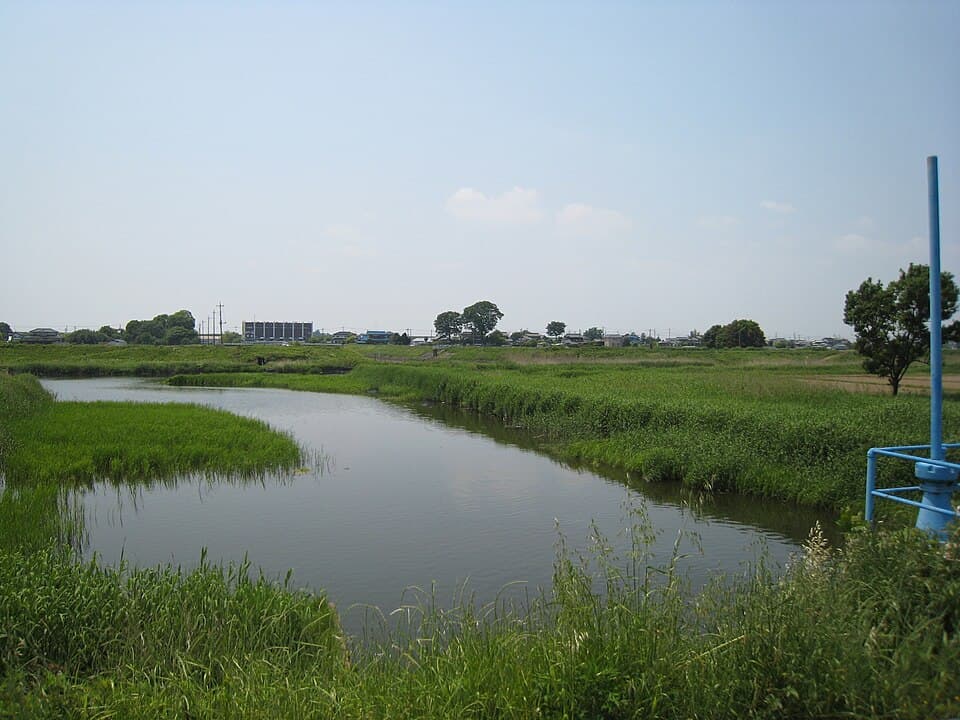
Gunma is a prefecture that uses every metre of its altitude. Lowland, mountain valley and highland each make something clearly different.
Local Specialties
About 90 percent of Japan's konjac tuber is grown here, mainly in the hills around Shimonita and Tomioka.
Konjac is a difficult crop: it takes three years to grow and is weak to both cold and disease. Well-drained volcanic-ash slopes suited it, and so did the fact that little else would grow there. The two together made the region a producer.
Tsumagoi village also ranks first in Japan for summer and autumn cabbage. It uses the cool of about 1,000 metres to ship in a season the lowlands cannot manage. Height, used as a tool for shifting the calendar.
Then Shimonita leeks, Joshu beef, and the sericulture that leads all the way to UNESCO.
Souvenirs
Yakimanju is a leavened bun with no filling, skewered, painted with miso sauce and grilled. It came out of being wheat country.
Konjac products, Shimonita leeks, and ties and scarves of Kiryu weave.
Sacred Sites | Shrines & Temples
Akagi Jinja is the head shrine of Japan's Akagi shrines (about 300 shrines). 28 shrines and temples worth knowing in Gunma.
Haruna Jinja(Takasaki)Shinto shrine / Important Cultural Property / Seimo / Blessings: good fortune, warding off misfortune, mountain worship
Behind the main hall stands a great rock called Mesugata-iwa, and that rock is the deity itself. The building is no more than a frame for worshipping it. The approach runs about 1.5 kilometres along the gorge.
Ichinomiya Nukisaki Jinja(Tomioka)Shinto shrine / Ichinomiya (first shrine) of Kozuke Province / Important Cultural Property / Seimo / Blessings: warding off misfortune, good harvests
After passing through the torii, you go down a stone stairway to reach the main hall. A descending approach, rare anywhere in Japan.
Myogi Jinja(Tomioka)Shinto shrine / Important Cultural Property / Seimo / Blessings: good fortune, mountain worship
It backs onto Mount Myogi, known for its strange rock forms. The shape of the mountain, counted among the three great scenic oddities of Japan, is itself the object of worship.
Ikaho Jinja(Shibukawa)Shinto shrine / Hokumo / Blessings: love and relationships, safe childbirth
It stands at the top of the stone-stair street, enshrining deities of hot springs and healing.
Shorinzan Darumaji(Takasaki)Buddhist temple / Seimo / Blessings: good fortune, victory
The temple where the Takasaki daruma began. Doll making, started as off-season work for farmers, became the local industry it is today.
Akagi Jinja(Maebashi)Shinto shrine / Chumo / Head shrine of Akagi shrines (about 300 shrines) / Blessings: mountain worship, good fortune
It worships Mount Akagi and Lake Ono. One of the shrines held to be the head of all Akagi shrines.
Miatarashi Iwa(Takasaki)Utaki (Ryukyuan sacred grove) / Seimo / Blessings: good fortune
A great rock into which the main hall appears to be set. The building is only a frame for worshipping the rock.
Ikaho Ishidan(Shibukawa)Shinto shrine / Hokumo / Blessings: long life
Hot water runs beneath the stone steps. The design was there to divide the water fairly.
Shirane Jinja(Kusatsu)Shinto shrine / Hokumo / Blessings: long life, mountain worship
The guardian of Kusatsu Onsen, said to enshrine Yamato Takeru.
Kudari Sando(Tomioka)Shinto shrine / Seimo / Blessings: warding off misfortune
After passing through the torii, you go down a stone stairway to the main hall. A form rare anywhere in Japan.
Hakoso-sha(Tomioka)Shinto shrine / Important Cultural Property / Seimo / Blessings: mountain worship
The former main shrine of Myogi Jinja. The hall survives as an Important Cultural Property.
Takasaki Byakue Daikannon(Takasaki)Buddhist temple / Registered Tangible Cultural Property / Seimo / Blessings: warding off misfortune
Forty-one point eight metres tall. It was a pioneer among Kannon figures built of reinforced concrete.
Mizusawadera(Shibukawa)Buddhist temple / Bando 33 Kannon Pilgrimage, Temple No. 16 / Hokumo / Blessings: warding off misfortune
The Mizusawa udon sold before its gate is counted among the three great udon of Japan.
Nukisaki Somon(Tomioka)Shinto shrine / Important Cultural Property / Seimo / Blessings: warding off misfortune
A group of halls rebuilt by Tokugawa Iemitsu, with brightly coloured carving still intact.
Suwa Jinja (Shimonita)(Shimonita)Shinto shrine / Seimo / Blessings: good harvests
The tutelary shrine of konjac country.
Haruna Jinja (Numata)(Numata)Shinto shrine / Hokumo / Blessings: warding off misfortune
A shrine guarding a castle town on a river terrace.
Kiryu Tenmangu(Kiryu)Shinto shrine / Important Cultural Property / Tomo / Blessings: study and exams, business prosperity
The tutelary shrine of Kiryu, a weaving city. Its carved hall is an Important Cultural Property.
Oigami(Numata)Shinto shrine / Hokumo / Blessings: long life
The name of the spring comes from a legend of a battle between the deity of Akagi and the deity of Nikko.
Sakisaki Jinja(Annaka)Shinto shrine / Seimo / Blessings: good harvests
It carries a tradition of being the original shrine of Nukisaki Jinja, and was also revered as a deity of sericulture.
Onuma(Maebashi)Shinto shrine / Chumo / Blessings: mountain worship
The shrine stands as if afloat on the caldera lake at the summit of Mount Akagi.
Daruma-ichi(Takasaki)Buddhist temple / Seimo / Blessings: good fortune
Hundreds of thousands of daruma fill the new year market. Off-season farm work became a local industry.
Mizusawa Kannon(Shibukawa)Buddhist temple / Bando 33 Kannon Pilgrimage, Temple No. 16 / Hokumo / Blessings: warding off misfortune
It has a hexagonal hall with a turning wheel that represents the six realms of rebirth. Mizusawa udon is sold at the gate.
Akagi Jinja(Maebashi)Shinto shrine / Chumo / Blessings: love and relationships
A vermilion bridge crosses to a small island in the caldera lake.
Kosenji(Kusatsu)Buddhist temple / Hokumo / Blessings: long life
It looks down on the Yubatake. One of the three great hot-spring Yakushi halls of Japan.
Ryukoji (Tomioka)(Tomioka)Buddhist temple / Seimo / Blessings: rebirth and renewal
It holds the graves of the young women who died working at the Tomioka Silk Mill.
Kashozan(Numata)Buddhist temple / Hokumo / Blessings: good fortune
It displays the largest tengu mask in Japan. Worshippers borrow a tengu mask to carry a wish.
Morinji(Tatebayashi)Buddhist temple / Tomo / Blessings: business prosperity
The temple of the Bunbuku Chagama legend. Tanuki figures line the approach.
Kumano Jinja (Usui)(Annaka)Shinto shrine / Seimo / Blessings: road safety
The prefectural border runs straight through the middle of the hall, and Gunma and Nagano each appoint their own priest.
Sightseeing
Tomioka Silk Mill is a UNESCO World Heritage Site. Breakdown: historic townscape 2, hot spring 5, nature / scenery 2, industrial heritage 4. 14 places to see in Gunma.
Tago-hi(Takasaki)other / Seimo / Special Historic Site / Historic Site / 711
The Tago stele, one of the three great ancient monuments of Japan. As part of the Kozuke Sanpi it is inscribed on the UNESCO Memory of the World register.
Tomioka Silk Mill(Tomioka)industrial heritage / Seimo / National Treasure / UNESCO World Heritage (Cultural) / UNESCO World Heritage / 1872
A government-run mechanised silk mill. The reeling plant and the cocoon warehouses are National Treasures.
Yubatake(Kusatsu)hot spring / Hokumo
The largest natural flow of hot spring water in Japan. Wooden troughs cool the water so the mineral flowers can be gathered.
Ikaho Stone Steps(Shibukawa)hot spring / Hokumo / 1576
Three hundred and sixty-five stone steps. A town that grew out of a design for dividing the hot water evenly.
Oze(Katashina)nature / scenery / Hokumo / Special Natural Monument / Ramsar Wetland / Natural Monument
The largest highland marsh on Honshu. You may not step off the boardwalk.
Fukiware Falls(Numata)nature / scenery / Hokumo / Natural Monument / Place of Scenic Beauty
The water is drawn down into a split in the bedrock. The Niagara of the East.
Minakami(Minakami)hot spring / Hokumo
The headwaters of the Tone river. A base for rafting and for climbing.
Manza Onsen(Tsumagoi)hot spring / Hokumo
At 1,800 metres. Its hydrogen sulphide content is among the highest in Japan.
Takasaki Daruma(Takasaki)industrial heritage / Seimo
Eight in ten daruma made in Japan come from here. The eyebrows are cranes, the moustache a tortoise.
Shima Onsen(Nakanojo)hot spring / Hokumo
The name says it cures forty thousand ailments. The original bathhouse at Sekizenkan is among the oldest hot-spring inn buildings in Japan.
Kiryu Textile(Kiryu)industrial heritage / Tomo / Preservation District for Traditional Buildings
Nishijin in the west, Kiryu in the east. Saw-tooth roofed mills still stand.
Usui Meganebashi(Annaka)industrial heritage / Seimo / Important Cultural Property / 1893
A brick arch bridge of four spans. You can walk the disused railway across it.
Shimonita Konnyaku(Shimonita)historic townscape / Seimo
A tuber that grows even on poor ground. Production accounts for 90 percent of the national total.
Oigami Morning Market(Numata)historic townscape / Hokumo
A spring with a legend of the deity of Akagi. A morning market is held here.
Traditional Crafts
Two crafts hold national designation: Kiryu weaving and Isesaki kasuri. Both are textiles.
The saying pairs them: Nishijin in the west, Kiryu in the east. Kiryu weaving is unusual in that seven separate techniques are designated together as one craft.
More: VILLAGE Journal vol.40 — Nishijin in the west, Kiryu in the east(リンク先は現在公開されていません)
More from This Prefecture
See all Gunma articles ← All 47 prefectures
Sources: Ministry of Agriculture, Forestry and Fisheries (Crop Statistics Survey), Gunma Prefecture, City of Tomioka, Kusatsu Town, Haruna Jinja, Agency for Cultural Affairs, Association for the Promotion of Traditional Craft Industries — Value Village editorial team