Hiroshima: Local Specialties, Souvenirs, Shrines & Temples, Sightseeing | Japan 47 Prefecture Guide
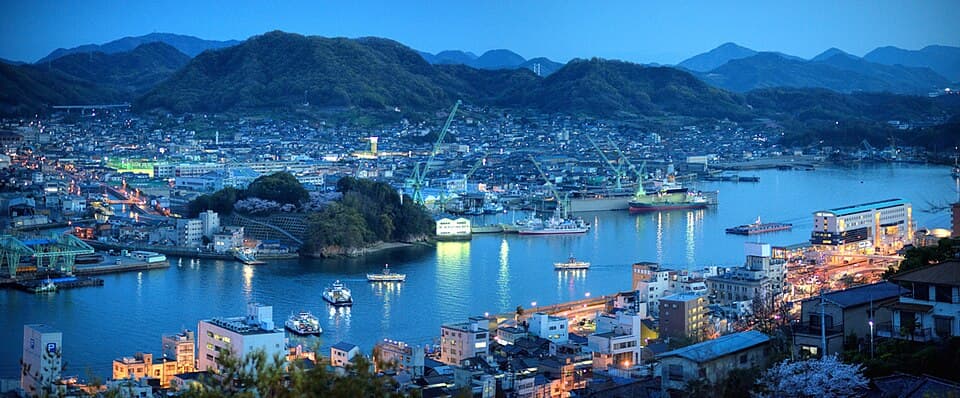
Hiroshima is one of the few prefectures with two World Heritage sites. The two could hardly be more different in character.
Local Specialties
Oysters: farmed production here is said to be about 60 percent of the national total.
The Inland Sea has all three: many islands and calm water, nutrients washing in from the rivers, and a large tidal range. Oyster farming at Hiroshima is said to have begun in the Muromachi period, so more than five centuries have accumulated behind it.
Lemons (first in Japan), Hiroshima greens, Mihara octopus, and the sake of Saijo. Saijo in Higashi-Hiroshima is counted with Fushimi and Nada as one of the three great brewing districts of Japan.
Souvenirs
Momiji manju is said to have been created in the Meiji era for an inn, named after the maple valley on Miyajima.
Oyster products, okonomiyaki sauce, and Kumano makeup brushes. Kumano makeup brushes are now a brand overseas as well.
Sacred Sites | Shrines & Temples
Itsukushima Jinja is the head shrine of Japan's Itsukushima shrines, including those to Benzaiten (about 500 shrines). Itsukushima Jinja and Otorii and Nobutai is a UNESCO World Heritage Site. 34 shrines and temples worth knowing in Hiroshima.
Itsukushima Jinja(Hatsukaichi)Shinto shrine / Ichinomiya (first shrine) of Aki Province / National Treasure / UNESCO World Heritage (Cultural) / Aki / Head shrine of Itsukushima shrines, including those to Benzaiten (about 500 shrines) / Blessings: safe voyages, business prosperity, the performing arts
This shrine stands out over the sea because the island itself is the deity. No earthworks may be cut into a god's island, so they built on the water. A restriction of belief became, exactly as it is, a World Heritage view. Taira no Kiyomori is said to have given it its present form.
Senjokaku(Hatsukaichi)Shinto shrine / Important Cultural Property / Aki / Blessings: victory
A hall Hideyoshi ordered built, left unfinished for over four hundred years. It has neither ceiling nor walls.
Myooin(Fukuyama)Buddhist temple / National Treasure / Bingo / Blessings: warding off misfortune
Both the main hall and the five-storey pagoda are National Treasures. The pagoda is held to be the fifth oldest in Japan.
Buttsuji(Mihara)Buddhist temple / Important Cultural Property / Bingo / Blessings: warding off misfortune
The head temple of the Buttsuji branch of Rinzai Zen. Also known for its autumn colour.
Mitakidera(Hiroshima)Buddhist temple / Important Cultural Property / Aki / Blessings: warding off misfortune
A mountain temple with three waterfalls. Its tahoto pagoda was moved here from Wakayama to console the victims of the atomic bomb.
Kibitsu Jinja (Bingo)(Fukuyama)Shinto shrine / Ichinomiya (first shrine) of Bingo Province / Important Cultural Property / Bingo / Blessings: warding off misfortune, good harvests
First shrine of Bingo Province. It enshrines the same Kibitsuhiko as the Kibitsu Jinja in Okayama, evidence of the old land of Kibi having been split into three.
Otorii(Hatsukaichi)Shinto shrine / Important Cultural Property / UNESCO World Heritage (Cultural) / Aki / Blessings: safe voyages
It is not sunk into the seabed: it stands by its own weight alone, made heavy with boxes of stones packed into its feet.
Nobutai(Hatsukaichi)Shinto shrine / Important Cultural Property / UNESCO World Heritage (Cultural) / Aki / Blessings: the performing arts
The only Noh stage still standing over water. Its floor is built to resonate.
Senjokaku(Hatsukaichi)Shinto shrine / Important Cultural Property / UNESCO World Heritage (Cultural) / Aki / Blessings: rebirth and renewal
Hideyoshi ordered it built, and his death left it unfinished. It has neither ceiling nor walls.
Misen(Hatsukaichi)Utaki (Ryukyuan sacred grove) / Natural Monument / UNESCO World Heritage (Cultural) / Aki / Blessings: mountain worship
Here stands the Kiezu-no-Reikado, where the fire Kukai lit has burned without going out for 1,200 years.
Daishoin(Hatsukaichi)Buddhist temple / Aki / Blessings: warding off misfortune
The oldest temple on Miyajima. Five hundred rakan and turning prayer wheels line the approach.
Hiroshima Gokoku Jinja(Hiroshima)Shinto shrine / Aki / Blessings: victory
It stands on the site of Hiroshima Castle, known for the Carp praying for victory.
Senkoji(Onomichi)Buddhist temple / Bingo / Blessings: love and relationships
It looks down on the Onomichi channel. The Path of Literature runs down the hill.
Jodoji(Onomichi)Buddhist temple / National Treasure / Bingo / Blessings: victory
Its main hall and tahoto pagoda are National Treasures. Ashikaga Takauji prayed here for victory.
Saikokuji(Onomichi)Buddhist temple / Important Cultural Property / Bingo / Blessings: long life
A giant straw sandal hangs at the gate. People pray here for strong legs.
Tenneiji(Onomichi)Buddhist temple / Important Cultural Property / Bingo / Blessings: warding off misfortune
It was originally a five-storey pagoda; the top two storeys were removed to make it three.
Kosanji(Onomichi)Buddhist temple / Registered Tangible Cultural Property / Bingo / Blessings: rebirth and renewal
Built in gratitude to a mother. Copies of the Yomeimon at Nikko and other buildings stand here, and it is called the Nikko of the west.
Nunakuma Jinja(Fukuyama)Shinto shrine / Important Cultural Property / Bingo / Blessings: safe voyages
Its Noh stage is a demountable one tied to Hideyoshi, and an Important Cultural Property. The tutelary shrine of a port where ships waited for the tide.
Kameyama Jinja(Kure)Shinto shrine / Aki / Blessings: safe voyages
The tutelary shrine of Kure, the faith of a naval port town.
Otoshi Jinja(Miyoshi)Shinto shrine / Bihoku / Blessings: good harvests
The tutelary shrine of a basin known for its sea of fog.
Hiroshima Toshogu(Hiroshima)Shinto shrine / Important Cultural Property / Aki / Blessings: victory
The atomic bomb destroyed its main hall, but the karamon gate and the wing corridors survived.
Reikado(Hatsukaichi)Buddhist temple / Aki / Blessings: love and relationships
The fire Kukai lit has not gone out in 1,200 years. It was the source of the flame in the Hiroshima Peace Memorial Park.
Daiganji(Hatsukaichi)Buddhist temple / Important Cultural Property / Aki / Blessings: the performing arts, wealth
One of the three great Benzaiten temples of Japan. It administered Itsukushima Jinja until the Meiji era.
Fudoin(Hiroshima)Buddhist temple / National Treasure / Aki / Blessings: warding off misfortune
Its golden hall is a National Treasure. When the atomic bomb destroyed the buildings of the city, this hall survived.
Tamonin(Hiroshima)Buddhist temple / Aki / Blessings: rebirth and renewal
The grave of Rai Sanyo's mother is here. A bell tower that survived the bomb still stands.
Tahoto(Hiroshima)Buddhist temple / Important Cultural Property / Aki / Blessings: rebirth and renewal
A pagoda moved here from Wakayama, brought to console the victims of the atomic bomb.
Kusado Inari Jinja(Fukuyama)Shinto shrine / Bingo / Blessings: business prosperity
A kakezukuri hall thrust out over the Ashida river. Its new year crowds are among the largest in the prefecture.
Abuto Kannon(Fukuyama)Buddhist temple / Important Cultural Property / Bingo / Blessings: safe childbirth
A vermilion Kannon hall thrust out from a cliff. It draws prayers for safe birth and for raising children.
Kusariyama(Onomichi)Buddhist temple / Bingo / Blessings: mountain worship
A place of practice where you climb a great rock by chain.
Jikoji(Onomichi)Buddhist temple / National Treasure / Bingo / Blessings: safe childbirth
You pass through a stone gate. It holds a National Treasure painting of Fugen Enmei on silk.
Fumeikaku(Takehara)Buddhist temple / Bingo / Blessings: warding off misfortune
A kakezukuri stage modelled on Kiyomizudera, looking down on the town.
Kiyomizudera (Miyoshi)(Miyoshi)Buddhist temple / Bihoku / Blessings: warding off misfortune
A site on the Bingo 33 Kannon pilgrimage.
Kumano Jinja (Shobara)(Shobara)Shinto shrine / Natural Monument / Bihoku / Blessings: long life
Cedars a thousand years old stand in ranks.
Mitarai(Kure)Utaki (Ryukyuan sacred grove) / Important Preservation District for Groups of Traditional Buildings / Aki / Blessings: safe voyages
A port where ships waited for the tide. Its Tenmangu has long guarded safety at sea.
Sightseeing
Genbaku Dome and Miyajima is a UNESCO World Heritage Site. Breakdown: historic townscape 3, nature / scenery 4, industrial heritage 2. 13 places to see in Hiroshima.
Genbaku Dome(Hiroshima)other / Aki / UNESCO World Heritage (Cultural) / UNESCO World Heritage / 1915
A World Heritage site of the negative kind. It keeps the memory of 6 August 1945 exactly as it is.
Shinroku(Hatsukaichi)nature / scenery / Aki
The deer of the island are held to be messengers of the gods, and hunting them has long been forbidden.
Taichoro(Fukuyama)other / Bingo / Historic Site / 1690
The view a Korean envoy praised as the finest scenery east of Japan.
Peace Memorial Museum(Hiroshima)museum / theatre / Aki / Important Cultural Property / 1955
Designed by Tange Kenzo. It receives 1.7 million visitors a year.
Miyajima(Hatsukaichi)nature / scenery / Aki / UNESCO World Heritage (Cultural) / Special Place of Scenic Beauty / Special Historic Site / UNESCO World Heritage / Historic Site
One of the three great views of Japan. The island itself is the deity, so the halls were built without cutting into the ground.
Onomichi(Onomichi)historic townscape / Bingo
Twenty-five temples and narrow slopes. The setting of Ozu Yasujiro's Tokyo Story.
Shimanami Kaido(Onomichi and nearby)industrial heritage / Bingo / 1999
Six islands joined by nine bridges. You can cross it by bicycle.
Tomonoura(Fukuyama)historic townscape / Bingo / Preservation District for Traditional Buildings
A port where ships waited for the tide. The stone lantern and the stepped quay survive as they were in the Edo period.
Sandankyo(Akiota)nature / scenery / Aki / Special Place of Scenic Beauty
Sixteen kilometres of gorge. You cross the Kurobuchi pool by ferry.
Taishakukyo(Shobara and nearby)nature / scenery / Bihoku / Place of Scenic Beauty
The limestone natural bridge Onbashi is one of the three great natural bridges of Japan.
Mazda Museum(Hiroshima)industrial heritage / Aki / 1994
You can watch the assembly line, and see a real rotary engine.
Takehara(Takehara)historic townscape / Bingo / Preservation District for Traditional Buildings
It grew rich on salt and sake. The little Kyoto of Aki.
Yamato Museum(Kure)museum / theatre / Aki / 2005
A tenth-scale battleship Yamato. This was once the greatest naval port in Japan.
Traditional Crafts
Five crafts hold national designation, among them Kumano brushes, Hiroshima Buddhist altars, Fukuyama koto, and Bingo kasuri.
Kumano town in Aki district is said to account for most of the brushes made in Japan. It began with men going out to work in the off-season from farming. Today it is the district that global cosmetics brands place their orders with.
More: VILLAGE Journal vol.16 — From seasonal labour to a world centre(リンク先は現在公開されていません)
More from This Prefecture
See all Hiroshima articles ← All 47 prefectures
Sources: Hiroshima Prefecture, City of Hiroshima, City of Kure, Kumano Town, City of Higashi-Hiroshima, Ministry of Agriculture, Forestry and Fisheries, Agency for Cultural Affairs, Association for the Promotion of Traditional Craft Industries — Value Village editorial team