Ishikawa: Local Specialties, Souvenirs, Shrines & Temples, Sightseeing | Japan 47 Prefecture Guide
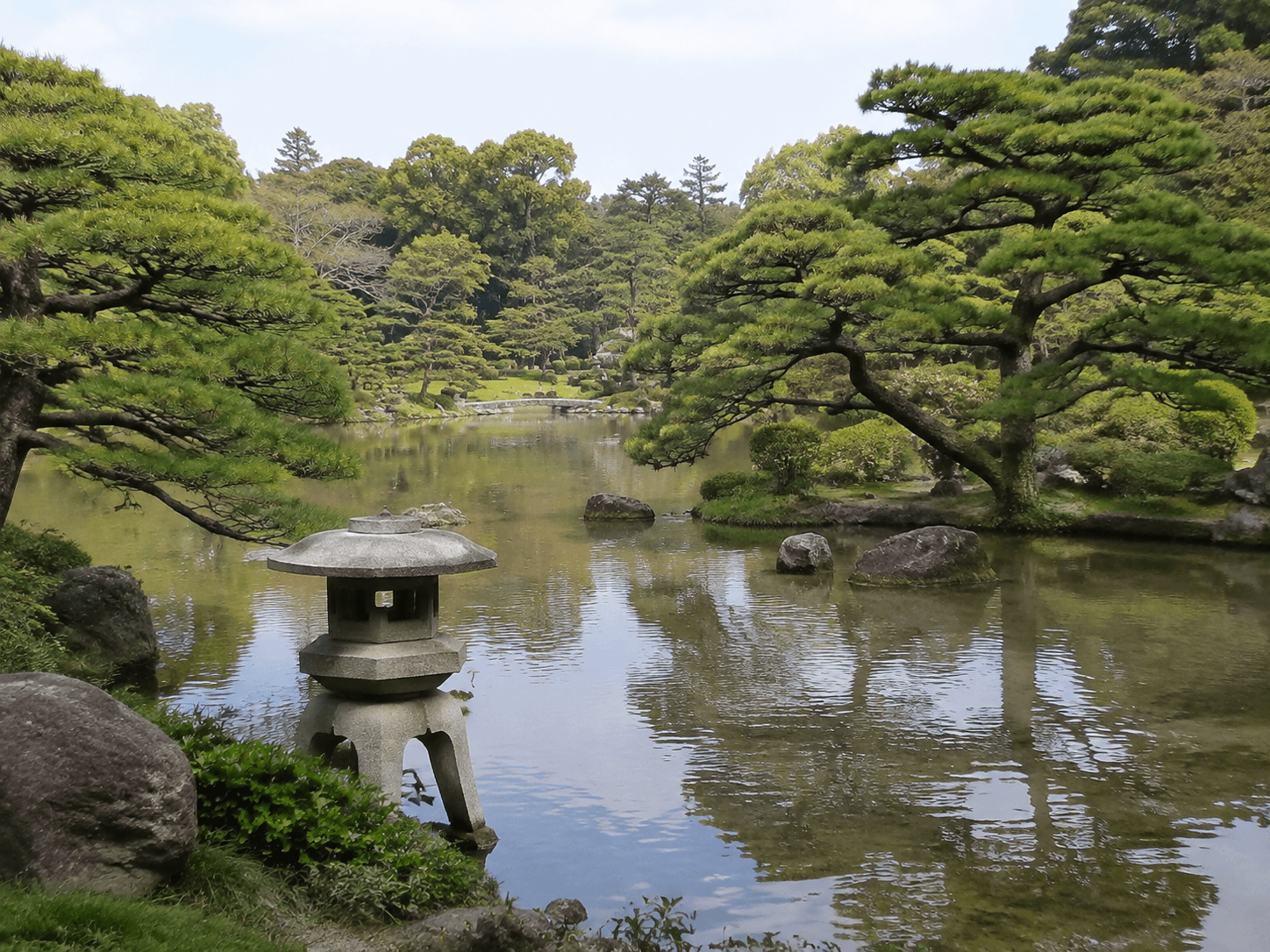
Ishikawa's specialities come down, in the end, to the fact that the domain paid for them. Kaga was an outside domain, yet among the wealthiest in the country, and it turned that money towards crafts and culture.
Local Specialties
Kanazawa leaf accounts for more than 98 percent of the gold leaf made in Japan. One gram of gold is beaten out to about the area of a tatami mat. At a fraction of a hundredth of a millimetre thick, a breath will send it flying.
One reason it concentrated here is the climate. Beating leaf goes badly in dry air and better in humidity. The damp winters of the Japan Sea coast were themselves a condition of the process.
Then the seafood of Noto, the Kaga vegetables such as Kaga lotus root and Gensuke daikon, and one more thing: household spending on confectionery here is among the highest in Japan, because tea ceremony is part of ordinary life.
Souvenirs
Wagashi lead. Rakugan such as Chosei-den, and fukuume. They keep, they are light, and they are beautiful. Every condition for a souvenir.
Then small items in gold leaf, small Kutani dishes, Wajima lacquer chopsticks. If you want a craft as a souvenir, this prefecture offers the widest choice.
Sacred Sites | Shrines & Temples
Shirayamahime Jinja is the head shrine of Japan's Hakusan shrines (about 3,000 shrines). 30 shrines and temples worth knowing in Ishikawa.
Shirayamahime Jinja(Hakusan)Shinto shrine / Ichinomiya (first shrine) of Kaga Province / Important Cultural Property / Kaga / Head shrine of Hakusan shrines (about 3,000 shrines) / Blessings: love and relationships, mountain worship, good harvests
Hakusan stands with Fuji and Tateyama as one of the three sacred mountains of Japan. What this shrine venerates is water. Snow that falls on Hakusan becomes the Tedori and Kuzuryu rivers and waters the plain. The rice, the sake and the yuzen-nagashi rinsing all depend on it. The inner shrine sits at the 2,702-metre summit.
Keta Taisha(Hakui)Shinto shrine / Ichinomiya (first shrine) of Noto Province / Important Cultural Property / Natural Monument / Noto / Blessings: love and relationships
The Irazu-no-Mori in its grounds is a Natural Monument, and the public is still forbidden to enter.
Sojiji Soin(Wajima)Buddhist temple / Noto / Blessings: warding off misfortune
An old Soto Zen temple. It was once the head temple; after a fire the head moved to Yokohama, and this site remained as the founding temple.
Oyama Jinja(Kanazawa)Shinto shrine / Important Cultural Property / Kanazawa / Blessings: victory, good fortune
It enshrines Maeda Toshiie. The gate, set with stained glass, is an unusual design mixing Japanese, Chinese and Western elements.
Natadera(Komatsu)Buddhist temple / Important Cultural Property / Kaga / Blessings: rebirth and renewal, warding off misfortune
Halls stand among strange rock formations. Here Basho wrote in the Narrow Road that the autumn wind was whiter than the stones of Ishiyama.
Ataka Sumiyoshi Jinja(Komatsu)Shinto shrine / Kaga / Blessings: warding off misfortune, victory
It stands on the site of the Ataka barrier, known as the setting of the Kanjincho tale of Yoshitsune and Benkei, and draws prayers for getting through a hard test.
Shirayama Okumiya(Hakusan)Shinto shrine / Kaga / Blessings: mountain worship
At the 2,702-metre summit of Hakusan, one of the three sacred mountains of Japan.
Omote Sando(Hakusan)Shinto shrine / Kaga / Blessings: love and relationships
A stone stairway through cedars. The sound of the Tedori river never stops.
Sugawara Jinja(Kanazawa)Shinto shrine / Kanazawa / Blessings: the performing arts, study and exams
The shrine the geisha of the teahouse district worshipped at.
Myoryuji(Kanazawa)Buddhist temple / Important Cultural Property / Kanazawa / Blessings: warding off misfortune
Pitfalls, hidden staircases, escape routes. The devices the Kaga domain built in against emergency are still there.
Oyama Shinmon(Kanazawa)Shinto shrine / Important Cultural Property / Kanazawa / Blessings: good fortune
A three-storey gate mixing Japanese, Chinese and Western styles. The stained glass at the top is said to have served as a lighthouse.
Utatsuyama(Kanazawa)Shinto shrine / Kanazawa / Blessings: good fortune
A hill looking down on Kanazawa. Utasu Jinja enshrines the ancestral spirits of the Kaga domain.
Kigan Yusenkyo(Komatsu)Buddhist temple / Place of Scenic Beauty / Kaga / Blessings: rebirth and renewal
The caves are said to represent paradise and hell. Passing through the rock is a rebirth.
Juzo Jinja(Wajima)Shinto shrine / Noto / Blessings: business prosperity, good catches
The shrine behind a morning market said to have run for over a thousand years.
Sojiji Soin Garan(Wajima)Buddhist temple / Noto / Blessings: warding off misfortune
Damaged in the Noto Peninsula earthquake; restoration continues.
Irazu no Mori(Hakui)Utaki (Ryukyuan sacred grove) / Natural Monument / Noto / Blessings: mountain worship
A Natural Monument. The public is still forbidden to enter.
Ataka no Seki(Komatsu)Shinto shrine / Kaga / Blessings: victory
The setting of the Kanjincho tale, and the source of a belief in getting through hard tests.
Iouji(Kaga)Buddhist temple / Kaga / Blessings: long life
The guardian temple of Yamanaka Onsen, where Basho stayed a long while.
Kanazawa Jinja(Kanazawa)Shinto shrine / Kanazawa / Blessings: study and exams, wealth
Next to Kenrokuen. The spring called Kinjo Reizawa is said to be the origin of the name Kanazawa, the golden marsh.
Utasu Jinja(Kanazawa)Shinto shrine / Kanazawa / Blessings: good fortune
Behind the Higashi Chaya district. It enshrined the ancestral spirits of the Kaga domain.
Ishiura Jinja(Kanazawa)Shinto shrine / Kanazawa / Blessings: love and relationships
Held to be the oldest shrine in Kanazawa. A hundred and one vermilion torii stand in a row.
Myosenji (Anamizu)(Anamizu)Buddhist temple / Important Cultural Property / Noto / Blessings: warding off misfortune
Its stone five-storey pagoda is an Important Cultural Property.
Suzu Jinja(Suzu)Shinto shrine / Important Cultural Property / Noto / Blessings: safe voyages
At the tip of the Noto peninsula. It holds a flute said to have been dedicated by Yoshitsune.
Gozengamine(Hakusan)Shinto shrine / Kaga / Blessings: mountain worship
At 2,702 metres. Climbers come to watch the sun rise.
Jisshoin(Kaga)Buddhist temple / Kaga / Blessings: rebirth and renewal
The funerary temple of the Maeda, lords of the Daishoji domain. A temple of bush clover.
Otokonushi Jinja(Nanao)Shinto shrine / Noto / Blessings: warding off misfortune
The great floats of the Seihaku festival set out from here. UNESCO Intangible Cultural Heritage.
Ozaki Jinja (Kanazawa)(Kanazawa)Shinto shrine / Important Cultural Property / Kanazawa / Blessings: victory
Called the Nikko of the Hokuriku coast. A Toshogu built inside Kanazawa Castle.
Myojoji(Hakui)Buddhist temple / Important Cultural Property / Noto / Blessings: warding off misfortune
Ten buildings including the five-storey pagoda are Important Cultural Properties. One of the finest Nichiren precincts in the Hokuriku region.
Kinkengu(Hakusan)Shinto shrine / Kaga / Blessings: wealth
Counted among the three great shrines of wealth in Japan.
Ataka Sumiyoshi Jinja(Komatsu)Shinto shrine / Kaga / Blessings: victory
The setting of the Kanjincho tale, known as a guardian for getting through hard tests.
Sightseeing
Breakdown: castle 1, historic townscape 4, hot spring 1, nature / scenery 3. 14 places to see in Ishikawa.
Chirihama(Hakui)nature / scenery / Noto
A beach you can drive along. A place where the sea and belief stand close together.
Yukizuri(Kanazawa)garden / park / Kanazawa / Place of Scenic Beauty
Practical work, to keep the snow from breaking the branches. It became a sight of winter.
Noto Kiriko(Wajima and nearby)festival / event / Noto
Huge votive lanterns move through the town at night. Recognised as Japan Heritage.
Kenrokuen(Kanazawa)garden / park / Kanazawa / Special Place of Scenic Beauty / 1676
One of the three great gardens of Japan, known for its winter snow ropes and the Kotoji lantern.
Higashi Chaya(Kanazawa)historic townscape / Kanazawa / Preservation District for Traditional Buildings
Latticed teahouse buildings stand in a row. Geisha still practise here.
21st Century Museum(Kanazawa)museum / theatre / Kanazawa / 2004
A circular building with no front. Known for the Swimming Pool.
Kanazawa-jo(Kanazawa)castle / Kanazawa / Historic Site / 1583
Stone walls in the Ano-shu style. The Hishi turret and the Gojikken Nagaya have been rebuilt.
Chirihama(Hakui)nature / scenery / Noto
You can drive along the water's edge. The sand grains are fine enough to pack hard, which is what makes it possible.
Wajima Morning Market(Wajima)historic townscape / Noto
Said to have run for a thousand years. Note: damaged in the 2024 earthquake; reopening is under way.
Shiroyone Senmaida(Wajima)nature / scenery / Noto / Place of Scenic Beauty
One thousand and four small paddies on a slope running down to the sea. Lit up in winter.
Kaga Onsen(Kaga)hot spring / Kaga
The Kaga hot spring district. Basho called Yamanaka one of the three finest springs of Japan.
Kutani Ware(Kaga)industrial heritage / Kaga / 1655
Overglaze in five colours. Production died out once and was revived as saiko-kutani.
Nagamachi(Kanazawa)historic townscape / Kanazawa
Straw mats are hung on the earthen walls for winter. Water channels run through the lanes.
Omicho Market(Kanazawa)historic townscape / Kanazawa / 1721
The kitchen of Kanazawa. Kano crab and sweet shrimp.
Traditional Crafts
The prefecture holds many national designations: Wajima lacquerware, Kutani ware, Kaga yuzen, Yamanaka lacquerware, Kanazawa gold leaf, Ushikubi pongee and more.
Wajima lacquerware mixes powdered local diatomaceous earth into the ground coat, so that a piece can be repaired when it breaks: that is the assumption it is built on. Yamanaka lacquerware is also here, which means the prefecture holds two of the three great lacquer traditions of Japan.
More: VILLAGE Journal vol.31 — Ninety-eight percent of the gold leaf(リンク先は現在公開されていません)
More from This Prefecture
See all Ishikawa articles ← All 47 prefectures
Sources: Ishikawa Prefecture, City of Kanazawa, City of Wajima, City of Kaga, Shirayamahime Jinja, Ministry of Internal Affairs and Communications (Family Income and Expenditure Survey), Association for the Promotion of Traditional Craft Industries — Value Village editorial team