Iwate: Local Specialties, Souvenirs, Shrines & Temples, Sightseeing | Japan 47 Prefecture Guide
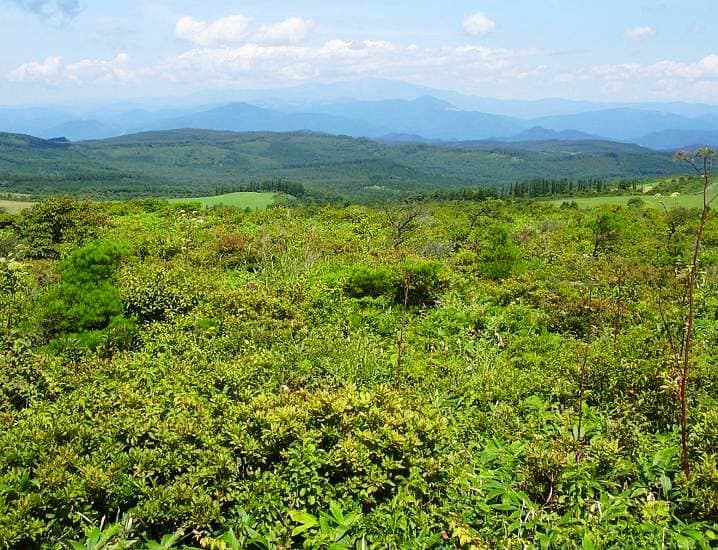
Iwate is the largest prefecture on Honshu. The sea and the mountains are far apart, and the coast and the interior yield entirely different things.
Local Specialties
The Sanriku coast sits on the front where a cold current meets a warm one. Plankton is abundant, and the coast became a producer of wakame, abalone, sea urchin and oysters. Farmed wakame in particular ranks among the highest in Japan.
The rias coast of Sanriku has deep inlets, so the water is calm and well suited to aquaculture. The same shape makes a tsunami worse. The conditions of a place carry its blessing and its danger together.
Inland, Iwate grows more gentian than any other prefecture, and is known for millets: barnyard, foxtail and proso.
Souvenirs
Nanbu senbei is shared across the territory of the old Nanbu domain, which covered northern Iwate and southern Aomori. It is one case where culture divides along the old domain border rather than the modern prefectural one.
Then there are the yolk-bean sweets, of which Kamome no Tamago is the best known, and wanko soba. Dried noodles travel well.
Sacred Sites | Shrines & Temples
Chusonji and Motsuji and Kanjizaioin is a UNESCO World Heritage Site. 30 shrines and temples worth knowing in Iwate.
Chusonji(Hiraizumi)Buddhist temple / National Treasure / UNESCO World Heritage (Cultural) / Southern area / Blessings: rebirth and renewal, long life
The Konjikido is a National Treasure, gilded inside and out. The bodies of four generations of the Northern Fujiwara still lie there. Late Heian Mutsu produced gold, and that wealth built a cultural world apart from the capital.
Motsuji(Hiraizumi)Buddhist temple / Special Historic Site / Special Place of Scenic Beauty / UNESCO World Heritage (Cultural) / Southern area / Blessings: rebirth and renewal
A Pure Land garden laid out around a pond, an attempt to build paradise on the ground. What earned it World Heritage status is that the thought is in the arrangement of the buildings and the garden itself.
Morioka Hachimangu(Morioka)Shinto shrine / Central area / Blessings: victory, good harvests
The Chagu Chagu Umakko is an Important Intangible Folk Cultural Property. Nanbu's history as horse country survives in the rite.
Mitsuishi Jinja(Morioka)Shinto shrine / Central area / Blessings: warding off misfortune
The giant rocks that are its deity are said to be the origin of the name Iwate, "hand of rock". An ogre is said to have pressed his handprint here, swearing never to return.
Takkoku no Iwaya(Hiraizumi)Buddhist temple / Historic Site / Southern area / Blessings: victory, warding off misfortune
A hall built into a hollow in the cliff face, propped on a stage-like frame. Said to have been founded by Sakanoue no Tamuramaro.
Komagata Jinja(Oshu)Shinto shrine / Ichinomiya (first shrine) of Rikuchu Province / Southern area / Blessings: victory, good harvests
The first shrine of Rikuchu Province. It grew from mountain worship of Mount Komagatake and is tied to the faith of horse country.
Tono-go Hachimangu(Tono)Shinto shrine / Southern area / Blessings: victory, good harvests
Yabusame horseback archery is dedicated here. The tutelary shrine of the land that still holds the world of The Legends of Tono.
Morioka Yabusame(Morioka)Shinto shrine / Central area / Blessings: victory
Nanbu's history as horse country survives in the rite.
Kanjizaioin(Hiraizumi)Buddhist temple / Special Historic Site / UNESCO World Heritage (Cultural) / Southern area / Blessings: rebirth and renewal
The remains of a temple built by the wife of Fujiwara no Motohira. Its Pure Land garden has been restored.
Muryokoin(Hiraizumi)Buddhist temple / Special Historic Site / UNESCO World Heritage (Cultural) / Southern area / Blessings: rebirth and renewal
Built in imitation of the Byodoin at Uji. It was designed so that the setting sun in the west became part of the whole.
Kinkeisan(Hiraizumi)Utaki (Ryukyuan sacred grove) / Historic Site / UNESCO World Heritage (Cultural) / Southern area / Blessings: mountain worship
The hill that set the axis for the town plan of Hiraizumi. A component of the World Heritage site.
Sakurayama Jinja(Morioka)Shinto shrine / Central area / Blessings: victory, good fortune
It stands on the site of Morioka Castle and enshrines the Nanbu clan. The Eboshi rock in its grounds is itself an object of worship.
Hachimantai(Hachimantai)Shinto shrine / Central area / Blessings: mountain worship
A highland scattered with small shrines to the hot springs and the mountains.
Kokusekiji(Oshu)Buddhist temple / Important Cultural Property / Southern area / Blessings: warding off misfortune
Known for the Somin Festival at the lunar new year, a wild all-night contest between naked men.
Motsuji Ennen(Hiraizumi)Buddhist temple / Southern area / Blessings: rebirth and renewal, the performing arts
An Important Intangible Folk Cultural Property. It preserves the form of Heian-period performance.
Hayachine Jinja(Hanamaki)Shinto shrine / Central area / Blessings: mountain worship
It worships Mount Hayachine. Hayachine Kagura is UNESCO Intangible Cultural Heritage.
Oni no Tegata(Morioka)Shinto shrine / Central area / Blessings: warding off misfortune
The handprint an ogre is said to have left gave the prefecture its name. This is where the name Iwate comes from.
Jokenji(Tono)Buddhist temple / Southern area / Blessings: warding off misfortune
Known for Kappa-buchi, the pool behind the grounds. Kappa figures stand where guardian lions usually would.
Hoonji(Morioka)Buddhist temple / Central area / Blessings: warding off misfortune
Four hundred and ninety-nine rakan figures line the Five Hundred Rakan Hall.
Kumano Jinja(Kitakami)Shinto shrine / Southern area / Blessings: rebirth and renewal
Known for the dedication of Onikenbai sword dancing, an Important Intangible Folk Cultural Property.
Konjikido(Hiraizumi)Buddhist temple / National Treasure / UNESCO World Heritage (Cultural) / Southern area / Blessings: rebirth and renewal
The whole hall is covered in gold leaf. The bodies of four generations of the Northern Fujiwara are interred here.
Yakehashiri(Hachimantai)Utaki (Ryukyuan sacred grove) / Special Natural Monument / Central area / Blessings: mountain worship
A black lava field left by an eruption of Mount Iwate. It was long regarded with dread.
Unedorisama(Tono)Shinto shrine / Southern area / Blessings: love and relationships
If you can tie the red cloth using only your left hand, your wish for love is said to come true.
Jodogahama(Miyako)Utaki (Ryukyuan sacred grove) / Place of Scenic Beauty / Central area / Blessings: rebirth and renewal
The name comes from a monk who said it was "like the Pure Land itself".
Tendaiji(Ninohe)Buddhist temple / Important Cultural Property / Central area / Blessings: warding off misfortune
Setouchi Jakucho served as its abbot. One of the oldest temples in northern Japan.
Ozaki Jinja(Kamaishi)Shinto shrine / Central area / Blessings: good catches, safe voyages
A shrine that guards the Sanriku fisheries. It was rebuilt after the tsunami.
Nobutai (Chusonji)(Hiraizumi)Shinto shrine / Important Cultural Property / Southern area / Blessings: the performing arts
The guardian shrine of Chusonji. Its thatched Noh stage is an Important Cultural Property.
Iwatesan(Hachimantai)Utaki (Ryukyuan sacred grove) / Central area / Blessings: mountain worship
Called Nanbu Kata-Fuji, the one-sided Fuji. The mountain behind the prefecture's name.
Tachibana Bishamondo(Kitakami)Buddhist temple / Important Cultural Property / Southern area / Blessings: victory
It preserves one of the largest Tobatsu Bishamonten figures in Japan.
Kyojoji(Morioka)Buddhist temple / Central area / Blessings: rebirth and renewal
A temple with long ties to the Nanbu clan.
Sightseeing
Breakdown: nature / scenery 6, industrial heritage 2, festival / event 2. 14 places to see in Iwate.
Esashi Fujiwara(Oshu)other / Southern area
A site with reconstructed Heian architecture, where the world of the Northern Fujiwara can be walked through.
Genbikei(Ichinoseki)nature / scenery / Southern area / Place of Scenic Beauty
A place of worship along the gorge, known for the "flying dango".
Ryusendo(Iwaizumi)nature / scenery / Central area / Natural Monument
One of the three great limestone caves of Japan. Its underground lake was long an object of dread.
Genbikei(Ichinoseki)nature / scenery / Southern area / Place of Scenic Beauty / Natural Monument
Dango are sent across from the far bank in a basket: the "flying dango".
Geibikei(Ichinoseki)nature / scenery / Southern area / Place of Scenic Beauty
Limestone walls a hundred metres high. Boatmen pole their way upstream.
Sansa Odori(Morioka)festival / event / Central area
It holds the world record for the number of Japanese drums played at once.
Chagu Chagu Umakko(Takizawa)festival / event / Central area / Important Intangible Folk Cultural Property
Horses in full harness walk to the sound of bells. A festival of Nanbu horse country.
Jodogahama(Miyako)nature / scenery / Central area / Place of Scenic Beauty
White rhyolite and pines. A monk called it "like the Pure Land itself".
Koiwai Farm(Shizukuishi)industrial heritage / Central area / Important Cultural Property / 1891
A private farm at the foot of Mount Iwate. Twenty-one buildings, the cowsheds among them, are Important Cultural Properties.
Hachimantai(Hachimantai)nature / scenery / Central area
Walls of snow appear when the road is cleared in spring. It runs at 1,600 metres.
Tono Densho-en(Tono)museum / theatre / Southern area
Magariya farmhouses were moved here to keep the folk tales alive. The Okaiko-do hall enshrines a thousand Oshirasama figures.
Nambu Ironware(Oshu)industrial heritage / Southern area
Iron is poured into sand moulds. The water is said to taste sweeter for it, and the ware now sells well abroad.
Tenshochi(Kitakami)garden / park / Southern area / 1921
Ten thousand cherry trees along the Kitakami river, one of the finest avenues in northern Japan.
Ryusen Shindo(Iwaizumi)museum / theatre / Central area
A limestone cave turned into a museum in its own right.
Traditional Crafts
Four crafts hold national designation: Nanbu ironware, Iwayado chests, Hidehira lacquerware and Joboji lacquerware.
Joboji in Ninohe is the main place where Japanese lacquer is still tapped, and it supplies the repair of National Treasure and Important Cultural Property buildings.
More: VILLAGE Journal vol.44 — The kettle that crossed the sea(リンク先は現在公開されていません)
More from This Prefecture
See all Iwate articles ← All 47 prefectures
Sources: Ministry of Agriculture, Forestry and Fisheries (Crop Statistics Survey; Fisheries and Aquaculture Production Statistics), Iwate Prefecture, Agency for Cultural Affairs, Chusonji, Association for the Promotion of Traditional Craft Industries — Value Village editorial team