Miyagi: Local Specialties, Souvenirs, Shrines & Temples, Sightseeing | Japan 47 Prefecture Guide
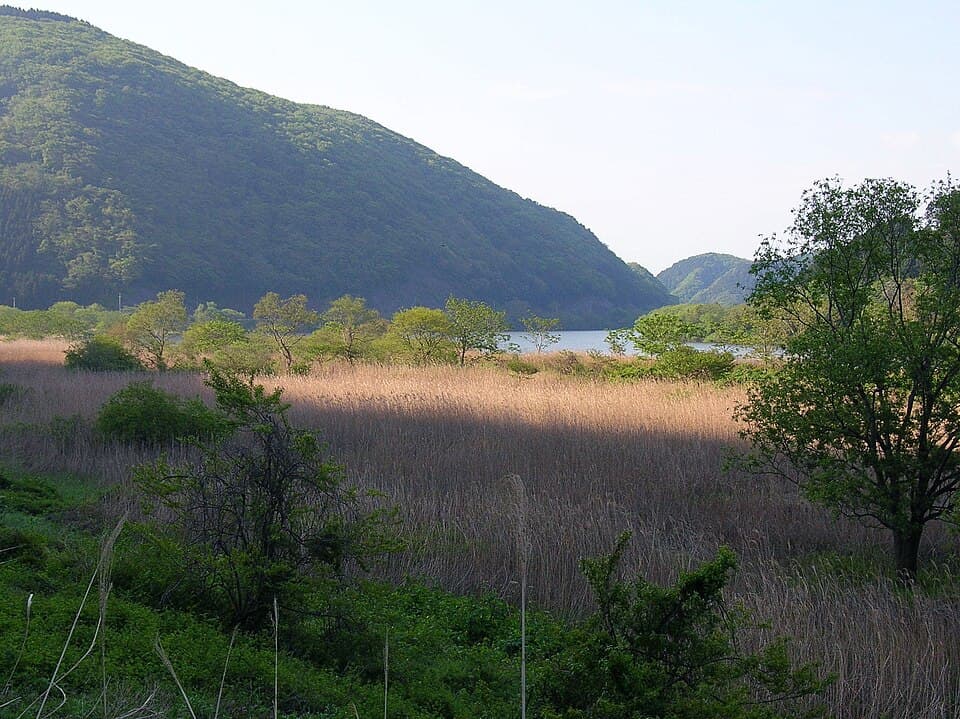
Even within northern Japan, Miyagi has a strong character as a place where things gather. Having a large city in Sendai shows in the food and in the crafts alike.
Local Specialties
Sasa-kamaboko began as a way of keeping the flounder that came ashore in quantity at Ishinomaki and Shiogama. Ground to a paste and grilled, it keeps. A preserved food that became a speciality.
Oyster farming is also important. Nutrients carried down from the mountains by the Kitakami river flow into Shizugawa Bay, and that is the condition the farms depend on.
At Shiretoko in Hokkaido, drift ice carried the nutrients. In Miyagi the rivers do it. Behind a good fishing ground there is usually a mountain.
Souvenirs
Sendai beef tongue is a relatively new speciality, born in postwar Sendai. A cut that was cheap at the time was seasoned, grilled, and made into a local dish.
Zunda is boiled green soybean ground to a paste and sweetened. It is no longer only for rice cakes; it now turns up in shakes and confectionery.
Sacred Sites | Shrines & Temples
Shiogama Jinja is the head shrine of Japan's Shiogama shrines (about 100 shrines). Osaki Hachimangu and Zuiganji holds National Treasures. 30 shrines and temples worth knowing in Miyagi.
Shiogama Jinja(Shiogama)Shinto shrine / Ichinomiya (first shrine) of Mutsu Province / Important Cultural Property / Sanriku Coast / Head shrine of Shiogama shrines (about 100 shrines) / Blessings: safe childbirth, safe voyages, good catches
Its deity is said to have taught people how to make salt. Every July a rite is still held to draw salt from seawater by the ancient method. Salt is the precondition for preserved food, so faith and the origin of the local diet sit in the same place.
Osaki Hachimangu(Sendai)Shinto shrine / National Treasure / Sendai / Blessings: victory, warding off misfortune
The hall Date Masamune had built is a National Treasure, and is held to be the oldest surviving building in the black-lacquer-and-colour Momoyama style.
Zuiganji(Matsushima)Buddhist temple / National Treasure / Sanriku Coast / Blessings: warding off misfortune
The main hall and the kitchen quarters are National Treasures. The funerary temple of the Date family, always spoken of together with the scenery of Matsushima.
Shiwahiko Jinja(Shiogama)Shinto shrine / Myojin Taisha (top rank in the ancient register) / Sanriku Coast / Blessings: good harvests, business prosperity
It stands in the same grounds as Shiogama Jinja, its vermilion and black lacquered halls side by side.
Mutsu Kokubunji Yakushido(Sendai)Buddhist temple / Important Cultural Property / Historic Site / Sendai / Blessings: warding off misfortune, long life
The Yakushido rebuilt by Date Masamune still stands, carrying the line of the provincial temples into northern Japan.
Godaido(Matsushima)Buddhist temple / Important Cultural Property / Sanriku Coast / Blessings: warding off misfortune
It stands on a small island jutting into Matsushima Bay. The bridge across is a sukashi-bashi, with gaps between the planks so that the sea shows through, built to make you cross with your mind on the crossing.
Moshioyaki Shinji(Shiogama)Shinto shrine / Sanriku Coast / Blessings: good catches
Every July, salt is drawn from seawater by the ancient method. A rite where faith and the origin of food overlap.
Sendai Toshogu(Sendai)Shinto shrine / Important Cultural Property / Sendai / Blessings: victory, good fortune
A Toshogu built by Date Tadamune. The main hall and karamon gate are Important Cultural Properties.
Rinnoji (Sendai)(Sendai)Buddhist temple / Sendai / Blessings: warding off misfortune
One of the funerary temples of the Date family, known for its three-storey pagoda and its garden.
Zuihoden(Sendai)Buddhist temple / Sendai / Blessings: victory
The mausoleum of Date Masamune. Its Momoyama-style colouring has been restored.
Entsuin(Matsushima)Buddhist temple / Important Cultural Property / Sanriku Coast / Blessings: love and relationships
The mausoleum of Mitsumune, grandson of Date Masamune. A shrine cabinet painted with roses survives, evidence of European influence.
Shiogama Monzen(Shiogama)Shinto shrine / Sanriku Coast / Blessings: business prosperity
A culture of sake and sushi grew up in the town before the gate of Shiogama Jinja.
Akiu Otaki Fudoson(Sendai)Buddhist temple / Sendai / Blessings: warding off misfortune
It stands beside Akiu Otaki, one of the three great waterfalls of Japan.
Onsen Jinja(Osaki)Shinto shrine / Northern area / Blessings: long life
The shrine that records the first welling up of the Naruko hot springs. It sits at the centre of kokeshi doll country.
Kanahebisui Jinja(Iwanuma)Shinto shrine / Southern area / Blessings: wealth, business prosperity
It enshrines a deity in the form of a snake and draws prayers for wealth. Known for peonies and wisteria.
Kattamine Jinja(Zao)Shinto shrine / Southern area / Blessings: mountain worship
Its inner shrine stands on the summit of Mount Zao. A faith centred on the crater lake.
Kashima Mikoji Jinja(Ishinomaki)Shinto shrine / Sanriku Coast / Blessings: safe voyages
Set on Mount Hiyoriyama, looking down on the mouth of the Kitakami river and the sea.
Sendai Daikannon(Sendai)Buddhist temple / Sendai / Blessings: warding off misfortune
A Kannon figure a hundred metres tall. Worshippers climb up inside it.
Oshima(Matsushima)Utaki (Ryukyuan sacred grove) / Sanriku Coast / Blessings: rebirth and renewal
An island where monks shut themselves away to practise. Countless caves are cut into the rock face.
Ishi no Torii(Sendai)Shinto shrine / Important Cultural Property / Sendai / Blessings: victory
Its granite came from Bizen, carried here by sea.
Ketsuzanji(Shiroishi)Buddhist temple / Southern area / Blessings: victory
The funerary temple of Katakura Kojuro.
Yokoyama Fudoson(Tome)Buddhist temple / Important Cultural Property / Northern area / Blessings: warding off misfortune
It claims to be one of the three great Fudo halls of Japan. Its population of Japanese dace is a Natural Monument.
Osaki Jinja(Kesennuma)Shinto shrine / Northern area / Blessings: good catches, safe voyages
It stands on a Sanriku headland, and survived the tsunami.
Shirotori Jinja(Murata)Shinto shrine / Southern area / Blessings: warding off misfortune
The tutelary shrine of a town of storehouses.
Atago Jinja (Sendai)(Sendai)Shinto shrine / Sendai / Blessings: fire protection
It displays the largest tengu mask in Japan and looks out over the city of Sendai.
Aoba Jinja(Sendai)Shinto shrine / Sendai / Blessings: victory
It enshrines Date Masamune, and is the starting point of the Sendai Tanabata festival.
Kuryu no Fuji(Iwanuma)Shinto shrine / Southern area / Blessings: wealth
A wisteria three hundred years old. The shrine enshrines a deity in the form of a snake and draws prayers for wealth.
Takekoma Jinja(Iwanuma)Shinto shrine / Southern area / Blessings: business prosperity
It claims to be one of the three great Inari shrines of Japan, and draws some of the largest new year crowds in northern Japan.
Yakurai Jinja(Kami)Shinto shrine / Northern area / Blessings: long life
It worships Mount Yakurai, long known as a mountain of medicinal herbs.
Hanabushi Jinja(Shichigahama)Shinto shrine / Sanriku Coast / Blessings: safe voyages
It faces the open sea, and survived the tsunami.
Sightseeing
Breakdown: castle 2, historic townscape 2, hot spring 2, nature / scenery 4. 15 places to see in Miyagi.
Donto Sai(Sendai)festival / event / Sendai
The Matsutaki festival is a nationally designated Intangible Folk Cultural Property, with a long procession of worshippers in loincloths.
Zaimokuiwa(Shiroishi)nature / scenery / Southern area / Natural Monument
A cliff of columnar jointing. A form of faith that stands in awe of natural objects.
Tagajo(Tagajo)castle / Sanriku Coast / Special Historic Site / Historic Site / 724
The seat of the provincial government of Mutsu. The Tagajo stele, one of the three great ancient monuments of Japan, still stands here.
Matsushima(Matsushima)nature / scenery / Sanriku Coast / Special Place of Scenic Beauty
One of the three great views of Japan: more than 260 islands afloat in the bay. Basho is said to have found no verse for it.
Sendai Tanabata(Sendai)festival / event / Sendai
Three thousand streamers fill the arcades. Date Masamune encouraged the festival.
Sendai-jo(Sendai)castle / Sendai / Historic Site / 1601
Built on the cliffs of Mount Aoba. No keep was ever raised.
Okama(Zao)nature / scenery / Southern area
A crater lake. Its surface changes colour with the angle of the light, which is why it is called the five-coloured pond.
Naruko Onsen(Osaki)hot spring / Northern area / 837
Nine of Japan's eleven spring types rise here. Kokeshi doll country.
Akiu Onsen(Sendai)hot spring / Sendai
A bathing place of the Date family, counted among the three imperial hot springs of Japan.
Tashirojima(Ishinomaki)nature / scenery / Sanriku Coast
An island with more cats than people. Fishermen long valued cats for catching rats.
Kyogamine(Sendai)museum / theatre / Sendai / 1637
Zuihoden, Kansenden and Zenoden stand together in a stand of cedars.
Shiogama Market(Shiogama)historic townscape / Sanriku Coast
Sashimi bought here can be made into a rice bowl on the spot. Tuna landings are among the largest in Japan.
Sendai Mediatheque(Sendai)museum / theatre / Sendai / 2001
Thirteen tubes pierce the floors. Designed by Ito Toyo.
Onagawa(Onagawa)historic townscape / Sanriku Coast / 2015
After the tsunami, the town was rebuilt around an axis running down to the sea.
Entsuin Garden(Matsushima)garden / park / Sanriku Coast
A garden that reads Matsushima Bay as the islands of the seven gods of fortune.
Traditional Crafts
Four crafts hold national designation: Miyagi traditional kokeshi, Ogatsu inkstones, Naruko lacquerware and Sendai chests.
Ogatsu has long accounted for the great majority of inkstone production in Japan. The inkstone you used at school may well have come from this shore.
More: VILLAGE Journal vol.42 — Nine in ten inkstones, from this shore(リンク先は現在公開されていません)
More from This Prefecture
See all Miyagi articles ← All 47 prefectures
Sources: Miyagi Prefecture, City of Sendai, City of Ishinomaki, Shiogama Jinja, Ministry of Agriculture, Forestry and Fisheries, Agency for Cultural Affairs, Association for the Promotion of Traditional Craft Industries — Value Village editorial team