Nara: Local Specialties, Souvenirs, Shrines & Temples, Sightseeing | Japan 47 Prefecture Guide
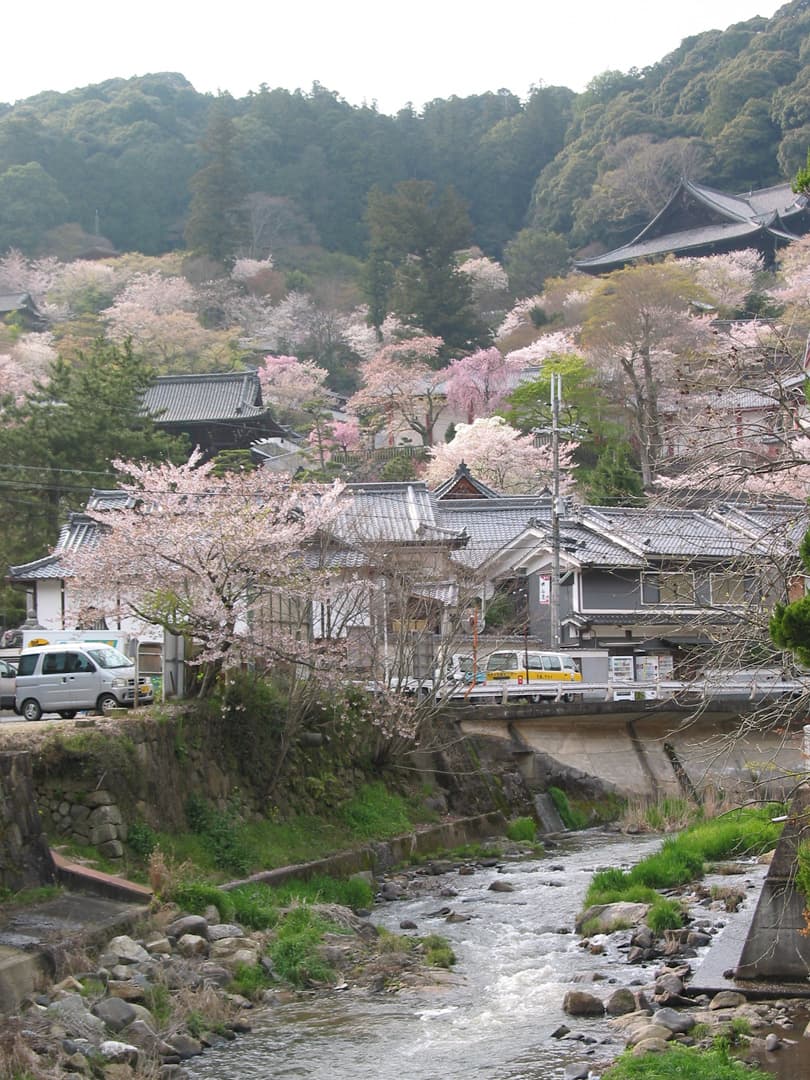
Nara is an older capital than Kyoto. It is inland, and ringed by mountains. Those two facts decide the food and the beliefs.
Local Specialties
Kaki-no-ha sushi is salt-cured mackerel or salmon laid on vinegared rice and wrapped in a persimmon leaf.
Nara has no coast. To carry mackerel over the mountains from Kumano, there was nothing for it but to salt it heavily. That very salty fish was then made easy to eat by pairing it with rice. Persimmon leaves are held to be antibacterial, and were used as a wrapper to make it keep. A disadvantage, turned into a speciality.
Miwa somen is held to be the birthplace of hand-stretched somen in Japan. The method handed down in the priestly family of Omiwa Jinja is said to have spread later to Banshu and Shodoshima. Yamato heirloom vegetables, and Yamato tea.
Souvenirs
Kaki-no-ha sushi, Miwa somen, and Nara ink.
Most of the solid ink sticks made in Japan are said to come from the city of Nara. What began in the temples for the copying of sutras became an industry as it stood. A trace of having been the capital.
Sacred Sites | Shrines & Temples
Kasuga Taisha is the head shrine of Japan's Kasuga shrines (about 1,000 shrines). Todaiji and Horyuji and Kasuga Taisha is a UNESCO World Heritage Site. 42 shrines and temples worth knowing in Nara.
Todaiji(Nara)Buddhist temple / National Treasure / UNESCO World Heritage (Cultural) / Nara / Blessings: warding off misfortune, good fortune
The Great Buddha was consecrated in 752. Its hall is among the largest wooden buildings standing anywhere. The Omizutori at Nigatsudo is the rite of drawing the water sent from Jinguji in Wakasa.
Horyuji(Ikaruga)Buddhist temple / National Treasure / UNESCO World Heritage (Cultural) / Nara / Blessings: study and exams, warding off misfortune
Held to be the oldest wooden buildings standing anywhere in the world, and in 1993 among the first World Cultural Heritage sites in Japan. Thirteen centuries, and the timber still stands. That is not only a fact about material. It means the people repairing it never once broke the chain.
Kasuga Taisha(Nara)Shinto shrine / National Treasure / UNESCO World Heritage (Cultural) / Nara / Head shrine of Kasuga shrines (about 1,000 shrines) / Blessings: warding off misfortune, good fortune, love and relationships
The stone and hanging lanterns along the approach come to about 3,000. These too were all dedicated by worshippers, the same structure as the thousand torii at Fushimi Inari. The deer of Nara Park are held to be the messengers of this shrine's deity, and are a Natural Monument.
Omiwa Jinja(Sakurai)Shinto shrine / Ichinomiya (first shrine) of Yamato Province / Important Cultural Property / Chuwa / Blessings: love and relationships, business prosperity, mountain worship
It has no main hall: Mount Miwa itself is the deity. One of the oldest shrines in Japan, keeping the form of belief that came before worshipping a building. Miwa somen is said to have spread from the method handed down in this shrine's priestly family.
Kofukuji(Nara)Buddhist temple / National Treasure / UNESCO World Heritage (Cultural) / Nara / Blessings: warding off misfortune
Its five-storey pagoda stands about 50 metres, second only to Toji among wooden pagodas. It flourished as the clan temple of the Fujiwara.
Yakushiji(Nara)Buddhist temple / National Treasure / UNESCO World Heritage (Cultural) / Nara / Blessings: warding off misfortune, long life
The East Pagoda is a National Treasure and the only building surviving from the temple's founding. Each storey carries a pent roof, and it has been called frozen music.
Toshodaiji(Nara)Buddhist temple / National Treasure / UNESCO World Heritage (Cultural) / Nara / Blessings: warding off misfortune, study and exams
Founded by Jianzhen. After five failed crossings and the loss of his sight, the monk reached Japan and brought the precepts with him. The golden hall is a National Treasure.
Hasedera (Nara)(Sakurai)Buddhist temple / head temple of the Shingon Buzan school / Saigoku 33-Temple Pilgrimage, Temple No. 8 / National Treasure / Chuwa / Blessings: love and relationships, warding off misfortune
Beyond 399 covered steps stands the National Treasure main hall. Famous for peonies, it is called the temple of flowers.
Tanzan Jinja(Sakurai)Shinto shrine / Important Cultural Property / Chuwa / Blessings: love and relationships, good fortune
Its wooden thirteen-storey pagoda is said to be the only one in the world. The name comes from the spot where Prince Naka no Oe and Nakatomi no Kamatari conferred on the Taika Reform.
Todaiji Daibutsu(Nara)Buddhist temple / National Treasure / UNESCO World Heritage (Cultural) / Nara / Blessings: warding off misfortune
About 15 metres tall. Some 2.6 million people are said to have taken part in casting it.
Nandaimon(Nara)Buddhist temple / National Treasure / UNESCO World Heritage (Cultural) / Nara / Blessings: warding off misfortune
It houses the Nio guardians by Unkei and Kaikei, the two figures finished in 69 days.
Shosoin(Nara)Buddhist temple / National Treasure / UNESCO World Heritage (Cultural) / Nara / Blessings: rebirth and renewal
A treasury in azekura log construction. Objects that came along the Silk Road were kept here for 1,200 years.
Kasugayama Genshirin(Nara)Utaki (Ryukyuan sacred grove) / Special Natural Monument / UNESCO World Heritage (Cultural) / Nara / Blessings: mountain worship
Felling has been forbidden here for more than a thousand years. Faith is what left the forest standing.
Kofukuji Gojunoto(Nara)Buddhist temple / National Treasure / UNESCO World Heritage (Cultural) / Nara / Blessings: warding off misfortune
About 50 metres tall. The second highest wooden pagoda in Japan.
Ashura(Nara)Buddhist temple / National Treasure / UNESCO World Heritage (Cultural) / Nara / Blessings: rebirth and renewal
A youth with three faces and six arms. Made in dry lacquer, and famous for its troubled expression.
Horyuji Kondo(Ikaruga)Buddhist temple / National Treasure / UNESCO World Heritage (Cultural) / Nara / Blessings: study and exams
The oldest wooden buildings standing anywhere in the world. Among the first World Cultural Heritage sites in Japan.
Yumedono(Ikaruga)Buddhist temple / National Treasure / UNESCO World Heritage (Cultural) / Nara / Blessings: good fortune
An octagonal hall. Its hidden Guze Kannon stayed wrapped in white cloth until the Meiji era.
Yakushiji Toto(Nara)Buddhist temple / National Treasure / UNESCO World Heritage (Cultural) / Nara / Blessings: warding off misfortune
Called frozen music. The stacked pent roofs make it look six-storeyed, but it is a three-storey pagoda.
Gangoji(Nara)Buddhist temple / National Treasure / UNESCO World Heritage (Cultural) / Nara / Blessings: warding off misfortune
Asuka-period tiles are still laid on its roof, the oldest roof tiles in Japan.
Miwayama(Sakurai)Utaki (Ryukyuan sacred grove) / Chuwa / Blessings: mountain worship
The sacred body of Omiwa Jinja itself. To climb it you must apply and wear a white sash.
Noborirou(Sakurai)Buddhist temple / Saigoku 33-Temple Pilgrimage, Temple No. 8 / National Treasure / Chuwa / Blessings: love and relationships
Three hundred and ninety-nine roofed steps. Famous for peonies, it is called the temple of flowers.
Muroji(Uda)Buddhist temple / National Treasure / Towa / Blessings: safe childbirth, love and relationships
Where Koyasan barred women, this temple took them in, and was called the Koyasan for women. Its five-storey pagoda is the smallest National Treasure pagoda standing outdoors.
Zaodo(Yoshino)Buddhist temple / National Treasure / UNESCO World Heritage (Cultural) / Yoshino / Blessings: mountain worship, victory
The central seat of shugendo. Its three blue Zao Gongen are hidden images.
Yoshino Mikumari Jinja(Yoshino)Shinto shrine / Important Cultural Property / UNESCO World Heritage (Cultural) / Yoshino / Blessings: safe childbirth
The word mikumari, water-parting, shifted to mikomori, child-guarding, and became a faith for conceiving a child.
Omine Okugake(Yoshino and nearby)Utaki (Ryukyuan sacred grove) / UNESCO World Heritage (Cultural) / Yoshino / Blessings: mountain worship, rebirth and renewal
The shugendo route from Yoshino through to Kumano. Parts of it are still closed to women.
Asukadera(Asuka)Buddhist temple / Historic Site / Chuwa / Blessings: rebirth and renewal
The oldest full-scale temple in Japan. The Asuka Great Buddha has sat in the same place for 1,400 years.
Kashihara Jingu(Kashihara)Shinto shrine / Chuwa / Blessings: good fortune
Held to be where Emperor Jimmu acceded. It holds a vast precinct at the foot of Mount Unebi.
Chuguji(Ikaruga)Buddhist temple / National Treasure / Nara / Blessings: rebirth and renewal
Its half-seated meditating figure is called one of the three great smiles of the world.
Horinji (Ikaruga)(Ikaruga)Buddhist temple / Nara / Blessings: study and exams
Its three-storey pagoda burned after a lightning strike, and was rebuilt through the efforts of Koda Aya and others.
Hokiji(Ikaruga)Buddhist temple / National Treasure / UNESCO World Heritage (Cultural) / Nara / Blessings: study and exams
Its three-storey pagoda is the oldest still standing, and a National Treasure.
Abe Monjuin(Sakurai)Buddhist temple / National Treasure / Chuwa / Blessings: study and exams
One of the three great Monju temples of Japan. Its Monju Bosatsu by Kaikei is a National Treasure.
Jusanjunoto(Sakurai)Shinto shrine / Important Cultural Property / Chuwa / Blessings: victory
Said to be the only wooden thirteen-storey pagoda in the world.
Fukada-ike(Kashihara)Shinto shrine / Chuwa / Blessings: good fortune
A pond reflecting Mount Unebi, which shows how wide the precinct is.
Taimadera(Katsuragi)Buddhist temple / National Treasure / Chuwa / Blessings: rebirth and renewal
The only temple with both an east and a west three-storey pagoda. It preserves the Taima Mandala.
Hitokotonushi Jinja(Gose)Shinto shrine / Chuwa / Blessings: good fortune
Said to grant a wish if you keep it to a single word. A great ginkgo stands here.
Tenporinji(Gose)Buddhist temple / Chuwa / Blessings: mountain worship
A shugendo mountain opened by En no Gyoja. It keeps a register of how many times each person has climbed.
Akishinodera(Nara)Buddhist temple / National Treasure / Nara / Blessings: the performing arts
Its Gigeiten figure is called the Muse of the East. The moss garden is beautiful.
Shinyakushiji(Nara)Buddhist temple / National Treasure / Nara / Blessings: warding off misfortune
The main hall and the Twelve Divine Generals are National Treasures. Empress Komyo built it praying for Emperor Shomu's recovery.
Tamukeyama Hachimangu(Nara)Shinto shrine / Important Cultural Property / Nara / Blessings: victory
Its deity was invited from Usa as the guardian of Todaiji. Known from a poem by Sugawara no Michizane.
Gojunoto (Muroji)(Uda)Buddhist temple / National Treasure / Towa / Blessings: warding off misfortune
The smallest five-storey pagoda standing outdoors in Japan, at 16 metres.
Butsuryuji(Uda)Buddhist temple / Towa / Blessings: long life
Among the oldest tea plants in Japan survive here. Known for its thousand-year cherry.
Nyoirinji(Yoshino)Buddhist temple / Important Cultural Property / Yoshino / Blessings: rebirth and renewal
The tomb of Emperor Godaigo is here. Kusunoki Masatsura carved his farewell poem into the door.
Sightseeing
Heijokyu and Mantoro and Mt. Yoshino is a UNESCO World Heritage Site. Breakdown: castle 1, historic townscape 2, nature / scenery 4, festival / event 4. 15 places to see in Nara.
Heijokyu(Nara)castle / Nara / Special Historic Site / UNESCO World Heritage (Cultural) / UNESCO World Heritage / Historic Site / 710
The Suzakumon and the Daigokuden have been rebuilt. The frame of the old capital survives as open ground.
Ishibutai(Asuka)burial mound / archaeological site / Chuwa / Special Historic Site / Historic Site / 7th century
Boulders weighing 2,300 tonnes in all. Held to be the tomb of Soga no Umako.
Mantoro(Nara)festival / event / Nara / UNESCO World Heritage (Cultural) / UNESCO World Heritage
About 3,000 lanterns are lit, twice a year at Setsubun and at Chugen.
Omizutori(Nara)festival / event / Nara / 752
It has run without a break for more than 1,270 years. To be showered with sparks from the great torches is said to drive off misfortune.
Nara Park(Nara)garden / park / Nara / Natural Monument / 1880
Twelve hundred wild deer. Held to be messengers of the Kasuga deity, they have long been protected.
Mt. Yoshino(Yoshino)nature / scenery / Yoshino / Historic Site / Place of Scenic Beauty / UNESCO World Heritage (Cultural) / UNESCO World Heritage
Thirty thousand shiroyama cherry trees. Shugendo practitioners planted them, generation after generation, as sacred trees.
Asuka(Asuka)burial mound / archaeological site / Chuwa / Historic Site
Where the original form of the Japanese state took shape. Ishibutai, and the Takamatsuzuka murals.
Naramachi(Nara)historic townscape / Nara
A town that grew up on the old grounds of Gangoji. Migawari-zaru charms hang from the eaves.
Wakakusa Yamayaki(Nara)festival / event / Nara
The whole hill is burned in January. Thirty-three hectares go up in flame.
Omizutori(Nara)festival / event / Nara / 752
Not once broken in over 1,270 years. Worshippers stand to catch the sparks from the great torches.
Tsukigase Plum Grove(Nara)nature / scenery / Nara / Place of Scenic Beauty
Ten thousand plum trees. They were first planted to take ubai, a dye.
Soni Highland(Soni)nature / scenery / Towa
Thirty-eight hectares of grassland, turning gold in autumn.
Kasugayama Forest(Nara)nature / scenery / Nara / Special Natural Monument / UNESCO World Heritage (Cultural) / UNESCO World Heritage / Natural Monument
Felling has been forbidden for more than a thousand years. Faith is what left the forest standing.
Yamanobe no Michi(Sakurai and nearby)historic townscape / Chuwa
Held to be the oldest road in Japan, running from Miwa to Nara and linking burial mounds and shrines.
Nara National Museum(Nara)museum / theatre / Nara / Important Cultural Property / 1895
It holds the Shosoin exhibition each autumn. The Buddhist sculpture hall is itself an Important Cultural Property.
Traditional Crafts
Two crafts hold national designation: Takayama tea whisks and Nara brushes.
Nara brushes are said to begin with the method Kukai brought back from Tang China. Ink, brushes and tea whisks alike all came out of the demand of the temples. Nara is a prefecture where the temples made the industries.
More: VILLAGE Journal vol.19 — When the temples made the industry
More from This Prefecture
See all Nara articles ← All 47 prefectures
Sources: Nara Prefecture, City of Nara, City of Sakurai, Ikaruga Town, Agency for Cultural Affairs, Association for the Promotion of Traditional Craft Industries — Value Village editorial team