Saga: Local Specialties, Souvenirs, Shrines & Temples, Sightseeing | Japan 47 Prefecture Guide
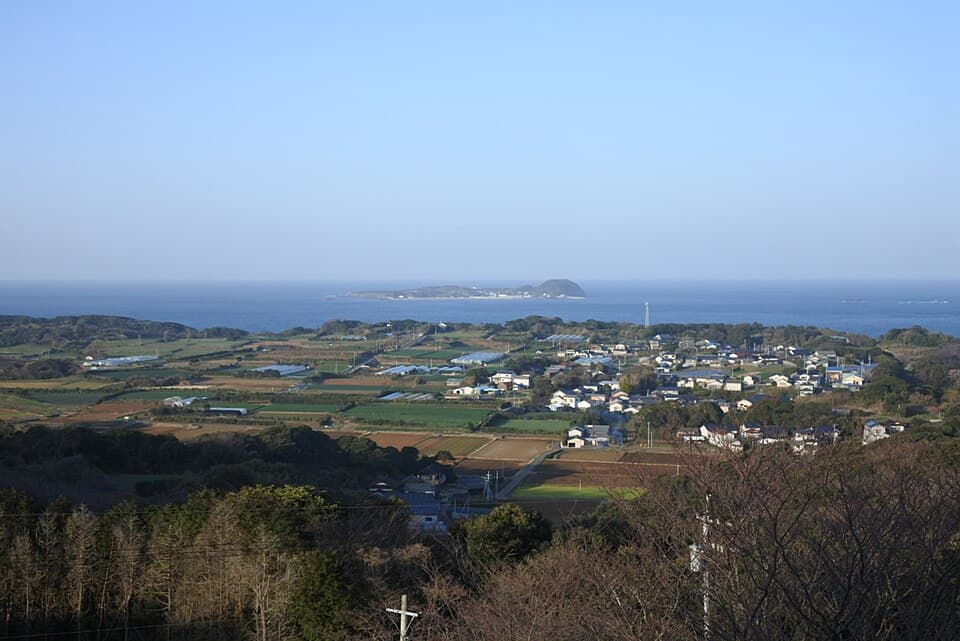
Japanese porcelain began in this prefecture. Much else here connects back to that one fact.
Local Specialties
Saga beef, the squid of Yobuko, Ariake nori, greenhouse fruit, and local sake.
Ariake nori is fine because it grows in the sea with the greatest tidal range in Japan. At low tide the nori is exposed to the air, and that stress is what makes the scent and the sweetness. Not simply growing more of it, but using time to put it under strain.
Souvenirs
Arita ware vessels, Ogi yokan, and maru-boro.
Ogi is known for having more than a dozen yokan makers gathered in one small city. Good water and makers living side by side came together.
Sacred Sites | Shrines & Temples
30 shrines and temples worth knowing in Saga.
Yutoku Inari Jinja(Kashima)Shinto shrine / Counted among the Three Great Inari Shrines / South (Kashima and Ogi) / Blessings: business prosperity, wealth, good fortune
A vermilion main hall thrust out from the slope on a kakezukuri frame. It is often counted with Fushimi and Toyokawa among the three great Inari shrines of Japan.
Tozan Jinja(Arita)Shinto shrine / West (Arita and Imari) / Blessings: business prosperity, good fortune
The torii, the guardian lions and the great lanterns are all made of Arita porcelain. It enshrines Yi Sam-pyeong, held to be the father of Japanese porcelain. The local industry became the material of the shrine itself: few examples show as plainly that faith and industry do not exist separately.
Chiriku Hachimangu(Miyaki)Shinto shrine / Ichinomiya (first shrine) of Hizen Province / Saga / Blessings: victory, good harvests
It preserves the okayu-dameshi, in which the year is read from the state of a bowl of gruel. First shrine of Hizen Province.
Tashima Jinja(Karatsu)Shinto shrine / Karatsu / Blessings: safe voyages, love and relationships
Among the oldest shrines in Hizen, standing on Kabeshima. It enshrines the three Munakata goddesses and has long guarded the sea route to the continent.
Takeo Jinja(Takeo)Shinto shrine / Natural Monument / West (Arita and Imari) / Blessings: love and relationships, victory
The great camphor of Takeo, said to be 3,000 years old, stands deep in the grounds. There is a hollow at its base, and a shrine within it.
Yutoku Honden(Kashima)Shinto shrine / South (Kashima and Ogi) / Blessings: business prosperity
A vermilion hall framed in kakezukuri on the slope. It claims to be one of the three great Inari shrines of Japan.
Okunoin (Yutoku)(Kashima)Shinto shrine / South (Kashima and Ogi) / Blessings: mountain worship
At the top of the stone steps, with the whole of the Ariake Sea in view.
Tashima Jinja(Karatsu)Shinto shrine / Karatsu / Blessings: good catches, safe voyages
Among the oldest shrines in Saga. The gateway to Yobuko, the town of squid.
Yodohime Jinja(Saga)Shinto shrine / Ichinomiya (first shrine) of Hizen Province / Saga / Blessings: safe childbirth
First shrine of Hizen Province, standing on the bank of the Kase river.
Toyotamahime Jinja(Ureshino)Shinto shrine / West (Arita and Imari) / Blessings: long life
The guardian of a hot spring known for the skin. A white catfish is held to be its messenger.
Takeo no Okusu(Takeo)Shinto shrine / Natural Monument / West (Arita and Imari) / Blessings: long life
A great camphor said to be 3,000 years old. There is a hollow at its base, with a shrine inside.
Suga Jinja (Ogi)(Ogi)Shinto shrine / South (Kashima and Ogi) / Blessings: warding off misfortune
It stands at the top of a steep stone stairway. The tutelary shrine of a town of yokan.
Taku Seibyo(Taku)Buddhist temple / Important Cultural Property / South (Kashima and Ogi) / Blessings: study and exams
It enshrines Confucius. One of only four such old Confucian shrines in Japan.
Kushidagu(Kanzaki)Shinto shrine / Saga / Blessings: warding off misfortune
It carries a tradition of being the original shrine of Kushida Jinja in Hakata.
Myobusha(Kashima)Shinto shrine / South (Kashima and Ogi) / Blessings: business prosperity
It enshrines the white fox, the messenger of Inari. It stands on the way up to the inner sanctuary.
Sayohime Jinja(Karatsu)Shinto shrine / Karatsu / Blessings: love and relationships
It carries the tale of Matsura Sayohime and her lost love, standing on Kabeshima at Yobuko.
Kagami Jinja(Karatsu)Shinto shrine / Important Cultural Property / Karatsu / Blessings: love and relationships, warding off misfortune
It enshrines Fujiwara no Hirotsugu. Its Korean-made Yoryu Kannon figure is an Important Cultural Property.
Homan Jinja(Karatsu)Shinto shrine / Karatsu / Blessings: safe voyages
A shrine looking out over the sea of Matsura.
Fudoin(Takeo)Buddhist temple / West (Arita and Imari) / Blessings: warding off misfortune
It stands at the foot of Mount Mifune.
Jiki Torii(Arita)Shinto shrine / Registered Tangible Cultural Property / West (Arita and Imari) / Blessings: business prosperity
A torii made of blue-and-white porcelain. A nationally registered Tangible Cultural Property.
Matsubara Jinja(Saga)Shinto shrine / Saga / Blessings: victory
It enshrines Nabeshima Naoshige, and is affectionately called Nippo-san.
Jissoin(Saga)Buddhist temple / Saga / Blessings: warding off misfortune
An old temple in the castle town of Saga.
Kawakamikyo(Saga)Buddhist temple / Saga / Blessings: long life
A place of worship facing the gorge of the Kase river.
Tsurugi Jinja(Ureshino)Shinto shrine / West (Arita and Imari) / Blessings: victory
It stands in the hills of Ureshino.
Kannonji (Taku)(Taku)Buddhist temple / South (Kashima and Ogi) / Blessings: warding off misfortune
With the Taku Confucian shrine, it upheld a town of letters.
Kiyomizu Kannon(Ogi)Buddhist temple / South (Kashima and Ogi) / Blessings: warding off misfortune
It adjoins Kiyomizu Falls. The area is also known for its carp cuisine.
Imari Jinja(Imari)Shinto shrine / West (Arita and Imari) / Blessings: business prosperity
The tutelary shrine of Imari, combining three shrines. Nakashima Jinja enshrines the deity of confectionery.
Kunenan(Kanzaki)Buddhist temple / Place of Scenic Beauty / Saga / Blessings: long life
A garden adjoining Nihiyama Jinja. A Place of Scenic Beauty, open only a few days a year.
Niiyama Jinja(Kanzaki)Shinto shrine / Saga / Blessings: good harvests
Known as Sanno-san. Its Otamai rite is performed once every twelve years.
Ryutaiji(Arita)Buddhist temple / West (Arita and Imari) / Blessings: warding off misfortune
A Zen temple in pottery country.
Sightseeing
Breakdown: castle 3, historic townscape 4, hot spring 2, nature / scenery 2. 17 places to see in Saga.
Ariakekai(Saga)nature / scenery / Saga
The sea with the greatest tidal range in Japan. Nori farming, and mudflats where mudskippers live.
Okawachiyama(Imari)castle / West (Arita and Imari)
The valley of the Nabeshima domain's official kiln. A barrier was set up so that the technique could not leak out.
Izumiyama(Arita)historic townscape / West (Arita and Imari) / Historic Site / 1616
The quarry where Japanese porcelain began. A whole mountain has been cut away.
Karatsu Kunchi(Karatsu)festival / event / Karatsu / Important Intangible Folk Cultural Property / UNESCO Intangible Cultural Heritage
UNESCO Intangible Cultural Heritage. Fourteen lacquer-finished floats move through the town.
Hizen Hamashuku(Kashima)historic townscape / South (Kashima and Ogi) / Important Preservation District for Groups of Traditional Buildings / Preservation District for Traditional Buildings
A white-walled town lined with sake breweries.
Mifuneyama Rakuen(Takeo)garden / park / West (Arita and Imari) / Place of Scenic Beauty / 1845
A garden backed by Mount Mifune. Known for azaleas and autumn colour.
Nagoyajo(Karatsu)castle / Karatsu / Special Historic Site / Historic Site / 1592
Hideyoshi's base for the invasions of Korea. For a time its population was second only to Osaka.
Saga-jo(Saga)castle / Saga / Historic Site / 1838
The heart of the domain that built Japan's first working reverberatory furnace at the end of the Edo period.
Yoshinogari(Yoshinogari)festival / event / Saga / Special Historic Site / Historic Site
A moated settlement of the Yayoi period. Among the largest in Japan, with traces of ritual.
Arita(Arita)historic townscape / West (Arita and Imari) / Preservation District for Traditional Buildings
Where Japanese porcelain began. Lanes walled with tonbai brick survive.
Yoshinogari(Yoshinogari)burial mound / archaeological site / Saga / Special Historic Site / Historic Site
One of the largest Yayoi moated settlements in Japan. The watchtowers have been reconstructed.
Karatsu Kunchi(Karatsu)festival / event / Karatsu / Important Intangible Folk Cultural Property / UNESCO Intangible Cultural Heritage
Fourteen lacquer-finished floats. UNESCO Intangible Cultural Heritage.
Balloon Fiesta(Saga)festival / event / Saga / 1978
One of the largest hot-air balloon events in Asia. Over a hundred balloons gather on the Kase river.
Ureshino Onsen(Ureshino)hot spring / West (Arita and Imari)
One of the three great waters for the skin in Japan. Hot-spring yudofu is the local speciality.
Takeo Romon(Takeo)hot spring / West (Arita and Imari) / Important Cultural Property / 1915
Designed by Tatsuno Kingo. A vermilion gate built without nails.
Nanatsugama(Karatsu)nature / scenery / Karatsu / Natural Monument
Seven caves the waves have cut into columnar basalt.
Hizen Hamashuku(Kashima)historic townscape / South (Kashima and Ogi) / Preservation District for Traditional Buildings
A white-walled town lined with sake breweries. The birthplace of brewery tourism.
Traditional Crafts
Two crafts hold national designation: Imari and Arita ware and Karatsu ware.
In the early seventeenth century, the stone that porcelain is made from was found at Izumiyama in Arita, and porcelain was fired in Japan for the first time. Until then Japan had only earthenware, made from clay. Arita porcelain was later shipped from the port of Imari by the Dutch East India Company to Europe, where it influenced kilns such as Meissen. It was called Imari after the port it left from.
More: VILLAGE Journal vol.3 — A stone was found, and porcelain began
More from This Prefecture
See all Saga articles ← All 47 prefectures
Sources: Saga Prefecture, Arita Town, City of Imari, City of Karatsu, City of Tosu, Agency for Cultural Affairs, Association for the Promotion of Traditional Craft Industries — Value Village editorial team