Saitama: Local Specialties, Souvenirs, Shrines & Temples, Sightseeing | Japan 47 Prefecture Guide
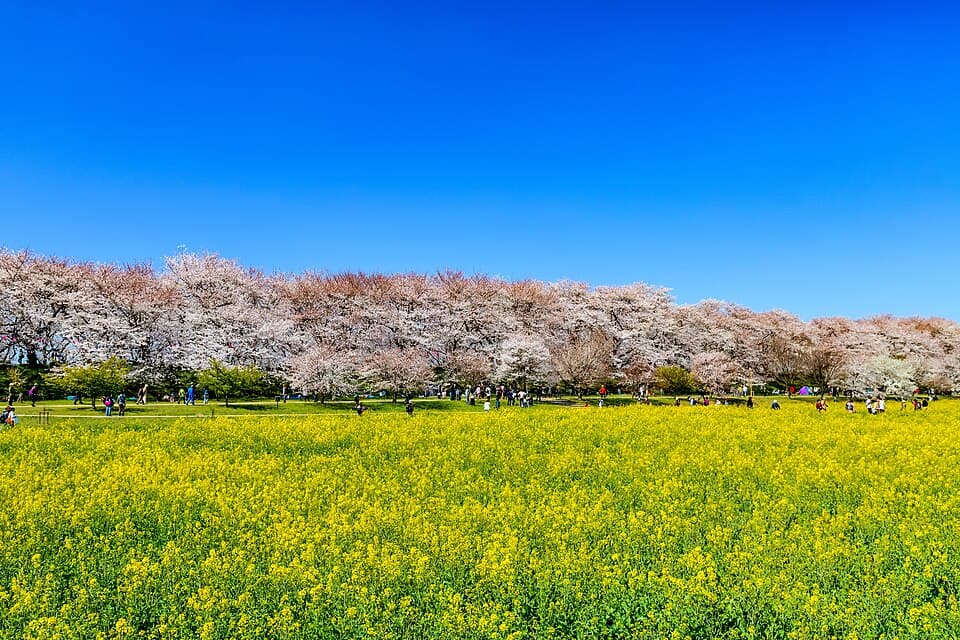
Saitama was shaped by sitting immediately north of Edo, an enormous market. Its industry and its crafts can both be explained by that distance.
Local Specialties
Soka senbei was born at Soka, a post town on the Nikko highway. It began as leftover dango flattened and dried to keep. Exactly the right form for selling to travellers.
Sayama tea grows near the northern limit for the crop. The leaves thicken to survive the cold, and a strong final firing, the Sayama hi-ire, brings out the roasted aroma that defines it.
Shizuoka has volume, Kyoto has gyokuro, Fukuoka has Yame, and Saitama has the scent of the firing. The same leaf, but each region competes on something different.
Then Fukaya leeks, gokabo, and the sweet potatoes of Kawagoe.
Souvenirs
Soka senbei, Sayama tea, gokabo. All three keep at room temperature and weigh little. On a highway full of travellers, the souvenirs that survive are the ones that meet those conditions.
In Kawagoe, the old-fashioned sweets of Kashiya Yokocho and confectionery made with sweet potato.
Sacred Sites | Shrines & Temples
Hikawa Jinja is the head shrine of Japan's Hikawa shrines (about 280 shrines). Menuma Shodenzan and Kanasana Jinja holds National Treasures. 30 shrines and temples worth knowing in Saitama.
Hikawa Jinja(Omiya, Saitama)Shinto shrine / Ichinomiya (first shrine) of Musashi Province / Central area / Head shrine of Hikawa shrines (about 280 shrines) / Blessings: love and relationships, warding off misfortune
Its approach runs about two kilometres, among the longest in Japan. The place name Omiya comes from people calling this the great shrine. It began as a water deity in the wetland once known as Minuma.
Mitsumine Jinja(Chichibu)Shinto shrine / Chichibu / Blessings: warding off misfortune, good fortune, mountain worship
It stands on a mountain at 1,100 metres, and in place of guardian lions, wolves sit at the gate.
Chichibu Jinja(Chichibu)Shinto shrine / Ichinomiya (first shrine) of Chichibu Province / Important Cultural Property / Chichibu / Blessings: study and exams, good fortune
The shrine of the Chichibu Night Festival. In 2016 the festival was included in the UNESCO listing of float festivals.
Kawagoe Hikawa Jinja(Kawagoe)Shinto shrine / Western area / Blessings: love and relationships, safe childbirth
Known for matchmaking, and crowded in summer for its corridor of wind chimes. The Kawagoe festival is UNESCO Intangible Cultural Heritage.
Kitain(Kawagoe)Buddhist temple / Important Cultural Property / Western area / Blessings: warding off misfortune, good fortune
The room where Tokugawa Iemitsu was born and the dressing room of Lady Kasuga, both moved here from Edo Castle, still stand. It is held to be the only place where buildings from Edo Castle survive.
Washinomiya Jinja(Kuki)Shinto shrine / Eastern area / Blessings: business prosperity, good fortune
It claims to be the oldest great shrine in eastern Japan. Its kagura is an Important Intangible Folk Cultural Property.
Mitsumine Okumiya(Chichibu)Shinto shrine / Chichibu / Blessings: mountain worship
At the summit of Myohogatake. Reaching it takes about an hour's climb each way.
Shimabuji(Chichibu)Buddhist temple / Chichibu 34 Kannon Pilgrimage, Temple No. 1 / Chichibu / Blessings: warding off misfortune
The starting point of the Chichibu circuit. With Saigoku and Bando it makes up the Hundred Kannon of Japan.
Suisenji(Minano)Buddhist temple / Chichibu 34 Kannon Pilgrimage, Temple No. 34 / Chichibu / Blessings: rebirth and renewal
The closing temple of the Hundred Kannon of Japan. The circuit ends here.
Hodosan Jinja(Nagatoro)Shinto shrine / Chichibu / Blessings: fire protection, warding off misfortune
Its name is said to come from a legend in which a fire was stopped: the mountain where fire halted. A ropeway runs up to the inner shrine.
Gohyaku Rakan(Kawagoe)Buddhist temple / Western area / Blessings: warding off misfortune
Five hundred and thirty-eight rakan figures stand in rows, and no two faces are said to be alike.
Senba Toshogu(Kawagoe)Shinto shrine / Important Cultural Property / Western area / Blessings: victory
It claims to be one of the three great Toshogu, with Nikko and Kunozan.
Hikawa Nyotai Jinja(Saitama)Shinto shrine / Central area / Blessings: love and relationships, safe childbirth
The shrine paired with Hikawa Jinja. It preserves the Mifune festival, set on the old Minuma wetland.
Menuma Shodenzan(Kumagaya)Buddhist temple / National Treasure / Northern area / Blessings: love and relationships, business prosperity
The Shotendo hall is a National Treasure. Its brilliantly coloured carving has earned it the name Saitama Nikko.
Tsuki Jinja(Saitama)Shinto shrine / Central area / Blessings: good fortune, wealth
It has no torii, and rabbits sit where guardian lions usually would. The reading tsuki also gave rise to a belief in luck in contests.
Enmusubi-dama(Kawagoe)Shinto shrine / Western area / Blessings: love and relationships
A charm in which you take home a pebble from the grounds. In summer a corridor of wind chimes is hung.
Sakitama Jinja(Gyoda)Shinto shrine / Northern area / Blessings: good fortune
The shrine said to be the origin of the prefecture's name, Saitama. It stands among a group of burial mounds.
Jionji(Saitama)Buddhist temple / Bando 33 Kannon Pilgrimage, Temple No. 12 / Central area / Blessings: warding off misfortune
A thirteen-storey pagoda here enshrines relics of the monk Xuanzang.
Eimyoji(Hanyu)Buddhist temple / Northern area / Blessings: warding off misfortune
The temple that is the setting of the novel Inaka Kyoshi.
Yamaguchi Kannon(Tokorozawa)Buddhist temple / Western area / Blessings: warding off misfortune
It carries a tradition that Nitta Yoshisada prayed here for victory.
Hikawa Jinja(Saitama)Shinto shrine / Ichinomiya (first shrine) of Musashi Province / Central area / Head shrine of Hikawa shrines (about 280 shrines nationwide) / Blessings: love and relationships, warding off misfortune
The head shrine of some 280 Hikawa shrines nationwide. Its approach runs about two kilometres, among the longest in Japan.
Hodosan Okumiya(Nagatoro)Shinto shrine / Chichibu / Blessings: fire protection
A ropeway runs to the summit, looking down on the rock terraces of Nagatoro.
Hisaizu Jinja(Koshigaya)Shinto shrine / Eastern area / Blessings: good fortune
Because its name can be read as kuizu, quiz, it is known for prayers before quiz shows.
Ryokami Jinja(Ogano)Shinto shrine / Chichibu / Blessings: mountain worship
It worships Mount Ryokami. Wolves stand in place of guardian lions.
Oshijo(Gyoda)Utaki (Ryukyuan sacred grove) / Northern area / Blessings: victory
The floating castle that withstood Ishida Mitsunari's attempt to flood it out.
Romon (Hikawa)(Saitama)Shinto shrine / Central area / Blessings: warding off misfortune
A vermilion gate, next to Omiya Park.
Tsuki no Usagi(Saitama)Shinto shrine / Central area / Blessings: good fortune
It has no torii, and rabbits sit where guardian lions usually would.
Yukokuji(Kumagaya)Buddhist temple / Northern area / Blessings: rebirth and renewal
Where Kumagai Naozane took vows and built his hermitage.
Noninji(Hanno)Buddhist temple / Place of Scenic Beauty / Western area / Blessings: warding off misfortune
Its pond garden is among the hundred famous gardens of Japan, at the foot of the climb up Tenranzan.
Kanasana Jinja(Kamikawa)Shinto shrine / Ninomiya (second shrine) of Musashi Province / National Treasure / Northern area / Blessings: mountain worship
It has no main hall, and worships Mount Omuro instead. Its tahoto pagoda is a National Treasure.
Sightseeing
Breakdown: historic townscape 3, nature / scenery 2, industrial heritage 1, festival / event 2. 15 places to see in Saitama.
Chichibu Yomatsuri(Chichibu)festival / event / Chichibu / UNESCO Intangible Cultural Heritage
Held on 2 and 3 December. Included in the UNESCO listing of float festivals.
Hikawa Sando(Saitama)other / Central area
The two-kilometre approach is among the longest in Japan. Its avenue of trees became the spine of the town.
Kawagoe Kurazukuri(Kawagoe)historic townscape / Western area / Preservation District for Traditional Buildings
Black-plastered merchant storehouses line the street. It is called Little Edo.
Toki no Kane(Kawagoe)museum / theatre / Western area / 1893
The symbol of Kawagoe. The bell still rings four times a day.
Nagatoro(Nagatoro)nature / scenery / Chichibu / Natural Monument / Place of Scenic Beauty
Crystalline schist spreads out like tatami. The birthplace of Japanese geology.
Chichibu Yomatsuri(Chichibu)festival / event / Chichibu / Important Intangible Folk Cultural Property / UNESCO Intangible Cultural Heritage
Held on 2 and 3 December, with floats and fireworks. UNESCO Intangible Cultural Heritage.
Rice Paddy Art(Gyoda)garden / park / Northern area
Recognised by Guinness as the largest rice paddy artwork in the world.
Sakitama Kofun(Gyoda)burial mound / archaeological site / Northern area / Special Historic Site / Historic Site / 5th to 7th centuries
The Inariyama mound yielded the gold-inlaid iron sword, a National Treasure.
Menuma(Kumagaya)historic townscape / Northern area
Inari sushi is the local speciality, sold before the gate of the National Treasure Shotendo.
Omiya Bonsai Village(Saitama)garden / park / Central area / 1925
A district built by bonsai growers who moved here after the Great Kanto Earthquake.
Kawaguchi Casting(Kawaguchi)industrial heritage / Eastern area
The setting of the film The Street with the Cupola. Everything from kettles to bridge girders was cast here.
Hitsujiyama Park(Chichibu)garden / park / Chichibu
Four hundred thousand moss phlox draw patterns against Mount Buko.
Kashiya Yokocho(Kawagoe)historic townscape / Western area
About twenty old-fashioned sweet shops in a row, holding the air of the Showa years.
Mitsumine Sea of Clouds(Chichibu)nature / scenery / Chichibu
At 1,100 metres. When the conditions align, the shrine floats on a sea of cloud.
Railway Museum(Saitama)museum / theatre / Central area / 2007
More than forty real railway carriages, and driving simulators.
Traditional Crafts
Six crafts hold national designation: Iwatsuki dolls, Edo kimekomi dolls, Kasukabe paulownia chests, Gyoda tabi, Chichibu meisen and Hosokawa paper.
Iwatsuki is known across Japan as a producer of hina dolls. Hosokawa paper is one of the three washi traditions inscribed on the UNESCO Intangible Cultural Heritage list in 2014.
More: VILLAGE Journal vol.36 — First in Japan for hina dolls(リンク先は現在公開されていません)
More from This Prefecture
See all Saitama articles ← All 47 prefectures
Sources: Saitama Prefecture, City of Soka, City of Iruma, City of Kawagoe, City of Chichibu, City of Saitama, Hikawa Jinja, Agency for Cultural Affairs, Association for the Promotion of Traditional Craft Industries — Value Village editorial team