Shizuoka: Local Specialties, Souvenirs, Shrines & Temples, Sightseeing | Japan 47 Prefecture Guide
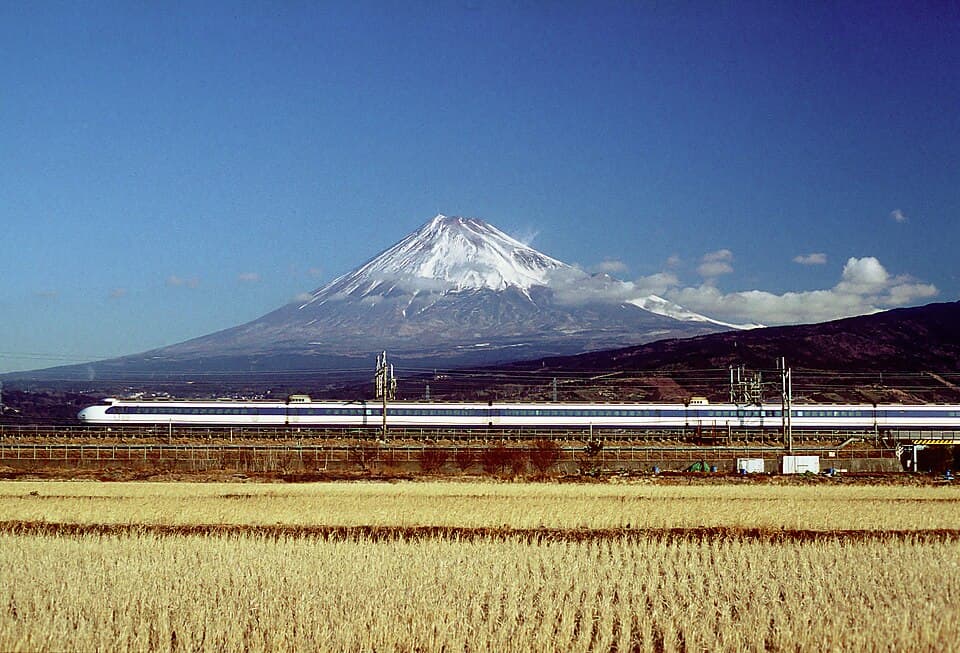
Shizuoka is the prefecture that holds both the deepest bay in Japan, Suruga, and its highest mountain, Fuji. That vertical range makes the food and the beliefs alike.
Local Specialties
Shizuoka is among the top tea producers in Japan. The slopes of Makinohara and Kawane drain well and catch the morning mist. They suit tea.
This series has passed through several tea districts. Shizuoka has volume, Kyoto has gyokuro, Yame in Fukuoka has the competitions, and Sayama in Saitama has the scent of the firing. The same leaf, and each district competes somewhere else.
Eel comes from Lake Hamana, a brackish lake whose stable water temperature suited farming. Sakura shrimp come from Suruga Bay, and this is the only place in Japan where they can be fished. Wasabi and whitebait are from this sea too.
Souvenirs
Tea, unagi pie, Abekawa mochi, wasabi pickles, dried sakura shrimp.
And small pieces of Suruga bamboo basketry. Shizuoka also ships more plastic model kits than any other prefecture, and that too is said to run continuously back to woodworking skills from moulds and Buddhist altars.
Sacred Sites | Shrines & Temples
Fujisan Hongu Sengen Taisha is the head shrine of Japan's Sengen shrines (about 1,300 shrines). Hitoana and Fujisan Hongu Sengen Taisha and Fujisan Okumiya is a UNESCO World Heritage Site. 33 shrines and temples worth knowing in Shizuoka.
Hitoana(Fujinomiya)Utaki (Ryukyuan sacred grove) / UNESCO World Heritage (Cultural) / Eastern area / Blessings: rebirth and renewal
A cave said to be where the founder of the Fuji-ko practised.
Fujisan Hongu Sengen Taisha(Fujinomiya)Shinto shrine / Ichinomiya (first shrine) of Suruga Province / Important Cultural Property / UNESCO World Heritage (Cultural) / Eastern area / Head shrine of Sengen shrines (about 1,300 shrines) / Blessings: mountain worship, safe childbirth, warding off misfortune
The head shrine of all Sengen shrines in Japan. Everything above the eighth station of Mount Fuji is held to be the grounds of this shrine. The idea that the mountain itself is the deity reaches as far as the form of land ownership.
Kunozan Toshogu(Shizuoka)Shinto shrine / National Treasure / Central area / Blessings: victory, good fortune
Where Ieyasu was first buried. The halls are National Treasures, built a year earlier than Nikko. The main approach runs to 1,159 stone steps.
Mishima Taisha(Mishima)Shinto shrine / Ichinomiya (first shrine) of Izu Province / Important Cultural Property / Natural Monument / Izu / Blessings: business prosperity, victory
The shrine where Minamoto no Yoritomo prayed before raising his army. The fragrant olive in its grounds is said to be 1,200 years old and is a Natural Monument.
Shizuoka Sengen Jinja(Shizuoka)Shinto shrine / Important Cultural Property / Central area / Blessings: warding off misfortune, good fortune
A collective name for three shrines. Held to be where Ieyasu came of age, its lacquered halls have earned it the name Nikko of the Tokai.
Ryotanji(Hamamatsu)Buddhist temple / Place of Scenic Beauty / Western area / Blessings: warding off misfortune
The funerary temple of the Ii family. Its garden, attributed to Kobori Enshu, is a Place of Scenic Beauty.
Akihasan Hongu Akiha Jinja(Hamamatsu)Shinto shrine / Western area / Head shrine of Akiba shrines (about 400 shrines) / Blessings: fire protection, warding off misfortune
The head shrine of the deity of fire prevention. Because Edo burned so often, the faith spread nationwide, and it is the origin of place names such as Akihabara and Akiba-cho across the country.
Fujisan Okumiya(Fujinomiya)Shinto shrine / UNESCO World Heritage (Cultural) / Eastern area / Blessings: mountain worship
Everything above the eighth station of Mount Fuji is held to be the grounds of this shrine.
Shiraito no Taki(Fujinomiya)Utaki (Ryukyuan sacred grove) / Place of Scenic Beauty / Natural Monument / UNESCO World Heritage (Cultural) / Eastern area / Blessings: rebirth and renewal
Groundwater from Fuji falls from the rock face like threads. It served as a place of ascetic practice for the Fuji-ko.
Miho no Matsubara(Shizuoka)Utaki (Ryukyuan sacred grove) / Place of Scenic Beauty / UNESCO World Heritage (Cultural) / Central area / Blessings: good fortune
The site of the feather robe legend. A component of the Fujisan World Heritage site, with Fuji seen across Suruga Bay.
Akiha Josha(Hamamatsu)Shinto shrine / Western area / Blessings: fire protection
A golden torii stands here. As the head shrine of fire prevention, its faith spread across the country.
Hamamatsu Hachimangu(Hamamatsu)Shinto shrine / Western area / Blessings: victory
Here stands the Kumotachi camphor, in which Ieyasu is said to have hidden after his defeat by the Takeda at Mikatagahara.
Hokoji(Hamamatsu)Buddhist temple / Important Cultural Property / Western area / Blessings: warding off misfortune
Known for Okuyama Hansobo. Five hundred rakan figures line the approach.
Kanzanji(Hamamatsu)Buddhist temple / Western area / Blessings: love and relationships
It stands on a headland jutting into Lake Hamana, said to have been founded by Kukai.
Ryotanji Teien(Hamamatsu)Buddhist temple / Place of Scenic Beauty / Western area / Blessings: warding off misfortune
A pond garden for viewing, attributed to Kobori Enshu.
Kotonomama Hachimangu(Kakegawa)Shinto shrine / Western area / Blessings: good fortune
Wishes here are said to come true just as they are spoken. It appears in The Pillow Book.
Shuzenji(Izu)Buddhist temple / Izu / Blessings: warding off misfortune, long life
Said to have been founded by Kukai. The stage of the tragedies of Minamoto no Noriyori and Yoriie.
Mishima Kinmokusei(Mishima)Shinto shrine / Natural Monument / Izu / Blessings: long life
Said to be 1,200 years old. A Natural Monument.
Kinomiya Jinja(Atami)Shinto shrine / Natural Monument / Izu / Blessings: long life, good fortune
A great camphor said to be over 2,000 years old. Walk once around it, they say, and you gain a year of life.
Izusan Jinja(Atami)Shinto shrine / Izu / Blessings: love and relationships, victory
Held to be where Yoritomo and Masako were joined. A place of prayer for the revival of the Minamoto.
Rinzaiji(Shizuoka)Buddhist temple / Important Cultural Property / Place of Scenic Beauty / Central area / Blessings: study and exams
Where Takechiyo, the young Ieyasu, studied as a hostage of the Imagawa. The garden is a Place of Scenic Beauty.
Seikenji(Shizuoka)Buddhist temple / Place of Scenic Beauty / Central area / Blessings: study and exams
Korean envoys called here and left plaques behind. The garden is a Place of Scenic Beauty.
Yaizu Jinja(Yaizu)Shinto shrine / Central area / Blessings: good catches, victory
The site of the Kusanagi legend of Yamato Takeru. Known for its Arai festival.
Takyoji(Shizuoka)Buddhist temple / Central area / Blessings: warding off misfortune
Once a great temple. Only the Buddhist figures remain, in the Kannon hall.
Ganjojuin(Izunokuni)Buddhist temple / National Treasure / Historic Site / Izu / Blessings: victory
It enshrines five figures confirmed as the work of Unkei. National Treasures.
Tokko no Yu(Izu)Buddhist temple / Izu / Blessings: long life
Kukai is said to have struck the rock with his vajra and brought the water up. The beginning of Shuzenji Onsen.
Hashiriyu(Atami)Shinto shrine / Izu / Blessings: rebirth and renewal
Hot water bursts from a horizontal shaft. Counted among the three oldest springs of Japan.
Okusu (Kotonomama)(Kakegawa)Shinto shrine / Western area / Blessings: long life
A great camphor several hundred years old. The Pillow Book records the shrine as the deity who grants wishes as spoken.
Yanahime Jinja(Iwata)Shinto shrine / Western area / Blessings: warding off misfortune
It carries the legend of the divine dog Shippeitaro. Its naked festival is an Important Intangible Folk Cultural Property.
Daikeiji(Fujieda)Buddhist temple / Central area / Blessings: long life
A pine said to have been planted by Nichiren stands here.
Ose Jinja(Numazu)Shinto shrine / Natural Monument / Eastern area / Blessings: safe voyages
The sacred pond at the tip of the cape is fresh water, though ringed by sea. The fishermen of Suruga Bay revered it.
Higashiguchi Hongu(Oyama)Shinto shrine / UNESCO World Heritage (Cultural) / Eastern area / Blessings: mountain worship
The starting point of the Subashiri trail up Mount Fuji.
Ryosenji(Shimoda)Buddhist temple / Historic Site / Izu / Blessings: rebirth and renewal
The temple where the Convention of Shimoda was signed. American jasmine blooms here.
Sightseeing
Nirayama and Mt. Fuji and Miho no Matsubara is a UNESCO World Heritage Site. Breakdown: castle 3, historic townscape 2, hot spring 2, nature / scenery 6. 16 places to see in Shizuoka.
Rengejiike(Fujieda)nature / scenery / Central area
The water source of tea country.
Kunozan Ishidan(Shizuoka)festival / event / Central area
One thousand one hundred and fifty-nine stone steps, remembered by a Japanese pun on the number.
Nirayama(Izunokuni)castle / Izu / UNESCO World Heritage (Cultural) / UNESCO World Heritage / 1857
A World Cultural Heritage component of the Sites of Japan's Meiji Industrial Revolution. A reverberatory furnace that actually operated still stands.
Oigawa Kawagoshi(Shimada)historic townscape / Central area / Historic Site
A horse may cross the eight leagues of Hakone, but no one crosses the Oi. The system of river porters survives here.
Sunpu-jo(Shizuoka)castle / Central area / Historic Site / 1585
The castle where Ieyasu spent both his childhood and his last years.
Mt. Fuji(Fujinomiya and nearby)nature / scenery / Eastern area / UNESCO World Heritage (Cultural) / Special Place of Scenic Beauty / Historic Site / UNESCO World Heritage
Three thousand seven hundred and seventy-six metres. It is inscribed not as natural but as cultural heritage: an object of worship and a wellspring of art.
Miho no Matsubara(Shizuoka)nature / scenery / Central area / Place of Scenic Beauty / UNESCO World Heritage (Cultural) / UNESCO World Heritage
The site of the feather robe legend, with Fuji seen across Suruga Bay.
Atami Onsen(Atami)hot spring / Izu
Ieyasu took the waters here. Fireworks rise out over the sea.
Shuzenji Onsen(Izu)hot spring / Izu / 807
The oldest hot spring town in Izu, with its bamboo lane and the Katsura river.
Kakegawa-jo(Kakegawa)castle / Western area / Important Cultural Property / 1497
The first fully wooden reconstructed keep in Japan. The Ninomaru palace is an Important Cultural Property.
Oigawa Railway(Shimada)industrial heritage / Central area / 1976
The first place in Japan to bring steam locomotives back into working preservation.
Kawazu Nanadaru(Kawazu)nature / scenery / Izu
Seven falls dropping over columnar basalt. The road of The Izu Dancer.
Numazu Port(Numazu)historic townscape / Eastern area
Suruga Bay is 2,500 metres deep, and deep-sea fish are landed here.
Hamamatsu Matsuri(Hamamatsu)festival / event / Western area
On the Nakatajima dunes, great kites from 170 districts cut one another's lines.
Makinohara(Makinohara)nature / scenery / Central area
The largest tea-growing area in Japan, opened up by former shogunal retainers.
Nihondaira(Shizuoka)nature / scenery / Central area / Place of Scenic Beauty
A hill with Fuji, Suruga Bay and Miho no Matsubara all in view.
Traditional Crafts
Three crafts hold national designation: Suruga bamboo basketry, Suruga doll fittings and Suruga hina dolls.
Bamboo work normally means weaving flat strips, but Suruga shaves the bamboo into round rods and assembles them one by one, each fitted into a hole. There is almost no other example of the technique in Japan.
More: VILLAGE Journal vol.27 — Shaving bamboo down to thread
More from This Prefecture
See all Shizuoka articles ← All 47 prefectures
Sources: Ministry of Agriculture, Forestry and Fisheries, Shizuoka Prefecture, City of Fujinomiya, City of Shizuoka, City of Mishima, Agency for Cultural Affairs, Association for the Promotion of Traditional Craft Industries — Value Village editorial team