Wakayama: Local Specialties, Souvenirs, Shrines & Temples, Sightseeing | Japan 47 Prefecture Guide
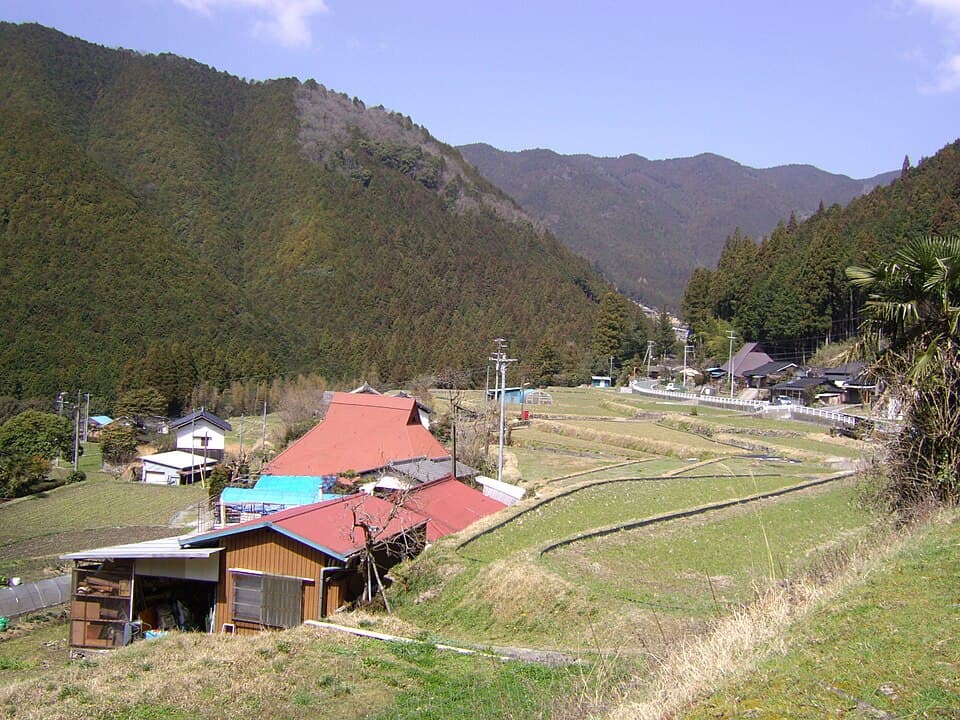
Most of Wakayama is mountain. Those mountains became both its fruit country and its places of worship.
Local Specialties
Wakayama ranks first in Japan for both plums and mandarins. Plums above all: the prefecture accounts for most of the national crop.
The Nanko plum is a variety with thick flesh and a small stone. It began as one superior tree propagated by grafting, so every Nanko plum today is a clone of it. A local schoolteacher and the farmers, working through the selection, made a whole production district.
Bonito and tuna riding the Kuroshio, yellowtail at Nachi. And kinzanji miso.
Souvenirs
Kishu umeboshi, mandarins, and koya-dofu.
Koya-dofu, freeze-dried tofu, was a preserved food made at the temples of Koyasan: frozen in the winter cold, then dried. Shinshu and northern Japan have something similar, but it is here that the mountain's name stuck to it.
Sacred Sites | Shrines & Temples
Kumano Hongu Taisha is the head shrine of Japan's Kumano shrines (about 3,000 shrines). Koyasan Kongobuji and Kumano Hongu Taisha and Kumano Hayatama Taisha is a UNESCO World Heritage Site. 35 shrines and temples worth knowing in Wakayama.
Koyasan Kongobuji(Koya)Buddhist temple / head temple of the Koyasan Shingon school / UNESCO World Heritage (Cultural) / Koya / Blessings: warding off misfortune, rebirth and renewal, long life
The head temple of the Shingon school, opened by Kukai. Along the approach to the inner sanctuary stand some 200,000 graves, from Sengoku warlords to ordinary townspeople. Lords who were enemies in life sometimes lie side by side.
Kumano Hongu Taisha(Tanabe)Shinto shrine / One of the Three Grand Shrines of Kumano / Important Cultural Property / UNESCO World Heritage (Cultural) / Kichu / Head shrine of Kumano shrines (about 3,000 shrines) / Blessings: rebirth and renewal, warding off misfortune, good fortune
The centre of the three Kumano shrines. There are almost no other cases in the world of a pilgrimage road itself becoming World Heritage. Being far from Kyoto and Nara is precisely where the value lies, because leaving the everyday world behind was the whole point.
Kumano Hayatama Taisha(Shingu)Shinto shrine / One of the Three Grand Shrines of Kumano / UNESCO World Heritage (Cultural) / Kinan / Blessings: rebirth and renewal, warding off misfortune
One of the three Kumano shrines. Many of its sacred treasures are designated National Treasures.
Kumano Nachi Taisha(Nachikatsuura)Shinto shrine / One of the Three Grand Shrines of Kumano / Important Cultural Property / UNESCO World Heritage (Cultural) / Kinan / Blessings: rebirth and renewal, warding off misfortune, long life
Nachi Falls drops about 133 metres, and the fall itself is the deity. With Seiganto-ji next door, it keeps the form of a faith in which gods and buddhas ran together.
Seigantoji(Nachikatsuura)Buddhist temple / Saigoku 33-Temple Pilgrimage, Temple No. 1 / Important Cultural Property / UNESCO World Heritage (Cultural) / Kinan / Blessings: rebirth and renewal, warding off misfortune
The first temple of the Saigoku 33 Kannon pilgrimage. Known for the view of its three-storey pagoda against Nachi Falls, it keeps the form of a faith in which gods and buddhas ran together.
Hinokuma Jingu / Kunikakasu Jingu(Wakayama)Shinto shrine / Ichinomiya (first shrine) of Kii Province / Kihoku / Blessings: good fortune, warding off misfortune
Two jingu stand side by side in one precinct. One of the few shrines that may call itself jingu.
Dojoji(Hidakagawa)Buddhist temple / National Treasure / Kichu / Blessings: warding off misfortune, love and relationships
The setting of the legend of Anchin and Kiyohime, which became a whole genre of Noh and kabuki plays.
Okunoin(Koya)Buddhist temple / UNESCO World Heritage (Cultural) / Koya / Blessings: rebirth and renewal
Kobo Daishi is held to be alive here still, deep in meditation, and food is carried to him twice a day.
Konpon Daito(Koya)Buddhist temple / UNESCO World Heritage (Cultural) / Koya / Blessings: warding off misfortune
About 49 metres tall. Its interior is a mandala rendered in three dimensions.
Danjo Garan(Koya)Buddhist temple / UNESCO World Heritage (Cultural) / Koya / Blessings: mountain worship
The area Kukai laid out first. Halls and pagodas stand around the golden hall.
Kongobuji(Koya)Buddhist temple / head temple of the Koyasan Shingon school / UNESCO World Heritage (Cultural) / Koya / Blessings: warding off misfortune
Banryutei is among the largest rock gardens in Japan. Its painted screens and its kitchen are open to visitors.
Shukubo(Koya)Buddhist temple / Koya / Blessings: rebirth and renewal
More than fifty temple lodgings take in pilgrims. Vegetarian meals, and morning service.
Oyunohara(Tanabe)Shinto shrine / UNESCO World Heritage (Cultural) / Kichu / Blessings: rebirth and renewal
The original site of Kumano Hongu Taisha. The largest torii in Japan stands here.
Nachi no Taki(Nachikatsuura)Utaki (Ryukyuan sacred grove) / Place of Scenic Beauty / UNESCO World Heritage (Cultural) / Kinan / Blessings: long life
A drop of 133 metres. The fall itself is the deity of Hiro Jinja, which has no hall at all.
Kamikura Jinja(Shingu)Shinto shrine / UNESCO World Heritage (Cultural) / Kinan / Blessings: victory
A giant rock at the top of 538 steep stone steps. At the Oto festival men run down carrying torches.
Daimonzaka(Nachikatsuura)Utaki (Ryukyuan sacred grove) / UNESCO World Heritage (Cultural) / Kinan / Blessings: road safety
A paved stretch of the Nakahechi route of the Kumano Kodo, running through an avenue of cedars.
Kohechi(Tanabe and nearby)Utaki (Ryukyuan sacred grove) / UNESCO World Heritage (Cultural) / Kichu / Blessings: mountain worship
The route joining Koyasan directly to Kumano Hongu. It crosses three passes.
Fudarakusanji(Nachikatsuura)Buddhist temple / UNESCO World Heritage (Cultural) / Kinan / Blessings: rebirth and renewal
The starting point of the Fudaraku crossings, in which a monk was sealed into a boat and set adrift towards the southern sea.
Kimiidera(Wakayama)Buddhist temple / Saigoku 33-Temple Pilgrimage, Temple No. 2 / Important Cultural Property / Kihoku / Blessings: love and relationships, safe childbirth
Known for the earliest cherry blossom in the Kansai region. You climb 231 steps.
Kokawadera(Kinokawa)Buddhist temple / Saigoku 33-Temple Pilgrimage, Temple No. 3 / Place of Scenic Beauty / Kihoku / Blessings: warding off misfortune
The dry landscape garden before the main hall is a Place of Scenic Beauty.
Negoroji(Iwade)Buddhist temple / National Treasure / Kihoku / Blessings: warding off misfortune
Its great pagoda is the largest wooden tahoto in Japan and a National Treasure. It was the base of the Negoro warriors, who carried firearms.
Tamatsushima Jinja(Wakayama)Shinto shrine / Place of Scenic Beauty / Kihoku / Blessings: the performing arts, study and exams
It enshrines the deity of waka poetry. A scenic spot sung of in the Manyoshu.
Kishu Toshogu(Wakayama)Shinto shrine / Important Cultural Property / Kihoku / Blessings: victory
You climb the 108 steps of the Samurai Slope. It is called the Nikko of the Kansai region.
Nakahechi(Tanabe)Utaki (Ryukyuan sacred grove) / UNESCO World Heritage (Cultural) / Kichu / Blessings: road safety, rebirth and renewal
The most walked of the pilgrimage routes. Small shrines called the ninety-nine oji line the way.
Ohechi(Shirahama)Utaki (Ryukyuan sacred grove) / UNESCO World Heritage (Cultural) / Kinan / Blessings: safe voyages
The route that runs along the coast. You walk in the salt wind.
Hiro Hachimangu(Hirogawa)Shinto shrine / Important Cultural Property / Kichu / Blessings: warding off misfortune
A place tied to Hamaguchi Goryo, who saved the villagers from a tsunami. The shrine halls are Important Cultural Properties.
Mandara no Taki(Tanabe)Utaki (Ryukyuan sacred grove) / Kichu / Blessings: long life
A waterfall of ascetic practice, said to have been opened by Kukai.
Nyonindo(Koya)Buddhist temple / Koya / Blessings: rebirth and renewal
In the days when women were barred from the mountain, this was as far as they could come. The only one left of seven such halls.
Jisonin(Kudoyama)Buddhist temple / UNESCO World Heritage (Cultural) / Koya / Blessings: safe childbirth, love and relationships
Where Kukai's mother lived. A Koyasan for women, where votive tablets shaped as breasts are dedicated.
Niutsuhime Jinja(Katsuragi)Shinto shrine / Ichinomiya (first shrine) of Kii Province / UNESCO World Heritage (Cultural) / Koya / Blessings: warding off misfortune
Said to have ceded the land of Koyasan to Kukai. An arched bridge crosses the water.
Choishimichi(Kudoyama)Utaki (Ryukyuan sacred grove) / UNESCO World Heritage (Cultural) / Historic Site / Koya / Blessings: mountain worship
About 24 kilometres from Jisonin to Koyasan, with a stone marker at every cho along the way.
Awashima Jinja(Wakayama)Shinto shrine / Kihoku / Blessings: safe childbirth, love and relationships
A deity who cures the illnesses of women. Dedicated dolls fill the whole precinct.
Idakiso Jinja(Wakayama)Shinto shrine / Kihoku / Blessings: mountain worship, warding off misfortune
It enshrines the deity of trees, held to be the origin of the name Kii, the land of trees.
Fudaraku Tokai(Nachikatsuura)Utaki (Ryukyuan sacred grove) / Kinan / Blessings: rebirth and renewal
The boat was nailed shut from outside and set out for the southern sea. A reconstruction is on display.
Asuka Jinja(Shingu)Shinto shrine / UNESCO World Heritage (Cultural) / Kinan / Blessings: good fortune
An old shrine backed by Mount Horai. A place of the Xu Fu legend.
Sightseeing
Kumano Kodo and Okunoin Path and Nachi Falls is a UNESCO World Heritage Site. Breakdown: castle 1, historic townscape 2, hot spring 1, nature / scenery 6. 12 places to see in Wakayama.
Hashiguiiwa(Kushimoto)industrial heritage / Kinan / Natural Monument / Place of Scenic Beauty
A line of rocks said to be what remains of Kobo Daishi's attempt to build a bridge in one night.
Saki no Yu(Shirahama)hot spring / Kinan
Muro no Yu, one of the three oldest springs of Japan. It is sung of in the Manyoshu.
Kumano Kodo(Tanabe and nearby)nature / scenery / Kichu / UNESCO World Heritage (Cultural) / Historic Site / UNESCO World Heritage
With the Camino de Santiago, one of only two pilgrimage roads in the world inscribed as World Heritage.
Shirahama(Shirahama)nature / scenery / Kinan
White sand, and Engetsuto, the island the setting sun passes through.
Adventure World(Shirahama)museum / theatre / Kinan / 1978
It has bred more giant pandas than anywhere else in Japan.
Okunoin Path(Koya)nature / scenery / Koya / UNESCO World Heritage (Cultural) / Historic Site / UNESCO World Heritage
Two kilometres of cedars, with over 200,000 gravestones. Sengoku commanders lie there without regard to which side they fought on.
Wakayama-jo(Wakayama)castle / Kihoku / Historic Site / 1585
The seat of the Kishu Tokugawa, one of the three branch houses. The keep is a reconstruction.
Nachi Falls(Nachikatsuura)nature / scenery / Kinan / Place of Scenic Beauty / UNESCO World Heritage (Cultural) / UNESCO World Heritage
A drop of 133 metres. The fall itself is the deity, so there is no hall.
Nanko Ume(Minabe)historic townscape / Kichu
Sixty percent of Japan's plums. Whole slopes turn white with blossom.
Tomogashima(Wakayama)nature / scenery / Kihoku
Meiji-era gun batteries lie buried in the forest. It is called the Laputa island.
Kuroshio Market(Wakayama)historic townscape / Kihoku
A tuna-cutting show three times a day.
Dorokyo(Shingu and nearby)nature / scenery / Kinan / Special Place of Scenic Beauty / Natural Monument
A gorge on the Kumano river. You go upstream by water-jet boat.
Traditional Crafts
One craft holds national designation: Kishu lacquerware.
Kishu is counted among the three great lacquer traditions, with Aizu and Yamanaka, and it developed towards making inexpensive everyday ware in quantity. Where Kyoto lacquer was for the nobility, this took on the job of spreading lacquer widely.
More: VILLAGE Journal vol.20 — Choosing to make it cheap(リンク先は現在公開されていません)
More from This Prefecture
See all Wakayama articles ← All 47 prefectures
Sources: Wakayama Prefecture, City of Tanabe, Koya Town, City of Kainan, Ministry of Agriculture, Forestry and Fisheries, Agency for Cultural Affairs, Association for the Promotion of Traditional Craft Industries — Value Village editorial team