Akita: Local Specialties, Souvenirs, Shrines & Temples, Sightseeing | Japan 47 Prefecture Guide
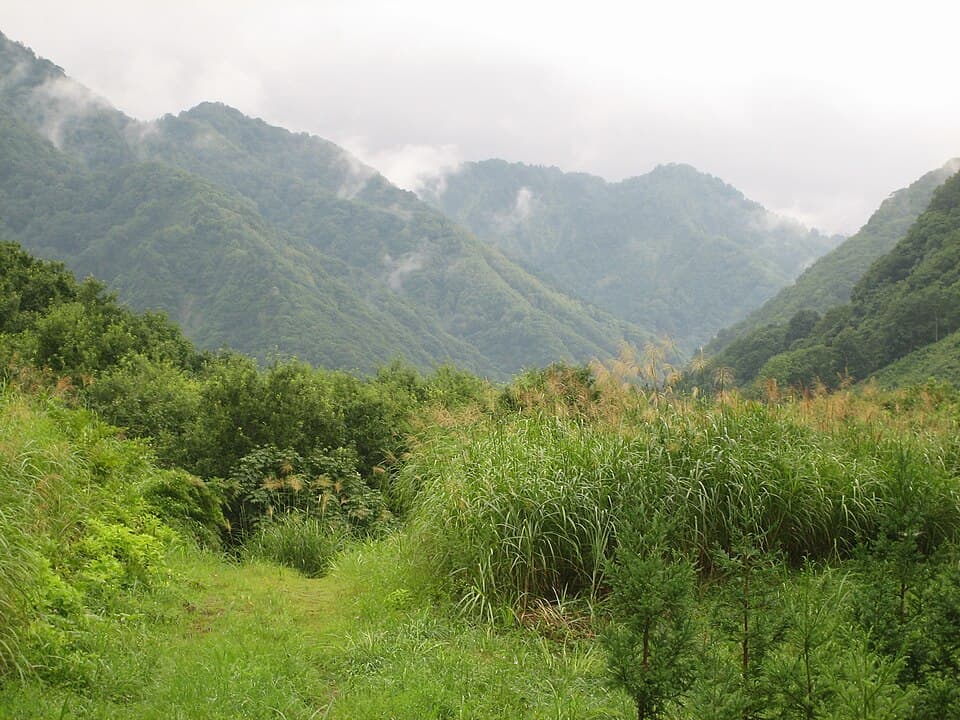
Almost everything Akita is known for comes out of snow and rice. The food and the crafts both lead back there.
Local Specialties
Akitakomachi is an original variety that the prefecture spent many years breeding.
Where there is rice, there is sake. Akita is known for the number of its breweries, and it suits kanzukuri, the slow cold fermentation of winter. The winter temperature is itself the condition of the brewing.
Fukui's spectacle frames, Niigata's hemp, Akita's sake: the starting point is the same. Long winters. What divided the industries was what each place chose to do with a disadvantage.
Tonburi, pickled junsai and iburigakko all came out of the same knowledge of how to keep food.
Souvenirs
Kiritanpo is cooked rice mashed, wrapped around a skewer and grilled. It began as food carried into the mountains for work. Today it travels vacuum-packed.
Sake, and a kaba-zaiku tea caddy. Both are things you use after you get home.
Sacred Sites | Shrines & Temples
Taiheizan Miyoshi Jinja is the head shrine of Japan's Miyoshi shrines (head shrine of all Miyoshi shrines in Japan). Oyu Kanjo Resseki is a UNESCO World Heritage Site. 27 shrines and temples worth knowing in Akita.
Chokaisan Omonoimi Jinja(Nikaho and nearby)Shinto shrine / Ichinomiya (first shrine) of Dewa Province / Important Cultural Property / Yuri / Blessings: mountain worship, good harvests, safe voyages
Its inner shrine stands on the summit of Mount Chokai, and which prefecture the peak belongs to, Akita or Yamagata, was disputed for a very long time. A place of worship takes shape by a logic of its own, not by administrative lines.
Shinzan Jinja(Oga)Shinto shrine / Central area / Blessings: warding off misfortune, mountain worship
The stage for the new year Saito festival and the namahage rite. A ceremony survives here in which participants cross red-hot iron barefoot. Mountain worship in northern Japan keeps forms that are proved with the body.
Koshio Jinja(Akita)Shinto shrine / Central area / Blessings: victory, warding off misfortune
An old shrine tied to legends of the subjugation of the Emishi. It preserves an early stratum of belief in Akita.
Iyataka Jinja(Akita)Shinto shrine / Central area / Blessings: study and exams
It enshrines the scholar of Japanese classics Hirata Atsutane, and stands on the site of Kubota Castle, now Senshu Park.
Akagami Jinja Goshado(Oga)Shinto shrine / Important Cultural Property / Central area / Blessings: warding off misfortune, mountain worship
Beyond 999 stone steps, said to have been piled up by ogres in a single night, five halls stand in a row. One source of the namahage legend.
Karamatsu Jinja(Daisen)Shinto shrine / Southern area / Blessings: safe childbirth, love and relationships
Unusually, the hall sits lower than the approach path. It draws prayers for safe childbirth.
Chokaisan Sancho(Nikaho)Shinto shrine / Important Cultural Property / Yuri / Blessings: mountain worship
It stands at the 2,236-metre summit. Which prefecture the peak belonged to was disputed for generations.
Akita Gokoku Jinja(Akita)Shinto shrine / Central area / Blessings: warding off misfortune
It stands in Takashimizu Park.
Kakunodate Shinmeisha(Semboku)Shinto shrine / Southern area / Blessings: good fortune
The tutelary shrine of the samurai district. The float rite of the Kakunodate festival is UNESCO Intangible Cultural Heritage.
Taiheizan Miyoshi Jinja(Akita)Shinto shrine / Head shrine of the Miyoshi faith / Central area / Head shrine of Miyoshi shrines (head shrine of all Miyoshi shrines in Japan) / Blessings: victory, warding off misfortune
The head shrine of Miyoshi Reijin, a deity of strength. Its Bonten festival at the lunar new year is known for a fierce scramble.
Shinzan Jinja(Yurihonjo)Shinto shrine / Yuri / Blessings: warding off misfortune
It preserves a striking rite in which worshippers parade in loincloths.
Goshado Ishidan(Oga)Shinto shrine / Central area / Blessings: warding off misfortune
Stone steps said to have been piled up by ogres in one night. The core of the namahage legend.
Kanmanji(Nikaho)Buddhist temple / Yuri / Blessings: warding off misfortune
The temple at Kisakata that Basho visited. It once looked out on a scattering of islands in the sea.
Hiyoshi Jinja(Noshiro)Shinto shrine / Northern area / Blessings: warding off misfortune
The tutelary shrine of Noshiro, which preserves the Yaku-Tanabata rite.
Gozanoishi Jinja(Semboku)Shinto shrine / Southern area / Blessings: love and relationships, long life
Vermilion torii stand on the shore of Lake Tazawa. It carries the legend of Princess Tatsuko.
Oyu Kanjo Resseki(Kazuno)Utaki (Ryukyuan sacred grove) / Special Historic Site / UNESCO World Heritage (Cultural) / Northern area / Blessings: rebirth and renewal
Jomon stone circles, held to be a ritual site, and a component of the World Cultural Heritage site of Jomon Prehistoric Sites in Northern Japan.
Warabioka(Nikaho)Shinto shrine / Important Cultural Property / Yuri / Blessings: mountain worship
The Akita-side starting point for the climb up Mount Chokai.
Hachiman Akita Jinja(Akita)Shinto shrine / Central area / Blessings: victory
It stands on the site of Kubota Castle and enshrines the Satake clan.
Kakunodate Shinmeisha(Semboku)Shinto shrine / Southern area / Blessings: good fortune
The float rite of the Kakunodate festival is UNESCO Intangible Cultural Heritage.
Taiheizan Okumiya(Akita)Shinto shrine / Central area / Blessings: victory, mountain worship
At the 1,170-metre summit. Worshippers climb in summer.
Oga Shinzan(Oga)Utaki (Ryukyuan sacred grove) / Central area / Blessings: warding off misfortune
The namahage are visiting deities. UNESCO Intangible Cultural Heritage.
Haushiwake Jinja(Yokote)Shinto shrine / Important Cultural Property / Southern area / Blessings: good harvests
Its kagura hall is an Important Cultural Property, and Shimotsuki Kagura is performed here.
Sanzugawa(Yuzawa)Utaki (Ryukyuan sacred grove) / Southern area / Blessings: rebirth and renewal
The name of the river is itself the boundary with the other world.
Hiyoshi Jinja (Noshiro)(Noshiro)Shinto shrine / Northern area / Blessings: warding off misfortune
The tutelary shrine of Noshiro, which preserves the Yaku-Tanabata rite.
Akagami Gosha-do(Oga)Shinto shrine / Important Cultural Property / Central area / Blessings: warding off misfortune
The 999 steps are said to have been piled up by ogres in one night. Five halls stand in a row above.
Karamatsu Jinja(Daisen)Shinto shrine / Southern area / Blessings: safe childbirth
An unusual arrangement, with the hall set lower than the approach path.
Kujukushima(Nikaho)Utaki (Ryukyuan sacred grove) / Natural Monument / Yuri / Blessings: rebirth and renewal
Once islands afloat in the sea. An earthquake lifted the land, and they now stand among the rice fields.
Sightseeing
Isedotai is a UNESCO World Heritage Site. Breakdown: castle 2, historic townscape 2, hot spring 2, nature / scenery 1. 15 places to see in Akita.
Akitajo(Akita)castle / Central area / Historic Site / 733
The site of the administrative base of Dewa Province, overlapping with the cult of Koshio Jinja.
Hachimantai Toji(Kazuno)hot spring / Northern area
At Goshogake and elsewhere, the bathing places themselves became places of worship.
Sedo Matsuri(Oga)festival / event / Central area
The rite held to be the source of the namahage tradition. Fires are lit on a winter night.
Hachiman Akita Jinja(Akita)castle / Central area / 1878
It stands on the site of Kubota Castle and enshrines the Satake clan.
Yokote Kamakura(Yokote)festival / event / Southern area
A water deity is enshrined inside a snow hut. Belief embedded in daily life became a festival as it was.
Inukko(Yuzawa)festival / event / Southern area
Dog figures are placed in shrines made of snow, in a folk rite that prays for protection against theft.
Kakunodate(Semboku)historic townscape / Southern area / Preservation District for Traditional Buildings
Black plank walls and weeping cherries. The little Kyoto of the north.
Kanto Matsuri(Akita)festival / event / Central area / Important Intangible Folk Cultural Property
A pole hung with 46 lanterns is balanced on the forehead or the hip. It weighs fifty kilograms.
Lake Tazawa(Semboku)nature / scenery / Southern area
The deepest lake in Japan. At 423 metres, its bed lies below sea level.
Nyuto Onsen(Semboku)hot spring / Southern area
Seven hot springs scattered through the valley. Tsuru-no-yu keeps its thatched Edo-period lodging.
Namahage(Oga)festival / event / Central area / Important Intangible Folk Cultural Property
UNESCO Intangible Cultural Heritage as a "visiting deity" tradition. They call at every house on New Year's Eve.
Isedotai(Kitaakita)burial mound / archaeological site / Northern area / Historic Site / UNESCO World Heritage (Cultural) / UNESCO World Heritage / late Jomon period
Four stone circles stand together, held to be a ritual site.
Yokote Kamakura(Yokote)festival / event / Southern area
A water deity is enshrined in a snow hut, and sweet amazake is served inside.
Hinai Jidori(Odate)historic townscape / Northern area
One of the three great native chicken breeds of Japan. It makes the broth for kiritanpo hotpot.
GAO(Oga)museum / theatre / Central area
Tanks that reach out over the Japan Sea. It keeps polar bears.
Traditional Crafts
Four crafts hold national designation: kaba-zaiku cherry-bark work, Kawatsura lacquerware, Odate magewappa bentwood, and Akita cedar tubs and barrels.
The kaba in kaba-zaiku means the bark of the wild cherry. And Odate magewappa bends Akita cedar and stitches it closed with that same cherry bark. One material carries two crafts.
More: VILLAGE Journal vol.45 — Vessels made from cherry bark(リンク先は現在公開されていません)
More from This Prefecture
See all Akita articles ← All 47 prefectures
Sources: Akita Prefecture, City of Semboku, City of Odate, City of Oga, City of Yokote, Agency for Cultural Affairs, Association for the Promotion of Traditional Craft Industries — Value Village editorial team