Gifu: Local Specialties, Souvenirs, Shrines & Temples, Sightseeing | Japan 47 Prefecture Guide
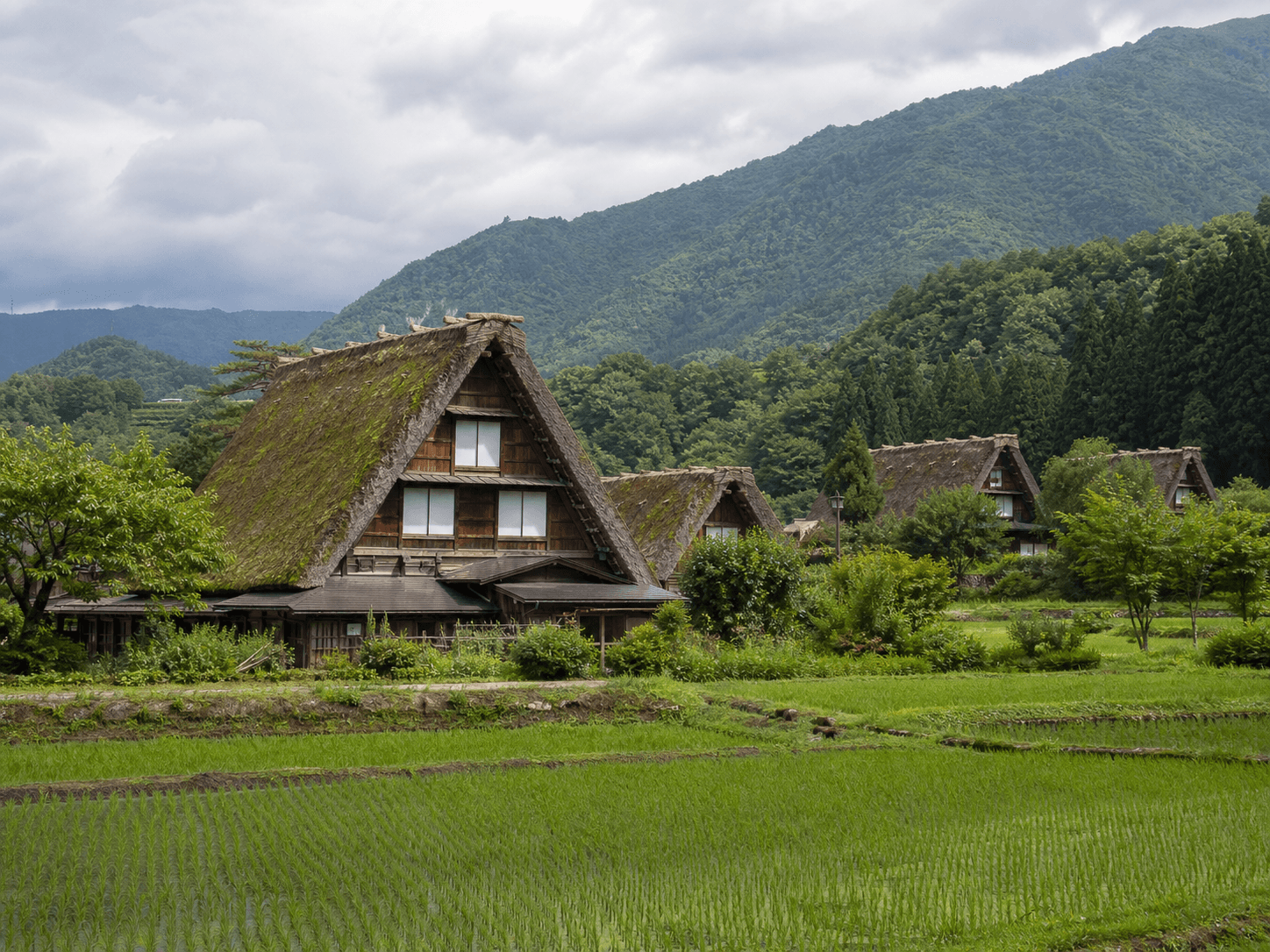
Gifu is an inland prefecture in the exact middle of Japan. Hida in the north and Mino in the south divide sharply, in food and in crafts.
Local Specialties
Mino ware accounts for a large share of the ceramic tableware produced in Japan. Many of the bowls and plates you use were fired around Tajimi and Toki.
What most marks Mino ware is that it has no single style. Shino, Oribe, Ki-Seto: named styles exist, but as a district it can fire anything. The opposite road from the districts that survived by making one thing only.
Hida beef, horse chestnuts, pickles laid down in midwinter. Being inland, out of reach of fresh fish, deepened the culture of preserved food.
Souvenirs
Mino ware vessels make a souvenir across a wide range of prices, from a few hundred yen for a small dish up to studio work.
Gohei-mochi, horse chestnut crackers, Hida sake. And the Gifu lantern, made from Mino washi and fine bamboo ribs.
Sacred Sites | Shrines & Temples
Nangu Taisha is the head shrine of Japan's shrines to Kanayamahiko-no-Kami (regarded as the head shrine of mining and metalworking). Myozenji is a UNESCO World Heritage Site. 31 shrines and temples worth knowing in Gifu.
Nangu Taisha(Tarui)Shinto shrine / Ichinomiya (first shrine) of Mino Province / Important Cultural Property / Seino / Head shrine of shrines to Kanayamahiko-no-Kami (regarded as the head shrine of mining and metalworking) / Blessings: wealth, victory
The head shrine of Kanayamahiko, the deity of metal. This series has passed through blade and metal country again and again: Sakai, Echizen, Kochi, Tsubame-Sanjo, Takaoka. This is where those people come to put their hands together. An industry carries a faith that holds it up.
Inaba Jinja(Gifu)Shinto shrine / Gifu / Blessings: warding off misfortune, good fortune
An old shrine at the foot of Mount Inaba. It is said to have been moved to its present site when Nobunaga built Gifu Castle.
Hida Kokubunji(Takayama)Buddhist temple / Important Cultural Property / Natural Monument / Hida / Blessings: warding off misfortune, long life
A three-storey pagoda and a great ginkgo said to be over 1,200 years old. A place where the skill of the Hida carpenters is handed down.
Chiyobo Inari Jinja(Kaizu)Shinto shrine / Counted among the Three Great Inari Shrines / Seino / Blessings: business prosperity, wealth
Known affectionately as Ochobo-san, it fills with worshippers through the night at the end of each month. Kushikatsu shops line the approach.
Kegonji(Ibigawa)Buddhist temple / Saigoku 33-Temple Pilgrimage, Temple No. 33 / Seino / Blessings: rebirth and renewal, warding off misfortune
The last temple of the Saigoku 33 Kannon pilgrimage. As the temple of fulfilment, it is where the circuit ends.
Sakurayama Hachimangu(Takayama)Shinto shrine / Hida / Blessings: victory, warding off misfortune
The stage of the autumn Takayama festival. Its float rite is UNESCO Intangible Cultural Heritage, and gathers the whole skill of the Hida carpenters.
Eihoji(Tajimi)Buddhist temple / National Treasure / Place of Scenic Beauty / Tono / Blessings: warding off misfortune
Both the Kannon hall and the founder's hall are National Treasures. The garden, attributed to Muso Soseki, is a Place of Scenic Beauty.
Shirakawa Hachiman Jinja(Shirakawa)Shinto shrine / Hida / Blessings: good harvests
Known for its doburoku festival, a rite that holds the village together.
Hie Jinja (Takayama)(Takayama)Shinto shrine / Hida / Blessings: warding off misfortune
The shrine of the spring Takayama festival, the Sanno festival. Its float rite is UNESCO Intangible Cultural Heritage.
Hida Kokubunji Sanjunoto(Takayama)Buddhist temple / Important Cultural Property / Hida / Blessings: warding off misfortune
The great ginkgo in its grounds is said to be 1,200 years old.
Kishitsurugi Jinja(Gujo)Shinto shrine / Chuno / Blessings: warding off misfortune
One of the shrines where the Gujo Odori began. Known for dancing through the night.
Sofukuji(Gifu)Buddhist temple / Gifu / Blessings: victory
The funerary temple of Oda Nobunaga and Nobutada. A blood-stained ceiling survives.
Gifu Daibutsu(Gifu)Buddhist temple / Important Cultural Property / Gifu / Blessings: warding off misfortune
A basket Buddha made of bamboo, clay and washi. The largest dry-lacquer Buddha in Japan.
Yoro no Taki(Yoro)Shinto shrine / Place of Scenic Beauty / Seino / Blessings: long life
From the tale of a dutiful son for whom the falls turned to sake came the era name Yoro.
Mangando(Ibigawa)Buddhist temple / Seino / Blessings: rebirth and renewal
As proof of completing the Saigoku 33, pilgrims receive three temple seals here.
Oyada Jinja(Mino)Shinto shrine / Important Cultural Property / Chuno / Blessings: warding off misfortune
The main hall and worship hall are Important Cultural Properties. Known for the autumn colour of Momiji Valley.
Eihoji Teien(Tajimi)Buddhist temple / Place of Scenic Beauty / Tono / Blessings: warding off misfortune
A pond garden attributed to Muso Soseki, crossed by the Musai bridge.
Kano Tenmangu(Gifu)Shinto shrine / Gifu / Blessings: study and exams
It was moved to its present site when Kano Castle was built.
Oicho(Takayama)Buddhist temple / Natural Monument / Hida / Blessings: long life
Said to be 1,200 years old. When its leaves fall, they say, the snow comes.
Hida Soja(Takayama)Shinto shrine / Hida / Blessings: warding off misfortune
It enshrines the eighteen shrines of Hida Province together.
Myozenji(Shirakawa)Buddhist temple / UNESCO World Heritage (Cultural) / Hida / Blessings: rebirth and renewal
An unusual temple with a gassho-zukuri bell gate and priest's quarters.
Jion Zenji(Gujo)Buddhist temple / Chuno / Blessings: warding off misfortune
It has a garden called Tessoen, and stands in the castle town of Gujo Hachiman.
Kasuga No(Seki)Shinto shrine / Important Cultural Property / Chuno / Blessings: the performing arts
Its Noh masks and costumes are Important Cultural Properties, dedicated over generations by swordsmiths.
Hachiman Jinja (Mino)(Mino)Shinto shrine / Chuno / Blessings: business prosperity
The tutelary shrine of the town of Mino washi and udatsu firewalls.
Oi-juku(Ena)Utaki (Ryukyuan sacred grove) / Tono / Blessings: road safety
A post town on the Nakasendo. Small shrines praying for safe travel still stand along the road.
Takamine Jinja(Nakatsugawa)Shinto shrine / Tono / Blessings: mountain worship
Known as a district where the anti-Buddhist movement of early Meiji was carried out to the letter.
Onsenji (Gero)(Gero)Buddhist temple / Chuno / Blessings: long life
It carries a legend that a white heron showed people where the water rose. You climb 173 stone steps.
Hakusan Chukyo Jinja(Gujo)Shinto shrine / Chuno / Blessings: mountain worship
The Mino-side starting point for the climb up Hakusan. Great cedars stand in rows.
Ochobo Inari(Kaizu)Shinto shrine / Seino / Blessings: business prosperity, wealth
Ochobo-san. It fills with worshippers through the night at the end of each month.
Ogaki Hachiman Jinja(Ogaki)Shinto shrine / Seino / Blessings: long life
Water wells up freely in its grounds, the emblem of the city of water.
Tanigumisan(Ibigawa)Buddhist temple / Seino / Blessings: rebirth and renewal
Souvenir shops line the approach. Pilgrims who had completed the circuit gathered here.
Sightseeing
Wadake and Shirakawa-go is a UNESCO World Heritage Site. Breakdown: castle 3, historic townscape 4, hot spring 2, industrial heritage 1. 16 places to see in Gifu.
Mizubune(Gujo)hot spring / Chuno
A system that divides spring water into three tiers for different uses. A life that reveres water, surviving as it was.
Kinkazan(Gifu)castle / Gifu
The mountain castle from which Nobunaga proclaimed rule over the realm. It looks down on the cormorant fishing of the Nagara river.
Magome-juku(Nakatsugawa)historic townscape / Tono
A post town along a paved slope, and the birthplace of Shimazaki Toson.
Nagaragawa Ukai(Gifu)other / Gifu / Important Intangible Folk Cultural Property
A fishing method that has run for more than 1,300 years. The masters hold office under the Imperial Household Agency.
Kasuga Jinja (Seki)(Seki)museum / theatre / Chuno / Important Cultural Property / 1288 (traditional date)
The shrine the swordsmiths took as their tutelary god. The source of the blades of Seki.
Wadake(Shirakawa)other / Hida / Important Cultural Property / UNESCO World Heritage (Cultural) / UNESCO World Heritage / mid-Edo period
The largest gassho-zukuri house in Shirakawa-go. Silkworms were raised in the roof space.
Takayama Jinya(Takayama)castle / Hida / Historic Site / 1692
The only Edo-period magistrate's office still standing anywhere in Japan, proof that Hida was ruled directly by the shogunate.
Shirakawa-go(Shirakawa)historic townscape / Hida / Preservation District for Traditional Buildings / UNESCO World Heritage (Cultural) / UNESCO World Heritage
Gassho-zukuri houses. The roofs stand at 60 degrees to shed snow, and silkworms were raised beneath them.
Sanmachi(Takayama)historic townscape / Hida / Preservation District for Traditional Buildings
Townhouses with projecting lattice windows stand in rows. The little Kyoto of Hida.
Gujo Odori(Gujo)festival / event / Chuno / Important Intangible Folk Cultural Property
Thirty-two nights of dancing, four of them through till dawn over Obon. Anyone may join the circle.
Takayama Matsuri(Takayama)festival / event / Hida / Important Intangible Folk Cultural Property / UNESCO Intangible Cultural Heritage
Mechanical puppets on the floats. UNESCO Intangible Cultural Heritage.
Gifu-jo(Gifu)castle / Gifu / Historic Site / 1201
The mountain castle from which Nobunaga proclaimed rule over the realm. A ropeway runs up.
Nagaragawa Ukai(Gifu)festival / event / Gifu / Important Intangible Folk Cultural Property
A fishing method of 1,300 years. The masters hold office under the Imperial Household Agency.
Gero Onsen(Gero)hot spring / Chuno
One of the three finest springs of Japan. Hayashi Razan set it beside Arima and Kusatsu.
Seki Cutlery(Seki)industrial heritage / Chuno
Swordsmithing since the Kamakura period. Today a world centre for kitchen knives and scissors.
Mino Udatsu(Mino)historic townscape / Chuno / Preservation District for Traditional Buildings
Merchant houses made rich by washi. More udatsu firewalls survive here than anywhere.
Traditional Crafts
Five crafts hold national designation: Mino ware, Mino washi, Hida shunkei lacquerware, ichii ittobori carving and Gifu lanterns.
Hon-Mino paper is one of the three washi traditions inscribed by UNESCO in 2014 as Washi: craftsmanship of traditional Japanese hand-made paper. Hida shunkei is lacquerware coated thinly in clear lacquer so that the grain of the wood shows through.
More: VILLAGE Journal vol.26 — Close to half the vessels on the table
More from This Prefecture
See all Gifu articles ← All 47 prefectures
Sources: Gifu Prefecture, City of Tajimi, City of Mino, City of Takayama, Tarui Town, Agency for Cultural Affairs, Association for the Promotion of Traditional Craft Industries — Value Village editorial team