Mie: Local Specialties, Souvenirs, Shrines & Temples, Sightseeing | Japan 47 Prefecture Guide
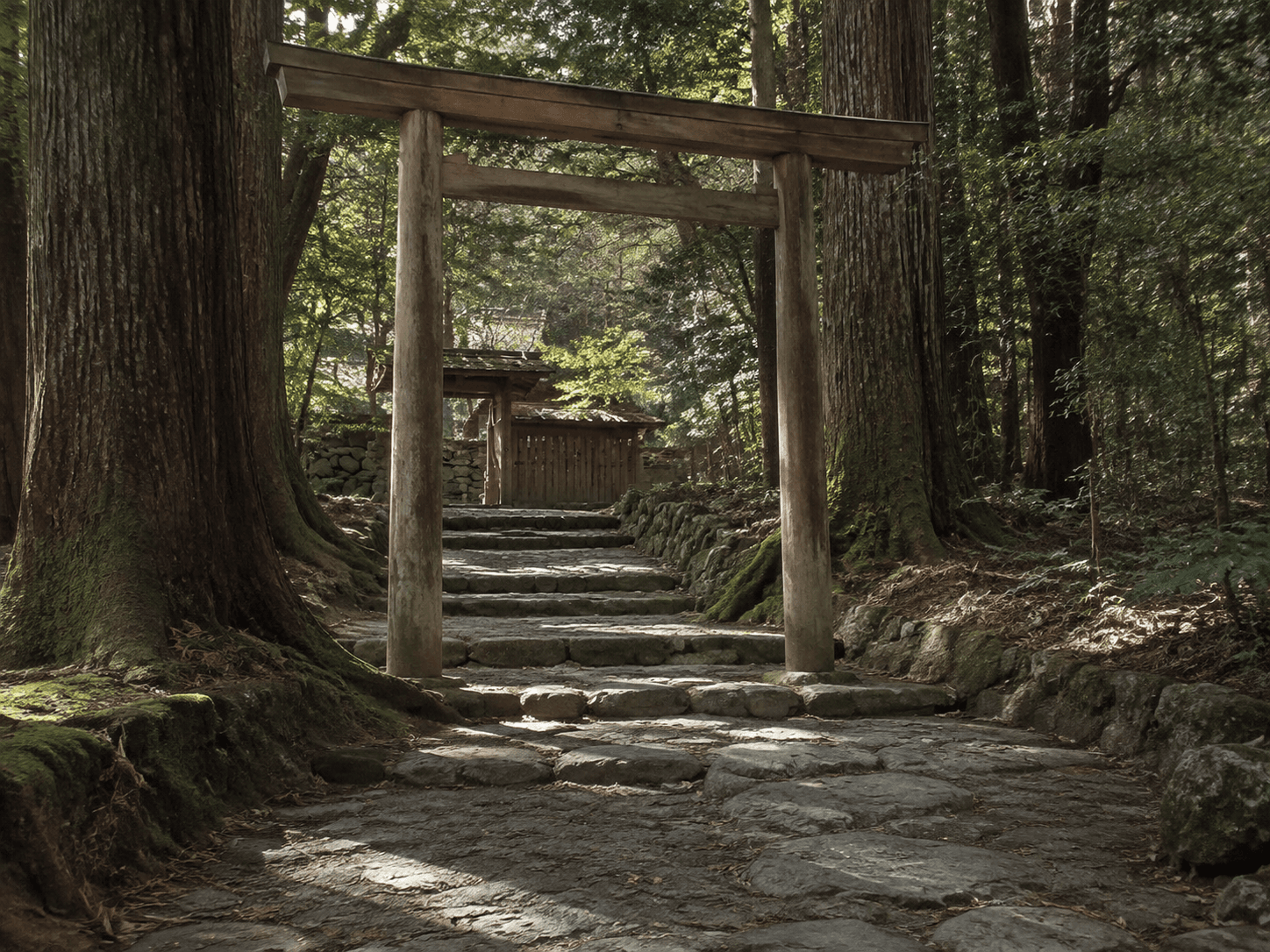
We now enter the Kinki region. Mie is the prefecture that holds the place taken as the centre of Shinto. It is also the prefecture that fired the clay pot in your kitchen.
Local Specialties
Yokkaichi Banko ware is said to hold about 80 percent of the domestic market for clay pots. Blending in the mineral petalite gave the body enough resistance to sit over a direct flame without cracking.
The name comes from the seal used by Nunami Rozan in the mid-Edo period: banko fueki, unchanging for ever. A ware named for not changing took 80 percent of the market in a pot, the most breakable use there is. The name turned out to be right.
Spiny lobster, abalone, pearls from Ago Bay. Matsusaka beef is from here too. Ise tea ranks third in production, behind Shizuoka and Kagoshima.
Souvenirs
Akafuku mochi is rice cake wrapped in bean paste. The three ridges on its surface are said to represent the current of the Isuzu river. It has been made for pilgrims for a very long time.
Ise udon, deep-fried whole fish, pearl jewellery, and Banko teapots and clay pots.
Sacred Sites | Shrines & Temples
Tsubaki Okami Yashiro is the head shrine of Japan's shrines to Sarutahiko-no-Okami (regarded as the head of about 2,000 shrines nationwide). Hana no Iwaya Jinja and Magose Toge and Jirozaka is a UNESCO World Heritage Site. 34 shrines and temples worth knowing in Mie.
Ise Jingu(Ise)Shinto shrine / Jingu, the head of all shrines in Japan / Ise-Shima / Blessings: good fortune, warding off misfortune, good harvests
The collective name for 125 shrines, the Inner and Outer Shrines among them. The rebuilding every twenty years is a method of preservation aimed not at the building but at the skill of building it, and its root is the same as the passing on of crafts we have followed through this series.
Futami Okitama Jinja(Ise)Shinto shrine / Ise-Shima / Blessings: warding off misfortune, love and relationships
Known for the Wedded Rocks. It was the custom to purify yourself here before going on to Ise.
Kongoshoji(Ise)Buddhist temple / Important Cultural Property / Ise-Shima / Blessings: warding off misfortune
On top of Mount Asama, sung of in the saying that a visit to Ise should include Asama. It is held to guard the demon gate of the Grand Shrine.
Senjuji(Tsu)Buddhist temple / head temple of the Shinshu Takada school / National Treasure / Chusei / Blessings: warding off misfortune
Its Mieido and Nyoraido halls are National Treasures, among the largest wooden buildings in Japan.
Tsubaki Okami Yashiro(Suzuka)Shinto shrine / Ichinomiya (first shrine) of Ise Province / Hokusei / Head shrine of shrines to Sarutahiko-no-Okami (regarded as the head of about 2,000 shrines nationwide) / Blessings: road safety, good fortune, warding off misfortune
The head shrine of Sarutahiko-no-Okami, the deity who opens the way. As a god who opens roads, he draws prayers for road safety and at turning points in life.
Tado Taisha(Kuwana)Shinto shrine / Hokusei / Blessings: warding off misfortune, good harvests
Sung of in the saying that a visit to Ise should include Tado. Known for the Ageuma rite, in which horses charge up a steep slope.
Izawanomiya(Shima)Shinto shrine / Auxiliary shrine of Ise Jingu / Ise-Shima / Blessings: good harvests, good catches
An auxiliary shrine of Ise Jingu, steeped in the faith of sea people. Its rice-planting rite is an Important Intangible Folk Cultural Property.
Naiku(Ise)Shinto shrine / Jingu (imperial shrine) / Ise-Shima / Blessings: good fortune
It enshrines Amaterasu Omikami. Every twenty years the halls, the vestments and the sacred treasures are all made anew.
Geku(Ise)Shinto shrine / Jingu (imperial shrine) / Ise-Shima / Blessings: business prosperity, good harvests
It enshrines the deity of food. The old order of worship is to go from the Outer Shrine to the Inner.
Ujibashi(Ise)Shinto shrine / Ise-Shima / Blessings: rebirth and renewal
The bridge that divides the everyday from the sacred. It is rebuilt in step with the twenty-year renewal.
Isuzugawa Mitarashi(Ise)Shinto shrine / Ise-Shima / Blessings: rebirth and renewal
You purify your hands in the running river. The mother of Tokugawa Tsunayoshi gave the stone paving.
Tsukiyomi no Miya(Ise)Shinto shrine / Ise-Shima / Blessings: good fortune
An auxiliary shrine of the Inner Shrine. Four halls stand side by side.
Takihara no Miya(Taiki)Shinto shrine / Ise-Shima / Blessings: rebirth and renewal
An auxiliary shrine of the Inner Shrine, called the distant shrine. Deep forest surrounds it.
Sarutahiko Jinja(Ise)Shinto shrine / Ise-Shima / Blessings: good fortune, road safety
It enshrines the deity who opens the way, and is where people go before starting something new.
Meoto Iwa(Ise)Shinto shrine / Ise-Shima / Blessings: love and relationships
Around the summer solstice the sun rises between the two rocks. Worshippers once purified themselves here before going on.
Shichiri no Watashi(Kuwana)Shinto shrine / Historic Site / Hokusei / Blessings: safe voyages
The only sea crossing on the Tokaido began here. The first torii of Ise Province stands at the landing.
Ueno Tenjingu(Iga)Shinto shrine / Iga / Blessings: study and exams
The danjiri rite of the Ueno Tenjin festival is UNESCO Intangible Cultural Heritage, known for its procession of demons.
Akame Shijuhachitaki(Nabari)Utaki (Ryukyuan sacred grove) / Place of Scenic Beauty / Iga / Blessings: mountain worship
A place of shugendo practice, also said to have been a training ground for ninja.
Ishigami-san(Toba)Shinto shrine / Ise-Shima / Blessings: good fortune
Long revered by the ama divers. It is said to grant one wish to a woman.
Suwa Jinja (Yokkaichi)(Yokkaichi)Shinto shrine / Hokusei / Blessings: warding off misfortune
The tutelary shrine of Yokkaichi, and the faith of a town of Banko ware.
Hana no Iwaya Jinja(Kumano)Shinto shrine / UNESCO World Heritage (Cultural) / Higashi-Kishu / Blessings: rebirth and renewal, safe childbirth
Held to be among the oldest shrines recorded in the Nihon Shoki. A rock 45 metres high is itself the deity.
Magose Toge(Owase)Utaki (Ryukyuan sacred grove) / UNESCO World Heritage (Cultural) / Higashi-Kishu / Blessings: road safety
Said to be the most beautiful paved pass on the Iseji route of the Kumano Kodo.
Mikuriya Jinja(Matsusaka)Shinto shrine / Chusei / Blessings: business prosperity
Its name comes from the mikuriya, the estates that supplied food to Ise Jingu. The shrine of a town of Matsusaka merchants.
Asamayama(Ise)Utaki (Ryukyuan sacred grove) / Ise-Shima / Blessings: rebirth and renewal
Held to be the mountain the souls of the dead climb. Huge grave tablets stand in a forest of their own.
Yamatohime no Miya(Ise)Shinto shrine / Ise-Shima / Blessings: good fortune
It enshrines Yamatohime-no-Mikoto, who chose where Ise Jingu would stand.
Kazahinomi no Miya(Ise)Shinto shrine / Ise-Shima / Blessings: good harvests
It governs wind and rain. It was raised to the rank of miya for having sent the divine wind against the Mongol invasions.
Mitakedera(Komono)Buddhist temple / Hokusei / Blessings: mountain worship
At the foot of Mount Gozaisho. It was once a great temple with warrior monks of its own.
Kuwana Sosha(Kuwana)Shinto shrine / Hokusei / Blessings: business prosperity
The Ishidori festival is called the noisiest in Japan. UNESCO Intangible Cultural Heritage.
Tsubaki Nakato Jinja(Suzuka)Shinto shrine / Ichinomiya (first shrine) of Ise Province / Hokusei / Blessings: road safety
One of the shrines claiming to be first of Ise Province.
Shindaibutsuji(Iga)Buddhist temple / Important Cultural Property / Iga / Blessings: rebirth and renewal
Founded by Chogen, who rebuilt Todaiji. It preserves a Nyorai figure by Kaikei.
Mirokuji(Nabari)Buddhist temple / Iga / Blessings: warding off misfortune
An old temple of Iga.
Tengurasan(Owase)Utaki (Ryukyuan sacred grove) / Higashi-Kishu / Blessings: mountain worship
A great rock looking down on the Kumano Kodo.
Jirozaka(Kihoku)Utaki (Ryukyuan sacred grove) / UNESCO World Heritage (Cultural) / Higashi-Kishu / Blessings: road safety
A pass on the Iseji route of the Kumano Kodo. Crossing the old provincial border was the hardest stretch.
Keishoji(Matsusaka)Buddhist temple / Chusei / Blessings: warding off misfortune
It claims to be the first Kannon of warding off misfortune in Japan. The Hatsuuma festival fills it with people.
Sightseeing
Onigajo is a UNESCO World Heritage Site. Breakdown: castle 1, historic townscape 3, nature / scenery 3, industrial heritage 3. 13 places to see in Mie.
Onigajo(Kumano)castle / Higashi-Kishu / Natural Monument / Place of Scenic Beauty / UNESCO World Heritage (Cultural) / UNESCO World Heritage
A great rock wall cut by the waves. Part of the Kumano Kodo World Heritage site.
Okage Yokocho(Ise)historic townscape / Ise-Shima / 1993
Before the gate of the Inner Shrine. The streets of the Edo and Meiji eras have been recreated.
Ago Bay(Shima)nature / scenery / Ise-Shima
Pearl rafts float on a rias coast. This is the sea where Mikimoto Kokichi first succeeded in culturing pearls.
Meoto Iwa(Ise)nature / scenery / Ise-Shima
Around the summer solstice the sun rises between the two rocks.
Nabana no Sato(Kuwana)garden / park / Hokusei
One of the largest illumination displays in Japan, with a begonia garden alongside.
Iga Ninja Museum(Iga)museum / theatre / Iga / 1964
A ninja house with revolving walls and hidden doors, moved here and rebuilt.
Matsusaka Beef(Matsusaka)historic townscape / Chusei
Only virgin Japanese Black cattle qualify. It is called the art of meat.
Ise Kaido(Matsusaka and nearby)industrial heritage / Chusei
The road of the Ise pilgrimage. There was an age when several million people a year walked it.
Kumano Fireworks(Kumano)festival / event / Higashi-Kishu
Shells burst against the rock wall of Onigajo in what is called the sea self-detonation. It has run for 300 years.
Ama Hut(Toba)historic townscape / Ise-Shima
Huts where the free-diving ama warm themselves. More ama remain here than anywhere in Japan.
Akame Falls(Nabari)nature / scenery / Iga / Place of Scenic Beauty / Natural Monument
A place of shugendo practice. Giant salamanders live here.
Suzuka Circuit(Suzuka)industrial heritage / Hokusei / 1962
The first full-scale racing circuit in Japan, with a figure-of-eight course that crosses over itself.
Banko Ware(Yokkaichi)industrial heritage / Hokusei
Purple-clay teapots. Most of the clay pots made in Japan come from here.
Traditional Crafts
Five crafts hold national designation: Yokkaichi Banko ware, Iga kumihimo braid, Suzuka ink sticks, Iga ware, and Ise stencil paper.
Ise stencil paper is designated not as a craft object but as a tool for making craft objects. Neither Kyo yuzen nor Tokyo komon could be dyed without this paper.
More: VILLAGE Journal vol.20 — Eight in ten clay pots, fired in this town
More from This Prefecture
See all Mie articles ← All 47 prefectures
Sources: Mie Prefecture, City of Yokkaichi, City of Ise, City of Suzuka, Agency for Cultural Affairs, Association for the Promotion of Traditional Craft Industries — Value Village editorial team