Shiga: Local Specialties, Souvenirs, Shrines & Temples, Sightseeing | Japan 47 Prefecture Guide
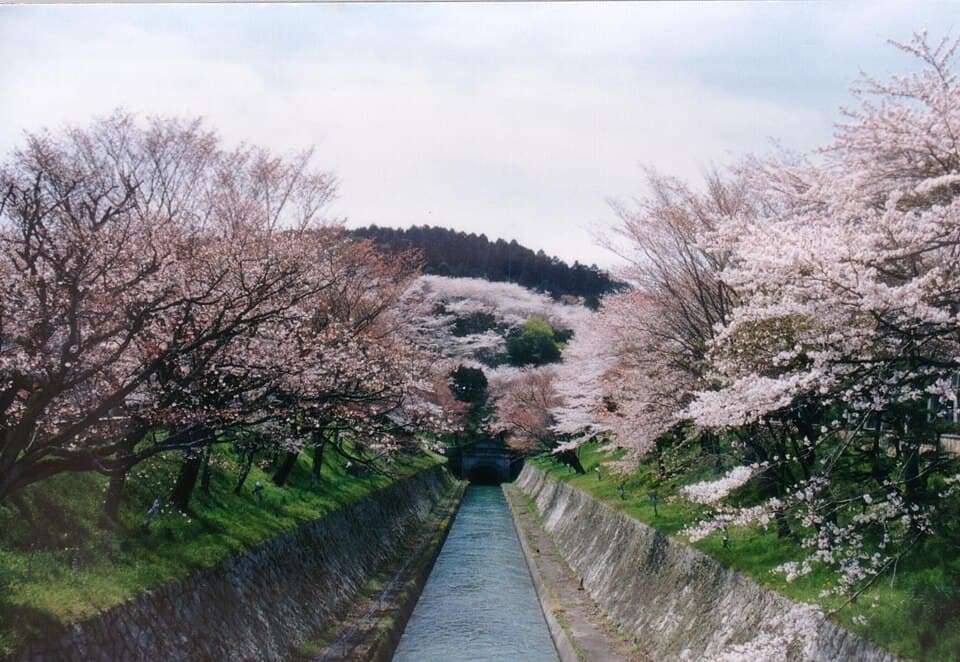
In Shiga, a sixth of the prefecture is Lake Biwa. And it sits next to Kyoto. Those two facts decide the food and the beliefs.
Local Specialties
Omi beef is held to be among the oldest wagyu brands in Japan for which records survive. In the Edo period the Hikone domain presented it to the shogunal house as a restorative medicine.
This was an age when Buddhist influence held people back from eating meat. The single pretext of medicine was the one exception allowed. Today's brand beef started not as a feast but as a form of words.
Funazushi is nigorobuna from Lake Biwa pickled with rice for a year or more. Before refrigeration, it was the technique for keeping a freshwater fish through to the next year. Omi rice, red konjac and Asamiya tea are from here too.
Souvenirs
Ubagamochi and funazushi. And the Shigaraki tanuki.
The tanuki that once stood in gardens has only fairly recently come to stand outside shops all over Japan. Even so, Shigaraki now means tanuki. Traditions can have things added to them along the way.
Sacred Sites | Shrines & Temples
Hiyoshi Taisha is the head shrine of Japan's Hiyoshi, Hie and Sanno shrines (about 3,800 shrines). Enryakuji and Konpon Chudo and Todo Saito Yokawa is a UNESCO World Heritage Site. 34 shrines and temples worth knowing in Shiga.
Enryakuji(Otsu)Buddhist temple / head temple of the Tendai school / National Treasure / UNESCO World Heritage (Cultural) / Konan / Blessings: warding off misfortune, study and exams, mountain worship
The men who would later found their own schools all studied here: Honen of Jodo, Shinran of Jodo Shinshu, Eisai of Rinzai, Dogen of Soto, Nichiren of the Nichiren school. Most of the major schools of Japanese Buddhism pass through this mountain. That is why it is called the mother mountain.
Hiyoshi Taisha(Otsu)Shinto shrine / National Treasure / Important Cultural Property / Konan / Head shrine of Hiyoshi, Hie and Sanno shrines (about 3,800 shrines) / Blessings: warding off misfortune, good fortune
It enshrines the land deity of Mount Hiei, and its messenger is the sacred monkey. The way shrine and temple grew up side by side is still legible in the lie of the land.
Taga Taisha(Taga)Shinto shrine / Koto / Blessings: long life, love and relationships
Known affectionately as Otaga-san, it draws prayers for long life. The old saying ran: seven visits to Ise, three to Kumano, and to Otaga every month.
Ishiyamadera(Otsu)Buddhist temple / National Treasure / Konan / Blessings: study and exams, safe childbirth, good fortune
Said to be where Murasaki Shikibu began writing The Tale of Genji. The main hall and the tahoto pagoda are National Treasures.
Omi Jingu(Otsu)Shinto shrine / Konan / Blessings: study and exams, good fortune
It enshrines Emperor Tenji. Because he set up the first water clock in Japan, it is regarded as the shrine of clocks, and a clock museum stands in its grounds. It is also known as the venue for competitive karuta.
Miidera(Otsu)Buddhist temple / head temple of the Tendai Jimon school / National Treasure / Konan / Blessings: warding off misfortune, good fortune
Its main hall is a National Treasure. It holds the bell of the Evening Bell of Mii, one of the eight views of Omi. It stood against Enryakuji and was burned again and again, and rebuilt each time.
Shirahige Jinja(Takashima)Shinto shrine / Kosei / Head shrine of Shirahige shrines (regarded as the head of all Shirahige shrines in Japan) / Blessings: long life, good fortune
Known for the torii standing out in Lake Biwa, and called the Itsukushima of Omi. A deity of long life.
Hyakusaiji(Higashiomi)Buddhist temple / Historic Site / Place of Scenic Beauty / Koto / Blessings: warding off misfortune
An old temple said to have been founded by immigrants from the continent. One of the three mountain temples of eastern Omi, and famous for autumn colour.
Konpon Chudo(Otsu)Buddhist temple / National Treasure / UNESCO World Heritage (Cultural) / Konan / Blessings: warding off misfortune
The undying dharma lamp Saicho lit has burned for 1,200 years. Never letting the oil run out is itself the practice.
Todo Saito Yokawa(Otsu)Buddhist temple / UNESCO World Heritage (Cultural) / Konan / Blessings: study and exams, mountain worship
The whole mountain is the temple, in three districts. It produced Honen, Shinran, Dogen and Nichiren.
Sanno Torii(Otsu)Shinto shrine / Konan / Blessings: warding off misfortune
A distinctive form, with a triangular gable set on top of the torii. The fusion of Shinto and Buddhism, given shape.
Chikubushima Hogonji(Nagahama)Buddhist temple / Saigoku 33-Temple Pilgrimage, Temple No. 30 / National Treasure / Kohoku / Blessings: wealth, the performing arts
The whole island afloat in Lake Biwa is an object of worship. Its karamon gate, a National Treasure, was moved here from the Hokoku mausoleum.
Tsukubusuma Jinja(Nagahama)Shinto shrine / National Treasure / Kohoku / Blessings: wealth
The shrine on Chikubushima. Its main hall, a National Treasure, is said to be a surviving structure from Fushimi Castle.
Kongorinji(Aisho)Buddhist temple / National Treasure / Koto / Blessings: warding off misfortune
One of the three mountain temples of eastern Omi. The main hall is a National Treasure, and it is known for its blood-red maples.
Saimyoji (Shiga)(Kora)Buddhist temple / National Treasure / Koto / Blessings: warding off misfortune
One of the three mountain temples of eastern Omi. Both the main hall and the three-storey pagoda are National Treasures. It escaped Nobunaga's burning.
Kannonshoji(Omihachiman)Buddhist temple / Saigoku 33-Temple Pilgrimage, Temple No. 32 / Koto / Blessings: warding off misfortune
It stands on the summit of Mount Kinugasa, said to have been founded by Prince Shotoku.
Mudojidani(Otsu)Buddhist temple / Konan / Blessings: mountain worship
The base of the circling practice, set in a valley of Mount Hiei.
Himure Hachimangu(Omihachiman)Shinto shrine / Koto / Blessings: business prosperity
It drew the faith of the Omi merchants, and is known for the fire festivals of Sagicho and the Hachiman festival.
Shigaraki Toki Jinja(Koka)Shinto shrine / Konan / Blessings: business prosperity
The home of Shigaraki ware, one of the six ancient kilns of Japan, known for its tanuki figures.
Ukimido(Otsu)Buddhist temple / Konan / Blessings: safe voyages
A hall thrust out over Lake Biwa. The Descending Geese of Katata, one of the eight views of Omi. Basho wrote a verse here.
Sanjunoto(Otsu)Buddhist temple / Important Cultural Property / Konan / Blessings: warding off misfortune
Moved here from Nara. Miidera was burned many times, and rebuilt after each.
Sakamoto Satobo(Otsu)Buddhist temple / Important Preservation District for Groups of Traditional Buildings / Konan / Blessings: rebirth and renewal
A town where monks of Mount Hiei lived in retirement. Stone walls in the Ano-shu style run through it.
Higashi Hongu(Otsu)Shinto shrine / National Treasure / Konan / Blessings: warding off misfortune
A distinctive roof form called hiyoshi-zukuri. With the West Main Shrine, a National Treasure.
Tahoto (Ishiyama)(Otsu)Buddhist temple / National Treasure / Konan / Blessings: safe childbirth
Held to be the oldest tahoto pagoda in Japan, said to have been given by Minamoto no Yoritomo.
Eigenji(Higashiomi)Buddhist temple / Koto / Blessings: warding off misfortune
It stands in the gorge of the Echi river, and is famous for autumn colour.
Rakuyaji(Koka)Buddhist temple / Important Cultural Property / Konan / Blessings: warding off misfortune
It holds the largest seated eleven-headed Kannon in Japan.
Aburahi Jinja(Koka)Shinto shrine / Important Cultural Property / Konan / Blessings: fire protection
Its group of halls is an Important Cultural Property, and it is often used as a location for period drama.
Shanain(Nagahama)Buddhist temple / Important Cultural Property / Kohoku / Blessings: warding off misfortune
It was the administrative temple of Nagahama Hachimangu. Famous for its hibiscus.
Doganji(Nagahama)Buddhist temple / National Treasure / Kohoku / Blessings: warding off misfortune
A National Treasure eleven-headed Kannon, rated among the finest in the history of Japanese sculpture.
Yogoko(Nagahama)Utaki (Ryukyuan sacred grove) / Kohoku / Blessings: love and relationships
Held to be the site of the oldest feather robe legend in Japan.
Kochu Otorii(Takashima)Shinto shrine / Kosei / Blessings: long life
A vermilion torii standing out in the lake. People come without fail to photograph it at sunrise.
Taga Oku Shoin(Taga)Shinto shrine / Place of Scenic Beauty / Koto / Blessings: long life
Its Momoyama-period garden is a Place of Scenic Beauty.
Ono Jinja(Ritto)Shinto shrine / Important Cultural Property / Konan / Blessings: warding off misfortune
Its gate is an Important Cultural Property.
Shimonikawa Jinja(Moriyama)Shinto shrine / Konan / Blessings: good catches
A rite survives here that carries the origin of funazushi.
Sightseeing
Hikone-jo holds National Treasures. Breakdown: castle 1, historic townscape 3, nature / scenery 3, industrial heritage 1. 12 places to see in Shiga.
Hikone-jo(Hikone)castle / Koto / National Treasure / 1622
A surviving keep, and a National Treasure. It is at its finest seen from Genkyuen below.
Sennichi Kaihogyo(Otsu)festival / event / Konan
About 40,000 kilometres walked over seven years. The rule was that anyone who stopped partway was to take his own life.
Lake Biwa(Otsu and nearby)nature / scenery / Konan / Ramsar Wetland
The largest lake in Japan, taking up a sixth of the prefecture. An ancient lake, four million years old.
Genkyuen(Hikone)garden / park / Koto / Place of Scenic Beauty / 1677
The daimyo garden of Hikone Castle. The keep is seen across the pond.
Hachimanbori(Omihachiman)historic townscape / Koto / Preservation District for Traditional Buildings
A canal that joined Lake Biwa to the castle town. White-walled merchant storehouses line it.
Kurokabe Square(Nagahama)historic townscape / Kohoku / 1989
Built around a black-plastered former bank, the district was reborn as a town of glass.
Shigaraki(Koka)industrial heritage / Konan
One of the six ancient kilns of Japan. Tanuki figures, and the remains of climbing kilns.
Metasequoia Avenue(Takashima)nature / scenery / Kosei
Five hundred trees along 2.4 kilometres. The colour changes completely with the seasons.
Biwako Valley(Otsu)nature / scenery / Konan
Looking down on Lake Biwa from 1,100 metres.
Nagahama Hikiyama(Nagahama)festival / event / Kohoku / Important Intangible Folk Cultural Property / UNESCO Intangible Cultural Heritage
Children perform kabuki on the stage of the floats. UNESCO Intangible Cultural Heritage.
Omi Beef(Omihachiman)historic townscape / Koto
Held to be the oldest wagyu brand in Japan. The Hikone domain presented it to the shogun, cured in miso.
Miho Museum(Koka)museum / theatre / Konan / 1997
Designed by I. M. Pei. It appears at the far end of a tunnel and a suspension bridge.
Traditional Crafts
Three crafts hold national designation: Shigaraki ware, Hikone Buddhist altars, and Omi jofu linen.
Shigaraki ware is one of the six ancient kilns of Japan. And Hikone Buddhist altars came from the craftsmen who had made armour for the Hikone domain. The woodwork, lacquer and metal fittings of armour became, as they were, the skills of the altar.
More: VILLAGE Journal vol.21 — Armourers who turned to altars
More from This Prefecture
See all Shiga articles ← All 47 prefectures
Sources: Shiga Prefecture, City of Otsu, City of Hikone, City of Koka, Agency for Cultural Affairs, Association for the Promotion of Traditional Craft Industries — Value Village editorial team