Fukui: Local Specialties, Souvenirs, Shrines & Temples, Sightseeing | Japan 47 Prefecture Guide
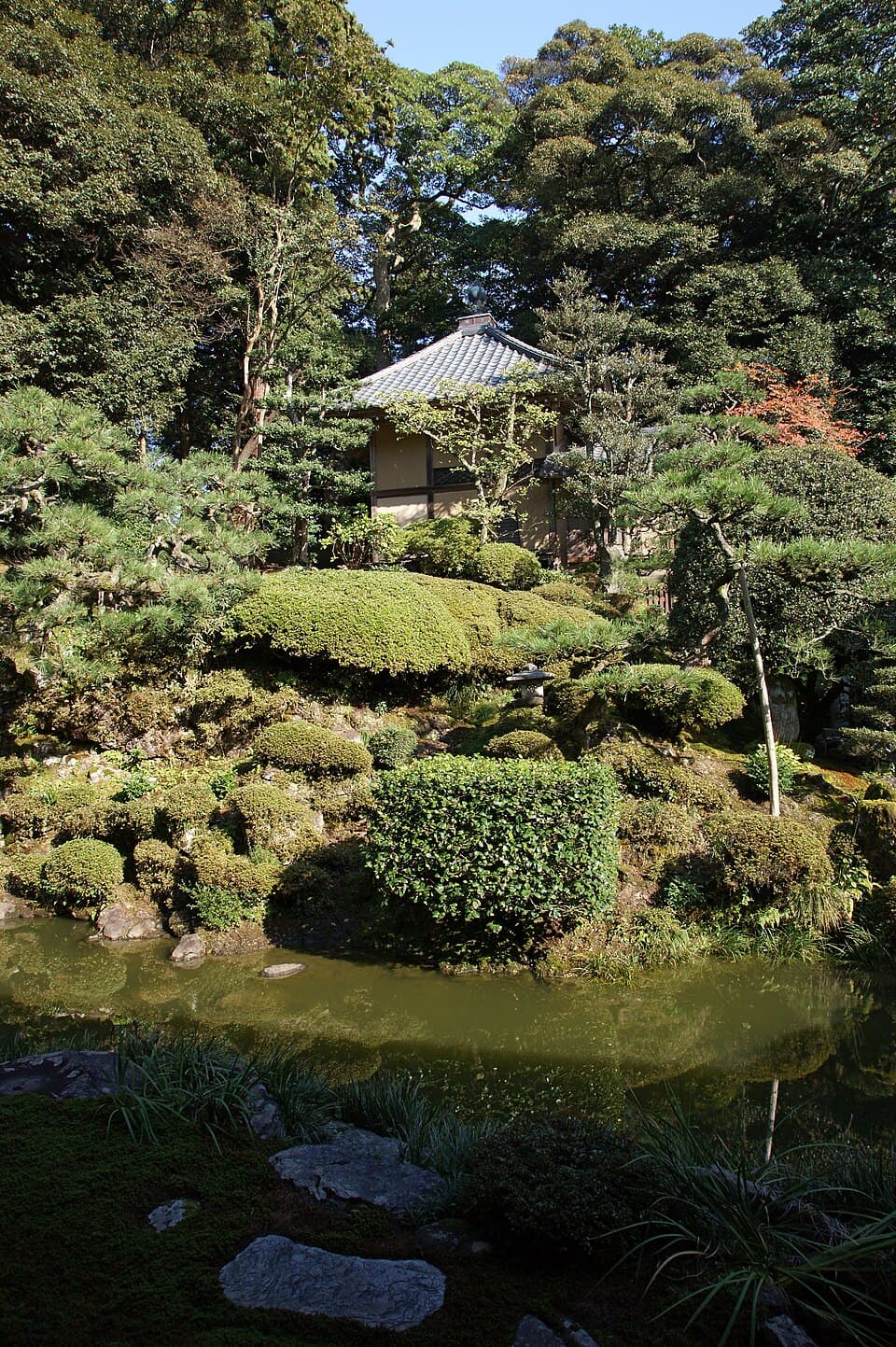
Fukui is a prefecture that holds a national share in both a traditional craft and a modern industry. Both start from the same place: long winters.
Local Specialties
Sabae and the towns around it make more than 90 percent of the spectacle frames produced in Japan.
It began in 1905. As winter work for a place where snow stopped the farming, craftsmen were brought in from Osaka. Then in the 1980s Sabae became the first in the world to mass-produce titanium frames.
Titanium is light, does not rust, and rarely causes metal allergy. But it is extremely hard to work. They took on the hard thing, and became difficult to replace.
In food, Echizen crab. Only male snow crab landed at a Fukui port carries the name, and a yellow tag certifies where it came from. Mackerel, Wakasa tilefish and Koshihikari rice are also from here.
Souvenirs
Habutae mochi is gyuhi rolled thin and dusted with starch. The name likens it to the smoothness of habutae, the local silk. A name that could only come from textile country.
Tinned grilled mackerel, Wakasa lacquer chopsticks, and Sabae spectacles.
Sacred Sites | Shrines & Temples
Tsurugi Jinja and Myotsuji and Jogu Jinja holds National Treasures. 30 shrines and temples worth knowing in Fukui.
Eiheiji(Eiheiji)Buddhist temple / major head temple of the Soto Zen school / Important Cultural Property / Reihoku / Blessings: warding off misfortune, rebirth and renewal
It is still a working training monastery. Dogen taught that not only zazen but cleaning, eating and washing the face are all practice. His Tenzo Kyokun sets out how to think about kitchen work, and its root is the same as the craftsman's work we have been following in this series.
Kehi Jingu(Tsuruga)Shinto shrine / Ichinomiya (first shrine) of Echizen Province / Important Cultural Property / Reinan / Blessings: safe voyages, good harvests, long life
Its great torii, eleven metres high, is counted with Itsukushima in Aki and Kasuga Taisha in Nara as one of the three great wooden torii of Japan.
Jinguji(Obama)Buddhist temple / Important Cultural Property / Reinan / Blessings: warding off misfortune
The Omizu-okuri rite, in which water drawn here is sent on, pairs with the Omizu-tori at Nigatsudo in Todaiji. Wakasa and Nara are joined by water.
Daianzenji(Fukui)Buddhist temple / Important Cultural Property / Reihoku / Blessings: warding off misfortune
The funerary temple of the Matsudaira, lords of the Fukui domain. On the Senjojiki behind it stand the great stone mausolea of the lord's family.
Tsurugi Jinja(Echizen)Shinto shrine / Ninomiya of Echizen Province / National Treasure / Reihoku / Blessings: victory, warding off misfortune
It holds a National Treasure temple bell. Oda Nobunaga's ancestors are said to have been priests here, and the place name Ota is the origin of the family name.
Myotsuji(Obama)Buddhist temple / National Treasure / Reinan / Blessings: warding off misfortune
Both the main hall and the three-storey pagoda are National Treasures. Wakasa keeps many old temples tied to Nara.
Eiheiji Sanmon(Eiheiji)Buddhist temple / Important Cultural Property / Reihoku / Blessings: warding off misfortune
Trainee monks enter by this gate and do not pass out again until their training is done.
Heisenji Hakusan Jinja(Katsuyama)Shinto shrine / Historic Site / Reihoku / Blessings: mountain worship
A precinct covered in moss. It is said once to have held 48 shrines, 36 halls and 6,000 lodgings.
Hagaji(Obama)Buddhist temple / Important Cultural Property / Reinan / Blessings: warding off misfortune
An old temple of Wakasa. Its principal image is said to have been modelled on Empress Gensho.
Mantokuji(Obama)Buddhist temple / Place of Scenic Beauty / Reinan / Blessings: warding off misfortune
A dry landscape garden that uses the slope of the hill, designated a Place of Scenic Beauty.
Kehi Otorii(Tsuruga)Shinto shrine / Important Cultural Property / Reinan / Blessings: safe voyages
About eleven metres high. One of the three great wooden torii of Japan.
Kanegasakigu(Tsuruga)Shinto shrine / Reinan / Blessings: love and relationships
The stage of Nobunaga's retreat from Kanegasaki. Known for the Hanakae festival.
Okamoto Jinja(Echizen)Shinto shrine / Important Cultural Property / Reihoku / Blessings: business prosperity
The only shrine in Japan to a deity of paper. It stands at the heart of Echizen washi country, and the carving on its halls is superb.
Sojadaijingu(Echizen)Shinto shrine / Reihoku / Blessings: warding off misfortune
The soja of Echizen Province, on the site of the provincial capital.
Heisenji(Katsuyama)Shinto shrine / Historic Site / Reihoku / Blessings: mountain worship
Moss from end to end. At its height it is said to have kept eight thousand warrior monks.
Wakasahiko Jinja(Obama)Shinto shrine / Ichinomiya (first shrine) of Wakasa Province / Important Cultural Property / Reinan / Blessings: safe childbirth
Divided into an upper and a lower shrine. A thousand-year-old cedar stands here.
Jogu Jinja(Tsuruga)Shinto shrine / National Treasure / Reinan / Blessings: safe childbirth
Its Korean bell is a National Treasure, brought back during Hideyoshi's invasions of Korea.
Asuwa Jinja(Fukui)Shinto shrine / Natural Monument / Reihoku / Blessings: warding off misfortune
It enshrines Emperor Keitai, and is known for its weeping cherries.
Okamoto Okumiya(Echizen)Shinto shrine / Reihoku / Blessings: business prosperity
The only shrine in Japan to a deity of paper. The inner shrine sits at the summit of Mount Gongen.
Mikuni Jinja(Sakai)Shinto shrine / Reihoku / Blessings: safe voyages
The tutelary shrine of a kitamaebune port town. Floats come out for the Mikuni festival.
Shinokura Jinja(Ono)Shinto shrine / Reihoku / Blessings: long life
A sacred spring rises here, said to be good for ailments of the eye.
Nakaikemi(Tsuruga)Utaki (Ryukyuan sacred grove) / Ramsar Wetland / Reinan / Blessings: good harvests
A lowland marsh holding forty thousand years of strata.
Shibata Jinja(Fukui)Shinto shrine / Reihoku / Blessings: victory
It enshrines Shibata Katsuie and Lady Oichi, on the site of Kitanosho Castle.
Fujishima Jinja(Fukui)Shinto shrine / Reihoku / Blessings: victory
It enshrines Nitta Yoshisada.
Ochisan(Echizen)Utaki (Ryukyuan sacred grove) / Reihoku / Blessings: mountain worship
The mountain where Taicho, who opened Hakusan, first trained.
Ominato Jinja(Sakai)Shinto shrine / Reihoku / Blessings: safe voyages
A sacred island afloat off Tojinbo, reached by a vermilion bridge.
Happyaku Bikuni(Obama)Buddhist temple / Reinan / Blessings: long life
A cave here is said to be where a nun who ate mermaid flesh and lived eight hundred years entered her final meditation.
Uriwari no Taki(Wakasa)Utaki (Ryukyuan sacred grove) / Reinan / Blessings: long life
Water so cold, they say, that it split a melon. It rises in the grounds of Tokutokuji.
Echizen Daibutsu(Katsuyama)Buddhist temple / Reihoku / Blessings: warding off misfortune
Seventeen metres tall, a seated figure larger than the Great Buddha of Nara.
Tounji(Ono)Buddhist temple / Reihoku / Blessings: warding off misfortune
A Zen temple in the castle town of Echizen-Ono.
Sightseeing
Breakdown: castle 1, historic townscape 3, nature / scenery 2, industrial heritage 3. 14 places to see in Fukui.
Shichido Garan(Eiheiji)festival / event / Reihoku
Seven buildings joined by covered walkways. Cleaning, eating and washing are all counted as practice.
Ichijodani(Fukui)castle / Reihoku / Special Historic Site / Special Place of Scenic Beauty / Historic Site / 15th century
A whole Sengoku castle town survived by being buried. Four of its gardens are Special Places of Scenic Beauty.
Katsuyama Hakusan(Katsuyama)historic townscape / Reihoku
The Echizen-side starting point for the climb up Hakusan, and also dinosaur fossil country.
Mikata Goko(Wakasa)nature / scenery / Reinan / Ramsar Wetland
Five lakes that change colour. The Jomon-era varves here became a world standard measure.
Omizu Okuri(Obama)festival / event / Reinan
On 2 March, water is sent from Unose. Ten days later it is drawn at the Omizu-tori of Todaiji in Nara.
Funatsu Jinja(Sabae)other / Reihoku / Important Cultural Property / date unknown; ancient
Held to be the second shrine of Echizen, and the tutelary shrine of eyewear country.
Tojinbo(Sakai)other / Reihoku / Natural Monument / Place of Scenic Beauty
Cliffs of columnar jointing. The name comes from a legend that an unruly monk called Tojinbo was pushed off here.
Dinosaur Museum(Katsuyama)museum / theatre / Reihoku / 2000
Much of Japan's dinosaur fossil material comes from this prefecture. Fifty full skeletons on display.
Mikata Five Lakes(Wakasa)nature / scenery / Reinan / Ramsar Wetland / Place of Scenic Beauty
Differences in salinity give the five lakes different colours. The varves of Lake Suigetsu are a world standard.
Echizen Crab(Echizen)historic townscape / Reihoku
Only male snow crab is called Echizen-gani. Each carries a yellow tag.
Echizen Washi(Echizen)industrial heritage / Reihoku
A papermaking district of 1,500 years. The shrine to the deity of paper stands in the village.
Kumagawa-juku(Wakasa)historic townscape / Reinan / Preservation District for Traditional Buildings
A post town on the Saba Kaido, the road that carried Wakasa fish to Kyoto.
Sabae Glasses(Sabae)industrial heritage / Reihoku / 1905
More than 90 percent of frames made in Japan. It began as off-season work for farmers.
Tsuruga Red Brick(Tsuruga)industrial heritage / Reinan / Registered Tangible Cultural Property / 1905
Oil warehouses. This was the port town of the Europe-Asia through trains.
Traditional Crafts
Seven crafts hold national designation: Echizen lacquerware, Echizen washi, Echizen forged blades, Echizen ware, Echizen chests, Wakasa lacquerware and Wakasa agate work.
Echizen ware is one of the six ancient kilns of Japan. Echizen washi is known for being able to make very large sheets, used for sliding-screen paper and for large-format Japanese painting.
More: VILLAGE Journal vol.30 — Nine in ten spectacle frames(リンク先は現在公開されていません)
More from This Prefecture
See all Fukui articles ← All 47 prefectures
Sources: Fukui Prefecture, Fukui Optical Association, City of Sabae, City of Katsuyama, City of Echizen, Eiheiji, Association for the Promotion of Traditional Craft Industries — Value Village editorial team