Nagano: Local Specialties, Souvenirs, Shrines & Temples, Sightseeing | Japan 47 Prefecture Guide
Nagano borders eight prefectures, more than anywhere else in Japan, and inside it is partitioned by mountains. Those two facts make its food, crafts and beliefs all various.
Local Specialties
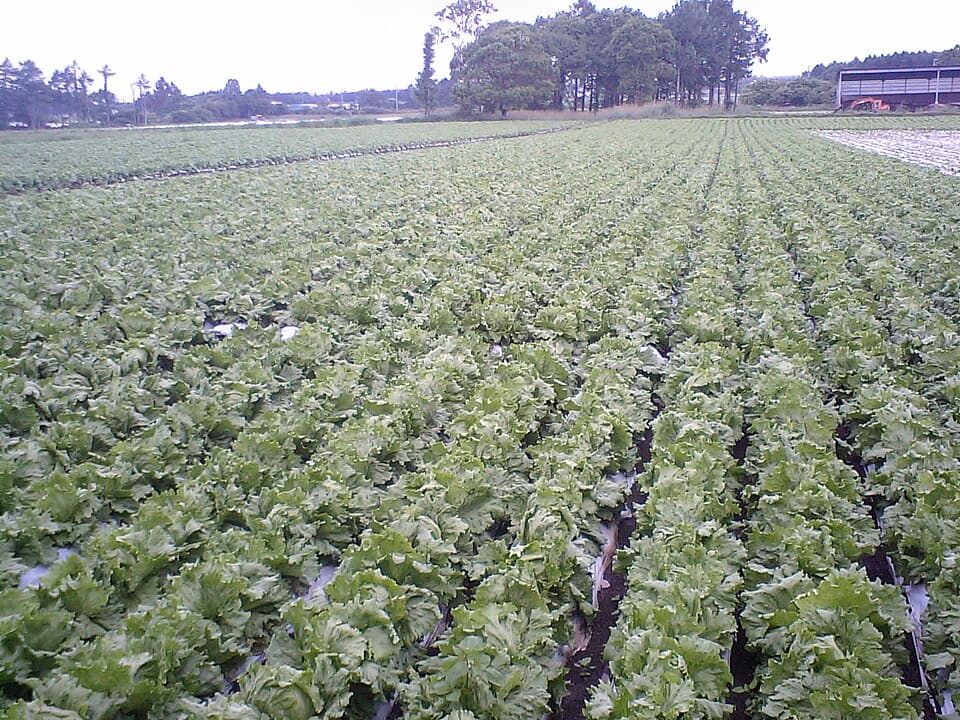
Nagano harvests more lettuce than any other prefecture. On highlands around 1,000 metres, such as Kawakami village, it ships in the summer, when the lowlands are too hot to grow it. The same idea as Tsumagoi cabbage in Gunma.
It also ships more miso than any other prefecture. Soybeans, rice, salt, and low temperatures. For fermentation that should go slowly, cold is not a handicap but a condition. The same logic as Akita sake and Niigata sake.
Buckwheat, nozawana, apples (second in Japan). Wine made using altitude is growing too.
Souvenirs
Dried Shinshu soba, oyaki, and the chestnut confectionery of Obuse.
Oyaki came from hill country where rice was scarce: vegetables wrapped in wheat or buckwheat dough and grilled. Soba is the same. Rice was never the only staple here.
Along the approach to Zenkoji stands a long-established shichimi pepper shop.
Sacred Sites | Shrines & Temples
Suwa Taisha is the head shrine of Japan's Suwa shrines (about 10,000 shrines). Zenkoji and Anrakuji and Mikaeri no To holds National Treasures. 30 shrines and temples worth knowing in Nagano.
Suwa Taisha(Suwa and nearby)Shinto shrine / Ichinomiya (first shrine) of Shinano Province / Important Cultural Property / Nanshin / Head shrine of Suwa shrines (about 10,000 shrines) / Blessings: victory, good harvests, good fortune
Four shrines make it up: Kamisha Honmiya and Maemiya, Shimosha Akimiya and Harumiya, and some of them have no main hall at all. Once every seven years, at the Onbashira festival, huge trees cut from the mountain are hauled by hand and raised at the four corners of the halls.
Zenkoji(Nagano)Buddhist temple / National Treasure / Hokushin / Blessings: rebirth and renewal, warding off misfortune
A temple belonging to no sect at all. Because it took in everyone regardless of school, it was also one of the few sacred sites that never restricted women from worshipping. The main hall is a National Treasure.
Togakushi Jinja(Nagano)Shinto shrine / Hokushin / Blessings: good fortune, mountain worship
Five shrines in all, including Okusha, Chusha and Hokosha. The avenue of cedars running about 500 metres to Okusha is famous. The name comes from the myth in which the rock thrown from the heavenly cave became Mount Togakushi.
Yohashira Jinja(Matsumoto)Shinto shrine / Chushin / Blessings: good fortune, love and relationships
Because it enshrines four deities, it is called the god who ties wishes together. It faces Nawate-dori.
Anrakuji(Ueda)Buddhist temple / National Treasure / Toshin / Blessings: warding off misfortune
Its octagonal three-storey pagoda is a National Treasure, and the only octagonal wooden pagoda still standing in Japan.
Ikushima Tarushima Jinja(Ueda)Shinto shrine / Toshin / Blessings: warding off misfortune, good harvests
Its object of worship is the ground itself, beneath the floor of the main hall. Many written prayers by Takeda Shingen survive here.
Kamisha Honmiya(Suwa)Shinto shrine / Important Cultural Property / Nanshin / Blessings: victory
One of the four shrines. It has no main hall, keeping the older form of worshipping the mountain itself.
Kamisha Maemiya(Chino)Shinto shrine / Nanshin / Blessings: good harvests
The only one of the four with a main hall. Held to be the birthplace of Suwa belief.
Shimosha Akimiya(Shimosuwa)Shinto shrine / Important Cultural Property / Nanshin / Blessings: warding off misfortune
The shrine where the deity resides from August to January. Its bronze guardian lions are said to be the largest in Japan.
Shimosha Harumiya(Shimosuwa)Shinto shrine / Important Cultural Property / Nanshin / Blessings: warding off misfortune
The deity resides here from February to July. It is said to have been built from the same plans as Akimiya.
Togakushi Okusha(Nagano)Shinto shrine / Hokushin / Blessings: good fortune
It stands at the end of an avenue of cedars some 500 metres long, enshrining the deity who threw the heavenly rock door.
Kuzuryusha(Nagano)Shinto shrine / Hokushin / Blessings: love and relationships, good harvests
The land deity, held to be older than Okusha. A god of rain and of toothache.
Kitamuki Kannon(Ueda)Buddhist temple / Toshin / Blessings: warding off misfortune
An unusual hall that faces north. Visiting it together with Zenkoji is a custom of long standing.
Jorakuji(Ueda)Buddhist temple / Important Cultural Property / Toshin / Blessings: warding off misfortune
Its stone tahoto pagoda is an Important Cultural Property. It is the head temple of Kitamuki Kannon.
Kaiko Jinja(Komoro)Shinto shrine / Toshin / Blessings: victory
It stands on the site of Komoro Castle, an ana-jiro that sits lower than the town below it.
Ganshoin(Obuse)Buddhist temple / Hokushin / Blessings: warding off misfortune
The ceiling painting of a phoenix that stares from every angle, painted by Katsushika Hokusai in his last years.
Ontake Jinja(Kiso)Shinto shrine / Chushin / Blessings: mountain worship, rebirth and renewal
It worships Mount Ontake in Kiso. The Ontake-ko spread in the Edo period, turning it into a sacred mountain ordinary people could climb.
Manji no Sekibutsu(Shimosuwa)Utaki (Ryukyuan sacred grove) / Nanshin / Blessings: good fortune
A stone Buddha seated near Harumiya. Known because Okamoto Taro praised it so highly.
Mikaeri no To(Aoki)Buddhist temple / National Treasure / Toshin / Blessings: warding off misfortune
So beautiful that people turn back to look, which is why it is called the pagoda that makes you look back.
Yohashira Jinja(Matsumoto)Shinto shrine / Chushin / Blessings: good fortune, love and relationships
The god who ties wishes together. It enshrines four deities.
Hotaka Jinja(Azumino)Shinto shrine / Chushin / Blessings: safe voyages, mountain worship
A sea deity enshrined in the mountains, held to be a trace of the Azumi people who moved inland to Shinshu.
Obasute(Chikuma)Buddhist temple / Place of Scenic Beauty / Hokushin / Blessings: rebirth and renewal
The moon reflects in every single paddy. Basho came here.
Manji Sekibutsu(Shimosuwa)Utaki (Ryukyuan sacred grove) / Nanshin / Blessings: good fortune
You walk around it three times, saying may all things be settled.
Kozenji(Komagane)Buddhist temple / Place of Scenic Beauty / Nanshin / Blessings: warding off misfortune
It carries the legend of Hayataro, the divine dog. Luminous moss grows here.
Achimura(Achi)Shinto shrine / Nanshin / Blessings: good fortune
A village the Ministry of the Environment named the place where the stars shine brightest in Japan.
Sanmon (Zenkoji)(Nagano)Buddhist temple / Important Cultural Property / Hokushin / Blessings: rebirth and renewal
Five doves are hidden inside the characters on the Zenkoji plaque.
Nunobiki Kannon(Komoro)Buddhist temple / Important Cultural Property / Toshin / Blessings: warding off misfortune
The birthplace of the saying about being led to Zenkoji by an ox. A hall built out over the cliff.
Omiwatari(Suwa)Utaki (Ryukyuan sacred grove) / Nanshin / Blessings: good fortune
The ice of Lake Suwa buckles upward. It is taken as the track of a god crossing, and is recorded in a rite.
Minakamiyama(Nagano)Utaki (Ryukyuan sacred grove) / Hokushin / Blessings: mountain worship
It carries a tradition of being the oldest pyramid in the world. A mountain of shugendo practice.
Kitamuki Kannon(Ueda)Buddhist temple / Toshin / Blessings: warding off misfortune
Zenkoji is said to guard the next life and Kitamuki Kannon this one, so visiting both is the custom.
Sightseeing
Matsumoto-jo holds National Treasures. Breakdown: castle 1, historic townscape 7, hot spring 1, nature / scenery 4. 16 places to see in Nagano.
Matsumoto-jo(Matsumoto)castle / Chushin / National Treasure / 1594
A surviving keep, and a National Treasure. The black weatherboarding gives it the name Crow Castle.
Tsumago-juku(Nagiso)historic townscape / Chushin / Important Preservation District for Groups of Traditional Buildings / Preservation District for Traditional Buildings
The first post town in Japan to take up townscape preservation. Small shrines are dotted along the highway.
Narai-juku(Shiojiri)historic townscape / Chushin / Important Preservation District for Groups of Traditional Buildings / Preservation District for Traditional Buildings
A post town once called Narai of a thousand houses, and a producer of Kiso lacquerware.
Onbashira(Suwa and nearby)festival / event / Nanshin
Once every seven years, huge trees cut from the mountain are hauled by hand and raised at the four corners of the halls.
Okaidan Meguri(Nagano)other / Hokushin
You feel your way along a pitch-dark corridor, and touching the lock is said to promise rebirth in paradise.
Zenkoji Nakamise(Nagano)historic townscape / Hokushin
The gate town that gave rise to the saying about being led to Zenkoji by an ox.
Kamikochi(Matsumoto)nature / scenery / Chushin / Special Place of Scenic Beauty / Special Natural Monument / Natural Monument
The Azusa river and Kappa Bridge. Weston introduced it to the world. Private cars cannot enter.
Snow Monkey Park(Yamanouchi)nature / scenery / Hokushin / 1964
Japanese macaques that bathe in hot springs, said to be the only ones in the world.
Tsumago-juku(Nagiso)historic townscape / Chushin / Preservation District for Traditional Buildings
The first post town in Japan to take up townscape preservation. The power lines were hidden away.
Bessho Onsen(Ueda)hot spring / Toshin
The Kamakura of Shinshu. Kitamuki Kannon and the National Treasure octagonal pagoda stand close together.
Nozawa Dosojin(Nozawaonsen)festival / event / Hokushin / Important Intangible Folk Cultural Property
A shrine structure is built, then set alight, with the villagers defending and attacking it.
Utsukushigahara(Matsumoto and nearby)nature / scenery / Chushin
A lava plateau at 2,000 metres, where cattle are put out to graze.
Obuse(Obuse)historic townscape / Hokushin
A town of chestnut confectionery. The Hokusai Museum holds work from his last years.
Tateshina(Tateshina and nearby)nature / scenery / Toshin
A highland lake at the foot of the Yatsugatake range. It freezes over completely in winter.
Karuizawa(Karuizawa)historic townscape / Toshin
The missionary Shaw made it known as a summer retreat. The old Mikasa Hotel still stands.
Shinshu Soba(Nagano and nearby)historic townscape / Chushin
Where rice grew poorly at altitude, buckwheat became the staple. Togakushi soba is the most renowned.
Traditional Crafts
Six crafts hold national designation: Kiso lacquerware, Shinshu pongee, Iiyama Buddhist altars, Uchiyama paper, Matsumoto furniture and Nagiso turned woodwork.
Each of the six sits in a different valley. You cannot reach the next one without crossing a pass, so each grew up on its own.
More: VILLAGE Journal vol.28 — Six craft districts in the mountains(リンク先は現在公開されていません)
More from This Prefecture
See all Nagano articles ← All 47 prefectures
Sources: Ministry of Agriculture, Forestry and Fisheries (Crop Statistics Survey), Federation of Japan Miso Manufacturers Cooperatives, Nagano Prefecture, Agency for Cultural Affairs, Association for the Promotion of Traditional Craft Industries — Value Village editorial team