Osaka: Local Specialties, Souvenirs, Shrines & Temples, Sightseeing | Japan 47 Prefecture Guide
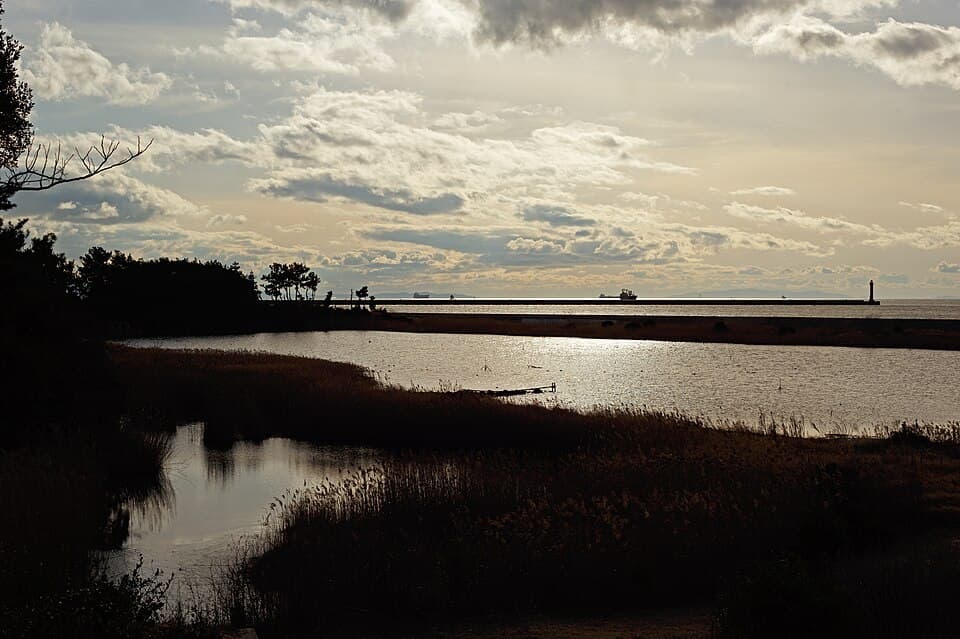
Osaka was less a place where things were made than a place where things gathered. It was called the kitchen of the realm because the goods of the whole country passed through it.
Local Specialties
Sakai forged blades are said to hold about 90 percent of the domestic market for the Japanese knives that professional cooks use.
That is not 90 percent of the consumer market. It is 90 percent among the people who earn their living with them. Nearly everyone who uses a knife daily and sharpens it daily has settled on the same district.
It started in the sixteenth century with the tobacco knife, for cutting the tobacco leaf brought in from Portugal. Word spread that they cut well, and the shogunate granted the Sakai-kiwame mark and a monopoly. A state-guaranteed brand, four hundred years ago.
Senshu mizu-nasu aubergine, Nose chestnuts, Tennoji turnip. And the culture of flour-based food.
Souvenirs
Awa-okoshi, battera, and the pork buns of 551. And sake vessels and tea caddies in Osaka Naniwa pewter.
Tin is said to be slow to corrode and slow to change the taste of what it holds, among metals. That is why it has long been used for sake vessels.
Sacred Sites | Shrines & Temples
Sumiyoshi Taisha is the head shrine of Japan's Sumiyoshi shrines (about 2,300 shrines). Sumiyoshi Taisha and Sumiyoshi-zukuri and Kanshinji holds National Treasures. 36 shrines and temples worth knowing in Osaka.
Sumiyoshi Taisha(Osaka)Shinto shrine / Ichinomiya (first shrine) of Settsu Province / National Treasure / Osaka City / Head shrine of Sumiyoshi shrines (about 2,300 shrines) / Blessings: safe voyages, business prosperity, warding off misfortune
Its four main halls are National Treasures, preserving sumiyoshi-zukuri, a building style from before Buddhism reached Japan: straight roofs with no upward curve. The way the Japanese built before Chinese influence survives here. Worship begins by crossing the steeply arched drum bridge.
Shitennoji(Osaka)Buddhist temple / Important Cultural Property / Osaka City / Blessings: warding off misfortune, study and exams
Said to have been built by Prince Shotoku, and held to be the oldest full-scale temple in Japan. The Shitennoji layout, with gate, pagoda, golden hall and lecture hall on a straight line from the south, takes its name from this temple.
Osaka Tenmangu(Osaka)Shinto shrine / Osaka City / Blessings: study and exams
It enshrines the deity of learning, and fills in July for the Tenjin festival, one of the three great festivals of Japan. Known for its river procession and dedicated fireworks.
Imamiya Ebisu Jinja(Osaka)Shinto shrine / Osaka City / Blessings: business prosperity, wealth
Ebessan. On the Toka Ebisu in January, people gather to pray for business prosperity. The faith of a merchant city, surviving as it was.
Kumata Jinja(Osaka)Shinto shrine / Important Cultural Property / Osaka City / Blessings: warding off misfortune
The tutelary deity of Hirano-go. Held to be the only shrine in Japan where the renga hall still stands.
Katsuoji(Mino)Buddhist temple / Saigoku 33-Temple Pilgrimage, Temple No. 23 / Hokusetsu / Blessings: victory
Known as a temple of winning. Daruma dolls of victory are dedicated across the whole grounds.
Mizumadera(Kaizuka)Buddhist temple / Senshu / Blessings: warding off misfortune, love and relationships
Known as a Kannon who wards off misfortune. The new year pounding of a thousand rice cakes is held here.
Domyoji Tenmangu(Fujiidera)Shinto shrine / Minami-Kawachi / Blessings: study and exams
A shrine tied to Sugawara no Michizane. The dried rice offered here gave its name to domyoji flour, the material of sakura mochi.
Sorihashi(Osaka)Shinto shrine / Osaka City / Blessings: rebirth and renewal
A steep drum bridge. Crossing it is itself held to be a purification.
Sumiyoshi-zukuri(Osaka)Shinto shrine / National Treasure / Osaka City / Blessings: safe voyages
One of the oldest styles of shrine architecture. Four halls, all National Treasures.
Shitennoji Garan(Osaka)Buddhist temple / Osaka City / Blessings: warding off misfortune
The oldest state temple in Japan. It gave its name to the Shitennoji layout, running in a straight line from south to north.
Ishi no Torii(Osaka)Buddhist temple / Important Cultural Property / Osaka City / Blessings: rebirth and renewal
One of the three great torii of Japan. It was the place for nissokan, meditation on the sun setting in the west.
Hokoku Jinja(Osaka)Shinto shrine / Osaka City / Blessings: good fortune, victory
It enshrines Hideyoshi, and draws prayers for getting on in the world.
Namba Yasaka Jinja(Osaka)Shinto shrine / Osaka City / Blessings: victory, warding off misfortune
A lion hall twelve metres high. Its wide-open mouth swallows evil.
Abe no Seimei Jinja(Osaka)Shinto shrine / Osaka City / Blessings: warding off misfortune
Held to be the birthplace of Abe no Seimei.
Gokuraku Jodo(Osaka)Buddhist temple / Osaka City / Blessings: rebirth and renewal
A garden built from descriptions in the sutras.
Ryuanji(Mino)Buddhist temple / Hokusetsu / Blessings: wealth
Held to be the origin of the Japanese lottery. It stands beside Minoo Falls.
Kanshinji(Kawachinagano)Buddhist temple / National Treasure / Minami-Kawachi / Blessings: study and exams
Its golden hall is a National Treasure. Kusunoki Masashige studied here, and his head mound is in the grounds.
Kongoji(Kawachinagano)Buddhist temple / National Treasure / Minami-Kawachi / Blessings: love and relationships
Called the Koyasan for women. Its golden hall and principal image are National Treasures.
Konda Hachimangu(Habikino)Shinto shrine / National Treasure / Minami-Kawachi / Blessings: victory
It claims to be the oldest Hachimangu in Japan, and adjoins the tomb of Emperor Ojin.
Fujiidera(Fujiidera)Buddhist temple / Saigoku 33-Temple Pilgrimage, Temple No. 5 / National Treasure / Minami-Kawachi / Blessings: warding off misfortune
Its Thousand-Armed Kannon actually has 1,041 arms. A National Treasure, shown on the 18th of each month.
Kishiki Jinja(Kishiwada)Shinto shrine / Senshu / Blessings: victory
The shrine into which the danjiri floats are hauled. Known for yarimawashi, taking the corners at full speed.
Ikukunitama Jinja(Osaka)Shinto shrine / Osaka City / Blessings: love and relationships, warding off misfortune
Held to be the oldest shrine in Osaka, with a distinctive main hall in the ikukunitama style.
Tsuyunoten Jinja(Osaka)Shinto shrine / Osaka City / Blessings: love and relationships
The setting of Chikamatsu Monzaemon's Love Suicides at Sonezaki. Lovers come here without pause.
Okuninushi Jinja(Osaka)Shinto shrine / Osaka City / Blessings: wealth
You receive seed money here and pray for wealth.
Horikoshi Jinja(Osaka)Shinto shrine / Osaka City / Blessings: good fortune
Said to hear one wish in a lifetime. One of the seven shrines of Shitennoji.
Tamatsukuri Inari Jinja(Osaka)Shinto shrine / Osaka City / Blessings: business prosperity, love and relationships
The Toyotomi family worshipped here. Craftsmen who made magatama beads lived in this district.
Ishikiri Tsurugiya Jinja(Higashiosaka)Shinto shrine / Minami-Kawachi / Blessings: warding off misfortune
The god of boils and swellings. There is no end to the people walking the hundred prayer circuits.
Hiraoka Jinja(Higashiosaka)Shinto shrine / Ichinomiya (first shrine) of Kawachi Province / Minami-Kawachi / Blessings: warding off misfortune
Called Moto-Kasuga: the deity of Kasuga Taisha in Nara was invited from here.
Hoshida Myokengu(Katano)Shinto shrine / Hokusetsu / Blessings: good fortune, study and exams
It carries a tradition of a meteorite fall. A place of star worship.
Sayamaike(Osakasayama)Utaki (Ryukyuan sacred grove) / Historic Site / Minami-Kawachi / Blessings: good harvests
The oldest dam-type reservoir in Japan. Gyoki and Chogen both worked on it.
Eifukuji(Taishi)Buddhist temple / Important Cultural Property / Minami-Kawachi / Blessings: rebirth and renewal
Held to be the burial place of Prince Shotoku. Three sets of remains in one mausoleum.
Nose Myokenzan(Nose)Buddhist temple / Hokusetsu / Blessings: good fortune, road safety
It worships the North Star. The Ichikawa Danjuro line of kabuki actors were devotees.
Kabusanji(Takatsuki)Buddhist temple / Hokusetsu / Blessings: wealth
It claims to be the first sacred site of Bishamonten in Japan.
Otori Taisha(Sakai)Shinto shrine / Ichinomiya (first shrine) of Izumi Province / Senshu / Blessings: victory
Said to be where Yamato Takeru came down to earth as a white bird.
Kureha Jinja(Ikeda)Shinto shrine / Hokusetsu / Blessings: business prosperity
It enshrines the weaving maidens of Wu who brought weaving to Japan. The origin of the Japanese word gofuku, for cloth.
Sightseeing
Mozu Kofun and Mozu-Furuichi Kofun is a UNESCO World Heritage Site. Breakdown: castle 1, historic townscape 2, nature / scenery 1, industrial heritage 2. 13 places to see in Osaka.
Mozu Kofun(Sakai)burial mound / archaeological site / Senshu / UNESCO World Heritage (Cultural) / UNESCO World Heritage / 5th century
The tomb of Emperor Nintoku is the largest in Japan. Part of the Mozu-Furuichi Kofun Group World Cultural Heritage site.
Osaka-jo(Osaka)castle / Osaka City / Special Historic Site / Historic Site / 1583
Hideyoshi's castle was buried by the Tokugawa, and the stone walls you see today are from the Tokugawa period.
Tenjin Matsuri(Osaka)festival / event / Osaka City / 951
One of the three great festivals of Japan. The river surface glitters with the boat procession and the dedicated fireworks.
Billiken(Osaka)other / Osaka City / 1912
Rub the soles of its feet and your wish is said to come true. A figure born in America became a god of Osaka.
Dotonbori(Osaka)historic townscape / Osaka City / 1615
An entertainment district that began with playhouses. The Glico sign is now in its sixth generation.
Tsutenkaku(Osaka)museum / theatre / Osaka City / Registered Tangible Cultural Property / 1912
You rub the soles of Billiken's feet. And you must not double-dip your kushikatsu.
Kaiyukan(Osaka)museum / theatre / Osaka City / 1990
A whale shark in the Pacific tank. You follow the ecosystems of the Pacific rim from top to bottom.
Kishiwada Danjiri(Kishiwada)festival / event / Senshu / 1703
Four-tonne floats take the corners at full speed in the yarimawashi.
Mozu-Furuichi Kofun(Sakai and nearby)burial mound / archaeological site / Senshu / UNESCO World Heritage (Cultural) / Historic Site / UNESCO World Heritage / 5th century
The tomb of Emperor Nintoku runs 486 metres. Among the largest graves in the world.
Kuromon Market(Osaka)historic townscape / Osaka City
The kitchen of Naniwa. Pufferfish and eel shops line the arcade.
Nakanoshima(Osaka)industrial heritage / Osaka City / Important Cultural Property
The public hall and the library, standing on a sandbank in the city of water.
Minoo Falls(Mino)nature / scenery / Hokusetsu
A drop of 33 metres. Tempura-fried maple leaves are the local speciality.
Sakai Cutlery(Sakai)industrial heritage / Senshu
The skills of gunsmiths turned to kitchen knives. Most professional cooks use them.
Traditional Crafts
Seven crafts hold national designation: Sakai forged blades, Osaka ranma transoms, Osaka karaki joinery, Osaka Senshu paulownia chests, Osaka Naniwa pewter, Osaka Kongo blinds, and Naniwa hon-zome dyeing.
All of them are things to use. Where Kyoto's seventeen crafts lean towards display, Osaka's lean towards use. Two neighbours, and this different in character.
More: VILLAGE Journal vol.23 — Nine in ten professional knives, from Sakai
More from This Prefecture
See all Osaka articles ← All 47 prefectures
Sources: Osaka Prefecture, City of Sakai, City of Osaka, Agency for Cultural Affairs, Association for the Promotion of Traditional Craft Industries — Value Village editorial team